
Before sending stickers directly to a packing partner in another country, confirm the physical receiving site and the import arrangement separately. The buyer, the person opening the carton and the party identified for import purposes may have different roles. A complete warehouse address does not close those other decisions.
Make a short role map and obtain the relevant parties’ confirmation before releasing the shipping instruction. This is especially useful when a brand purchases printed rolls but a separate site will hold and apply them. The map coordinates information; it does not appoint an importer or decide legal eligibility.
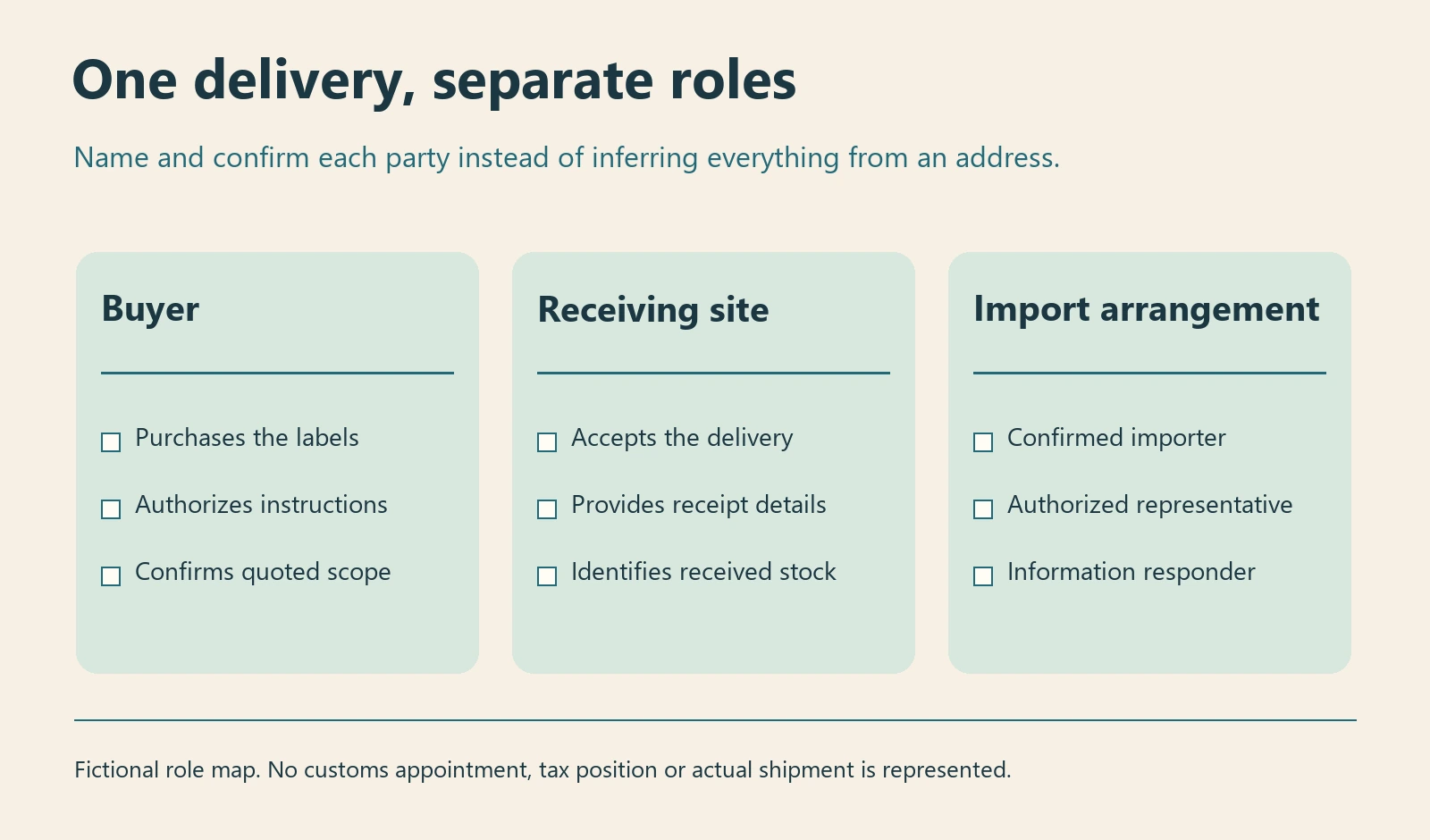
Ask what the receiving address actually authorizes
The receiving site should confirm the named shipment, delivery address, contact route and any receiving reference or appointment it requires. Ask whether it accepts this type of international delivery under the proposed arrangement. Do not infer that an address supplied for a sample review is also accepted for bulk stock.
Separately identify who places the order and who may authorize delivery changes. A packing-site contact may be able to accept a carton without authority to approve a new freight scope or an import arrangement. Preserve those distinctions when forwarding instructions to the label supplier.
The co-packer release guide assigns artwork, application and stock-use decisions. This page adds the import and delivery handoff. An approved roll drawing and accepted application specification do not identify who will answer a customs information request.
Name the import and clearance responsibilities explicitly
Ask the responsible commercial and logistics parties to confirm the proposed importer, any authorized customs representative and the contact who can supply missing information. Keep eligibility, required authorization and destination rules with the parties qualified to establish them. Do not assign the role to the warehouse merely because it is physically closest to the arriving goods.
A narrow US example illustrates the distinction. CBP bulletin 63096696, issued November 19, 2024, addresses origin declarations, statements and certifications. It says consignee information must not be used as importer information when the consignee is not the importer of record. That notice concerns its stated document context; it does not determine the correct importer or origin-document requirement for this sticker shipment.
DHL’s document guidance likewise includes receiver or importer contact details and makes the required paperwork dependent on the goods, destination, parties and service. Use the actual provider’s current requirements, with confirmation from the relevant customs party where needed.
| Role to identify | Confirmation to retain |
|---|---|
| Purchasing party | Which order and shipping instruction may this party authorize? |
| Physical receiving site | Will it accept the named delivery at the confirmed address and receiving window? |
| Proposed importer | Has the responsible party confirmed identity, eligibility and the applicable arrangement? |
| Customs representative | Who is engaged, and what authorization or information does that provider require? |
| Clearance-response contact | Who can obtain and return requested goods or transaction information? |
| Charge arrangement | Which confirmed offer or agreement assigns the relevant freight and import-related charges? |
Keep payment, import identity and delivery separate
Ask how freight and any applicable destination charges are handled in the accepted offer. Record exclusions and the person who will confirm them. A courier account used for one charge should not become an inferred answer to every import responsibility.
If a trade term is used, keep the agreed version and named place with the commercial record. Have the responsible parties confirm how it applies. The comparable-cost guide helps retain the scope and unresolved amounts; it does not provide an all-inclusive landed cost or determine who is legally entitled to make entry.
A site may be ready to receive goods while the proposed importer arrangement remains open. Record those statuses separately. Do not replace a missing confirmation with a purchase-order address or let a delivery abbreviation stand in for the party’s agreement.
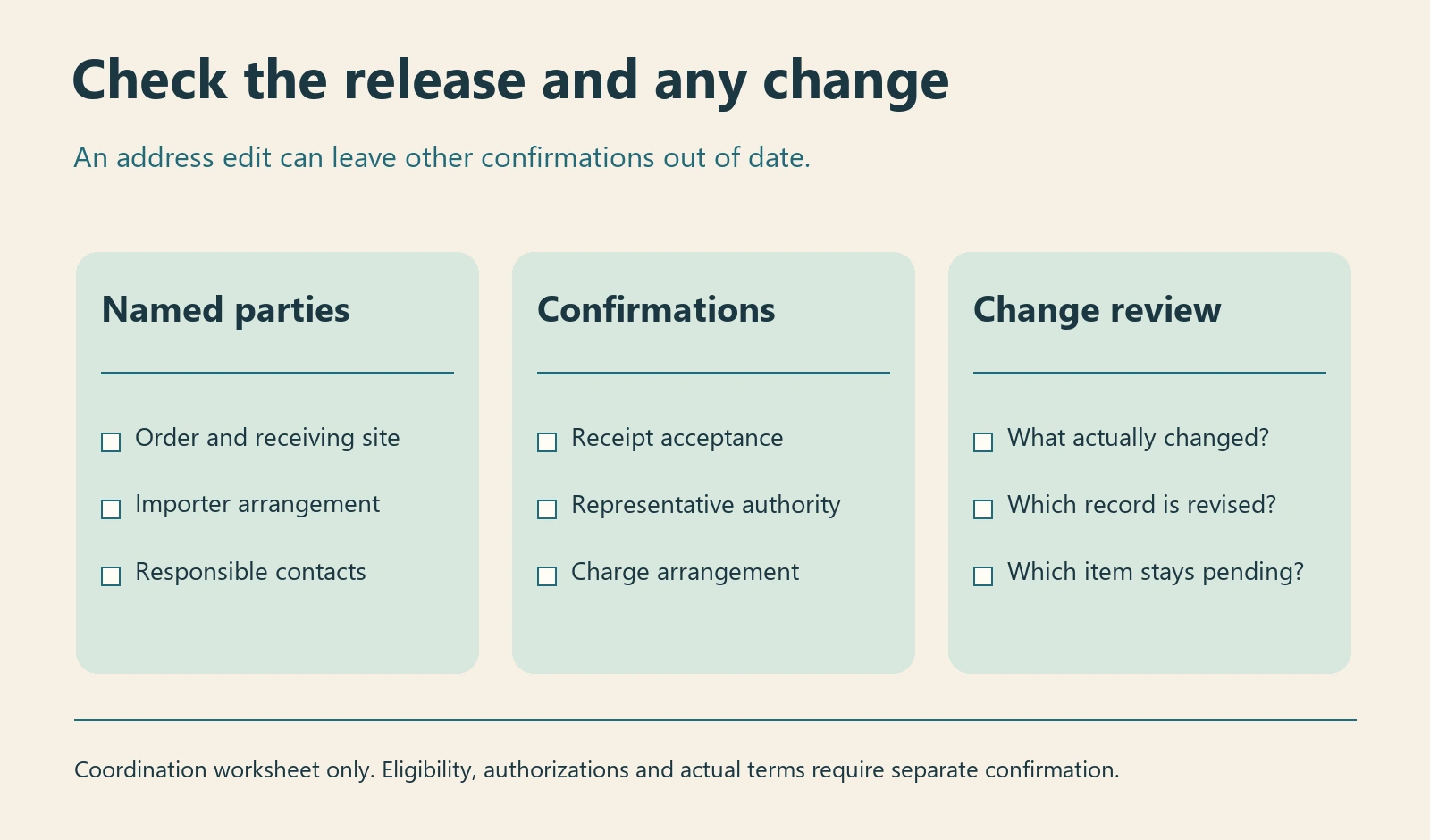
Return a destination change through the same checks
If the buyer switches from its own warehouse to a packing partner, identify what has changed: destination, receiving contact, importer arrangement, representative, shipment record or quoted transport scope. Obtain the affected confirmations before treating the revised address as ready for dispatch.
Keep the original instruction and the replacement revision identifiable. If the shipment has already been handed to a carrier, ask what change is available and what consequences the provider can confirm. Do not promise that a label edit can redirect goods or change an import arrangement without another review.
Use the carton identification guide for the physical carton references needed by receiving. That reference should agree with the shipment instruction, while remaining distinct from customs identity and authority.
Release only the arrangement the parties have confirmed
Where an import role, authorization or receiving acceptance is missing, keep that part of dispatch pending. Compare delivery to a buyer-controlled receiving point if it is a feasible, confirmed alternative. It can add a later transfer, handling and cost; it is not automatically simpler or cheaper.
For a printed roll-label project, send the route, artwork and quantities, intended receiving site and the confirmed import/clearance arrangement in a third-party delivery enquiry. State which confirmation remains open. Exchange sensitive identifiers or authorization documents only through the actual parties’ agreed secure channels; the public quote brief can identify that information as pending without reproducing it.
Current shipping terms require the route, freight and import-related scope to be confirmed for the project. None of the role assignments above establishes a ZC Labels DDP service, customs agency appointment or guaranteed delivery date.