
The brand approves the label PDF. The packing site expects a different roll orientation. The supplier receives instructions from both and cannot tell who can authorize a change. The artwork is approved, but the route from purchase to application is not controlled.
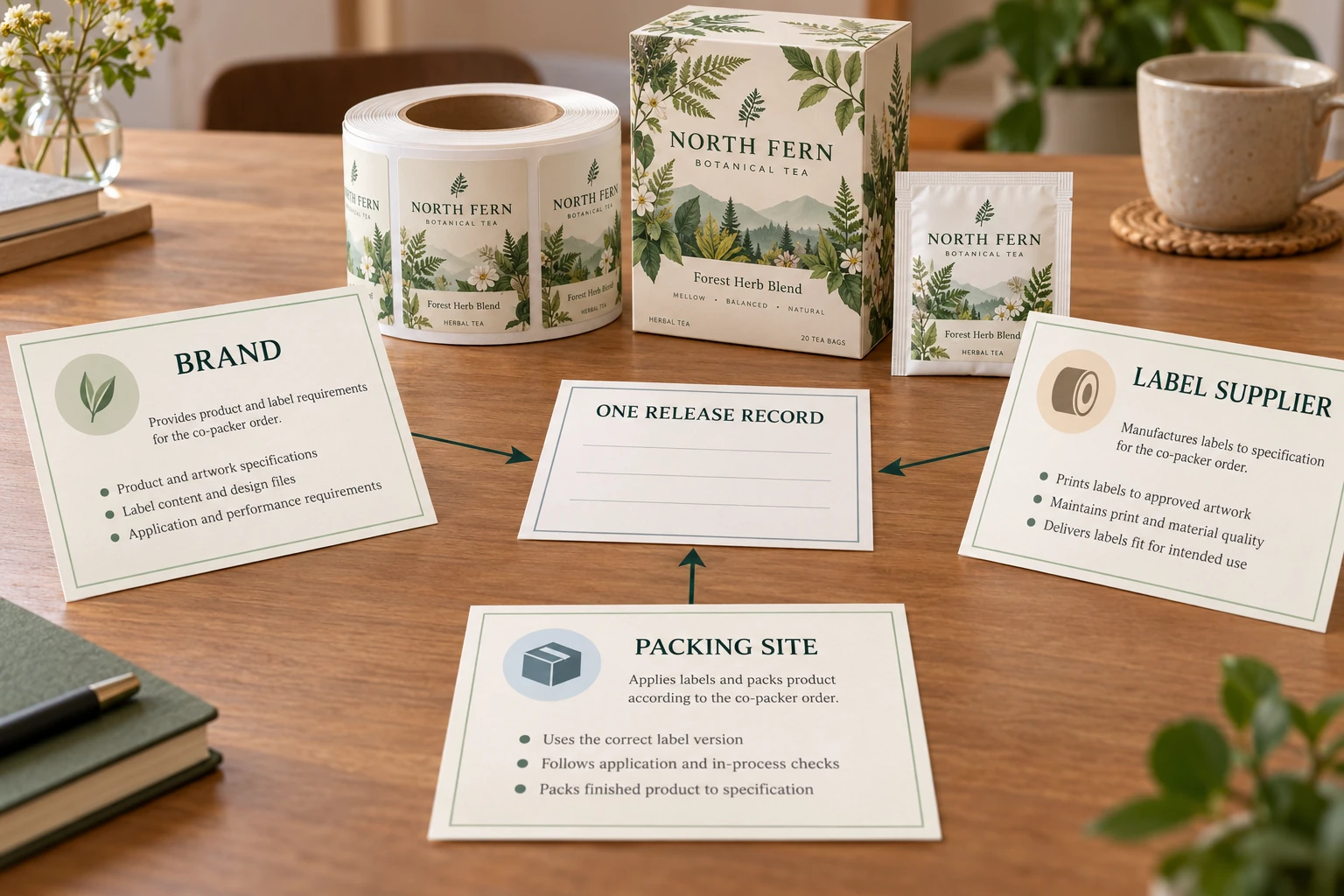
When ordering labels for a co-packer, assign the relevant decisions before sending a final release. Connect the brand's content approval, the packing site's application requirements and the supplier's confirmed scope in one record. Do not assume that buying the labels, owning the artwork and accepting the machine specification are the same responsibility.

Identify the parties by the decision they control
Ask who supplies and approves product wording, which site will apply the label and who places the actual order. Identify who may authorize quantity, packing or delivery changes. Use the parties' real arrangement rather than imposing a universal hierarchy on every project.
A brand may own the appearance and copy while the packing operation confirms its equipment requirements. Procurement may coordinate the order without being able to approve either technical issue. That division can work if the relevant instructions reach the supplier in an identifiable, accepted form.
If several people can request changes, name the process for resolving a conflict. A forwarded email should not quietly override an accepted specification merely because it arrived later. Preserve the controlling references and the person who can confirm their replacement.
Get the application site into the brief early
Obtain the actual container reference, label position and application route. For equipment use, request the relevant roll and web requirements from the responsible site. A brand mockup showing an upright label does not identify the leading edge required by the applicator.
The roll direction and core guide explains how to make that drawing explicit. Have the actual receiving line owner confirm it. Do not copy a supplier's chart number into the order without confirming that both parties mean the same drawing.
If representative application evidence is needed, agree who provides the package, who observes the review and who accepts the relevant result. This article does not promise sample preparation, line trials or a fixed approval period from ZC Labels or any packing site.
Separate receiving stock from approving its use
Name the location to which labels are delivered and the person or process receiving them. Ask how stock is identified, where it is held and what must be checked before it is used. The owner of the inventory and the site physically holding it may be different parties under the actual agreement.
Keep those arrangements explicit instead of inferring them from a delivery address. An address supplied for sample review is not necessarily the bulk delivery address. A delivery scan is not evidence that the correct artwork revision and application requirements have been accepted.
| Handoff | Information to connect |
|---|---|
| Content approval | Artwork revision, product wording owner and current status |
| Application specification | Package, equipment route and accepting site |
| Purchase release | Confirmed construction, quantities and authorized instruction |
| Stock receipt | Destination, identification and receiving responsibility |
| Use or change | Accepted revision and owner of any exception decision |
Agree what happens to remaining stock
Ask who decides whether surplus or unused labels are retained, transferred, returned or otherwise handled under the actual arrangement. Do not assume that a packing site will hold them indefinitely, that the printer will store them or that one party can use them for another run without confirmation.
When content or packaging changes, identify the affected stock. Keep an old roll from becoming an unofficial source for a new version merely because it remains on a nearby shelf. The relevant parties need to agree its disposition and how the next release is distinguished.
The label roll storage guide covers identification and protection before application. Ownership and authority are separate questions. Suitable storage cannot make an obsolete product name current or authorize use of stock allocated to another job.
Make a change travel through the same route
An illustrative brand may revise the product name after sending its artwork approval, while the packing site changes to another applicator. These are different changes with different accepting owners. Attach each to the affected reference rather than circulating a single “updated” folder with no explanation.
Ask the supplier what work has begun and what consequences it can confirm. Do not promise that a revised artwork or roll requirement can be accommodated without affecting scope, price or timing. Equally, avoid restarting unrelated decisions when the responsible parties can identify a narrower review.
Where instructions conflict, hold the disputed decision for resolution by the authorized owners. This is a coordination principle, not legal advice about the parties' contract or permission to bypass the packing operation's procedures.
Give the supplier one usable release package
Assemble the accepted artwork, construction, dimensions, quantities by design, roll drawing and agreed delivered state. Keep the actual receiving information and relevant owner confirmations with them. Record what is still provisional so the next recipient does not mistake an enquiry for final release.
Use the custom roll label page for the supply route. Send the brand and packing-site requirements, current artwork, package and equipment information, quantities and identified decision owners in a co-packer label handoff enquiry. Share only authorized contact and project information. The useful outcome is a clear next confirmation, not an assumption that the printer can reconcile every private arrangement between the other parties.