
One supplier may quote per sticker, another per sheet and a third per finished retail pack. The smallest number looks attractive until the buyer tries to calculate how many usable products will arrive. Even an accurate price can support the wrong decision when its unit and inclusions remain unclear.
When asking how much custom stickers cost, begin by defining the finished unit being purchased. Then align design quantities, construction, packing and delivery scope. A useful comparison does not need invented market prices. It needs every quoted amount attached to the same task and an identified commercial basis.
Write the receiving unit beside the price
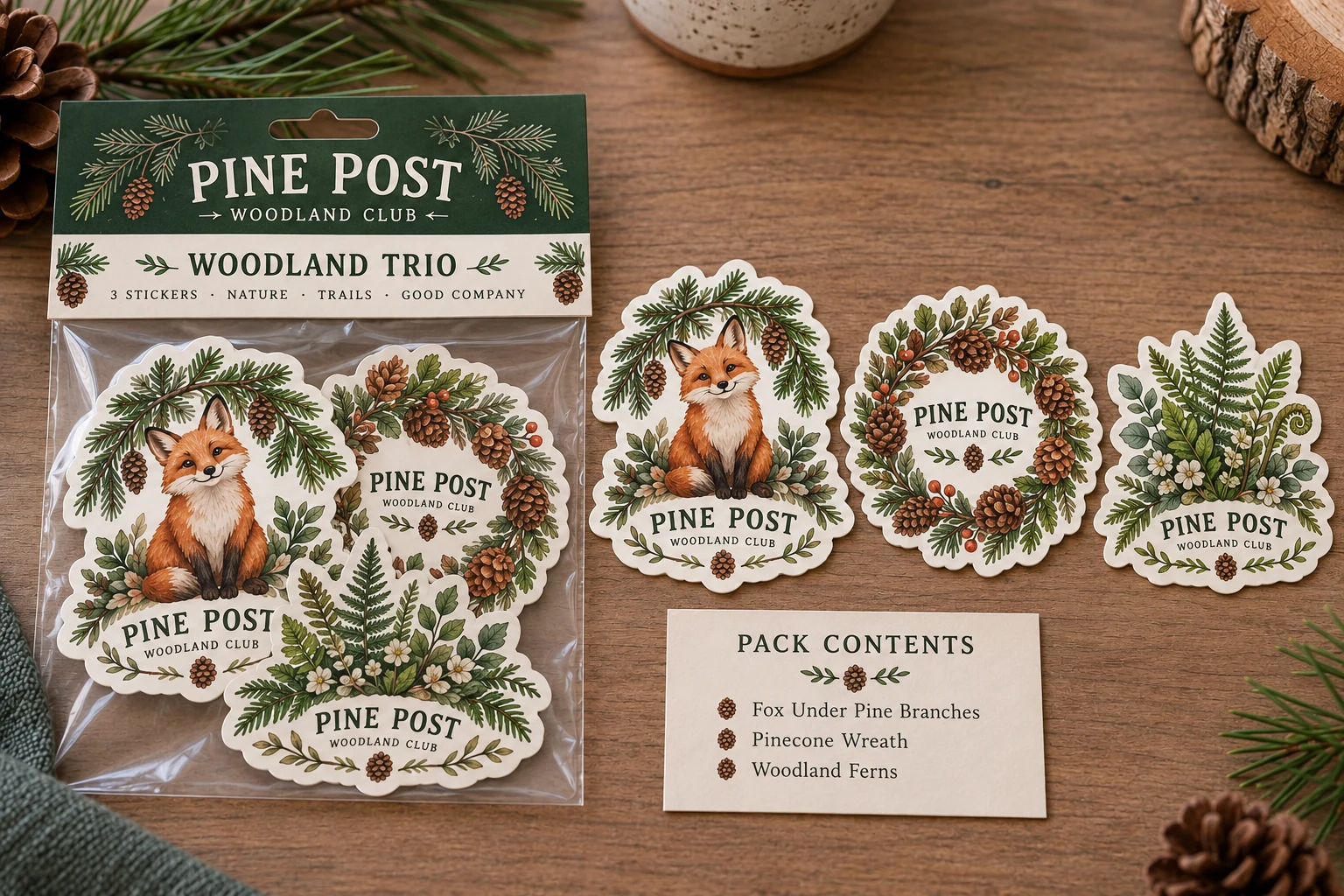
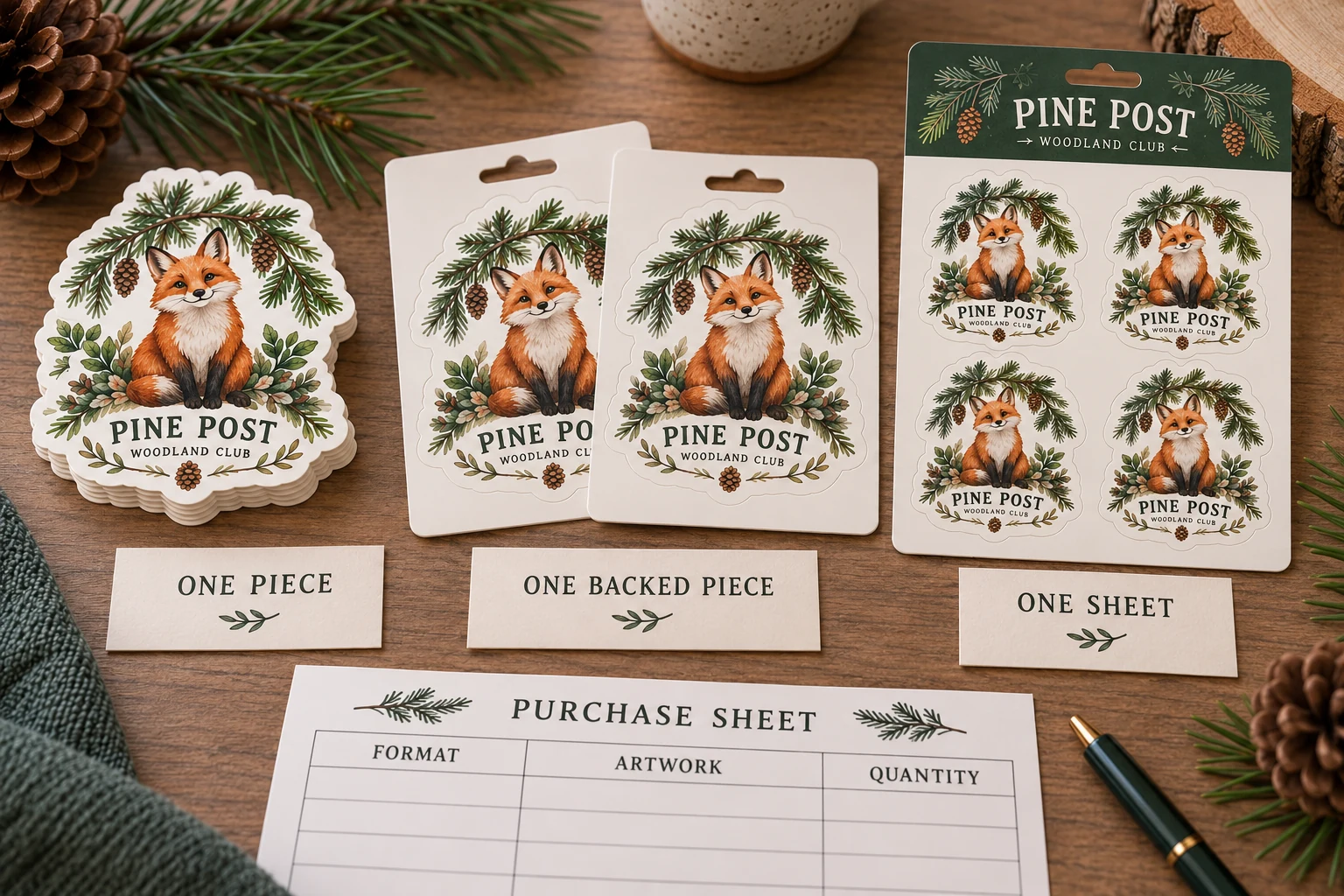
Name the unit the warehouse or customer will receive: loose piece, backed piece, complete sheet, roll or assembled pack. If a sheet contains several stickers, decide whether the project buys sheets as finished products or treats them as a supply route for individual use. Counting the artwork shapes is not always the same as counting saleable units.
For a retail pack, identify how many pieces and which designs belong inside. A price per loose sticker excludes the assembly decision unless the quotation says otherwise. Ask the supplier to restate the unit and the finished quantity instead of comparing an isolated headline number.
An illustrative arithmetic example makes the distinction clear: a project requiring 200 packs with three identified pieces in each needs 600 pieces allocated to that assortment. This is not an MOQ or quotation. The relationship only works if the quantities per design and the assembly scope match the pack plan.
Normalize the fields that change the job
| Comparison field | Record for each quotation | Reason to flag a difference |
|---|---|---|
| Quoted unit | Piece, sheet, roll or finished pack | Different denominators cannot be ranked directly |
| Design allocation | Quantity for each artwork or SKU | One large run differs from several allocations |
| Construction | Face, print, adhesive and protection as specified | A lower amount may describe another product |
| Finishing and packing | Cut format, sorting, assembly and packaging | Required work may be excluded |
| Review scope | Proof or sample assumptions and charges | Approval work may have separate terms |
| Delivery scope | Destination, shipment basis and stated exclusions | Product price alone is not an arrival budget |
Do not assign a zero cost to a blank field. Mark it as unknown and request clarification. An exclusion may be reasonable; it still belongs in the comparison if another quotation includes that task.
Compare the total against the same finished quantity
Calculate each proposal using its stated units and quantities. Keep product charges, separate one-time or review charges, packing and delivery components visible where quoted. If a charge is already included in the product amount, do not add it again.
For a project budget, distinguish confirmed supplier charges from estimates or costs that another party must confirm. Destination-specific duties, taxes and import responsibilities depend on the actual transaction. This guide does not supply tax advice or a guaranteed landed price; obtain current information for the agreed terms.
If suppliers quote different quantity breaks, request an aligned alternative or keep the difference explicit. Dividing a larger-order total by its piece count does not prove the smaller order can be purchased at that unit amount. Unsold or unnecessary stock is part of the buyer's commercial decision.
Separate setup allocation from required variety
A single design and several designs with the same total number of pieces may involve different production, review and sorting tasks. Explain the quantity per design rather than assuming that total volume alone determines the quotation. Ask which requirements affect the proposed pricing route.
Standardizing dimensions, construction or packing across variants may be worth discussing. Removing needed variants may also weaken the buyer's test or retail assortment. Make the tradeoff against the actual project objective, not an unsupported rule that fewer SKUs are always more economical.
The roll versus sheet workflow comparison addresses format selection. A different supply format may change the application task as well as the quotation. Compare the work the buyer must perform after delivery before describing the new format as a saving.
Ask for useful alternatives without weakening the requirement silently
Identify must-have requirements and negotiable presentation choices. A decorative finish, individual bag or special shape may be optional in one project and central to another. Request an alternative with the changed field named, so the buyer can decide whether the lower scope still serves the intended product.
For assembled products, the packing instruction guide helps define sorting, identification and carton requirements. Omitting these from a price enquiry may simply move the work and cost elsewhere; it does not make the task disappear.
If an appealing unit price depends on a construction change, review that change separately. Do not quietly trade away required readability, adhesion or use conditions to hit a comparison number. A quotation is useful when it describes a product the buyer can accept.
Request a restated comparison before accepting
Bring the accepted specification and monetary scope together before release. The factory ordering guide covers the approval sequence; this cost comparison supplies the unit and inclusions that sequence needs.
Send ZC Labels a comparable-quotation brief with final dimensions, artwork count, quantities by design, required delivery unit, construction or use conditions, packing and destination. Attach competing scope descriptions if appropriate, with sensitive details removed. Those inputs help establish whether the difference is a price difference, a quantity difference or a different finished product.