
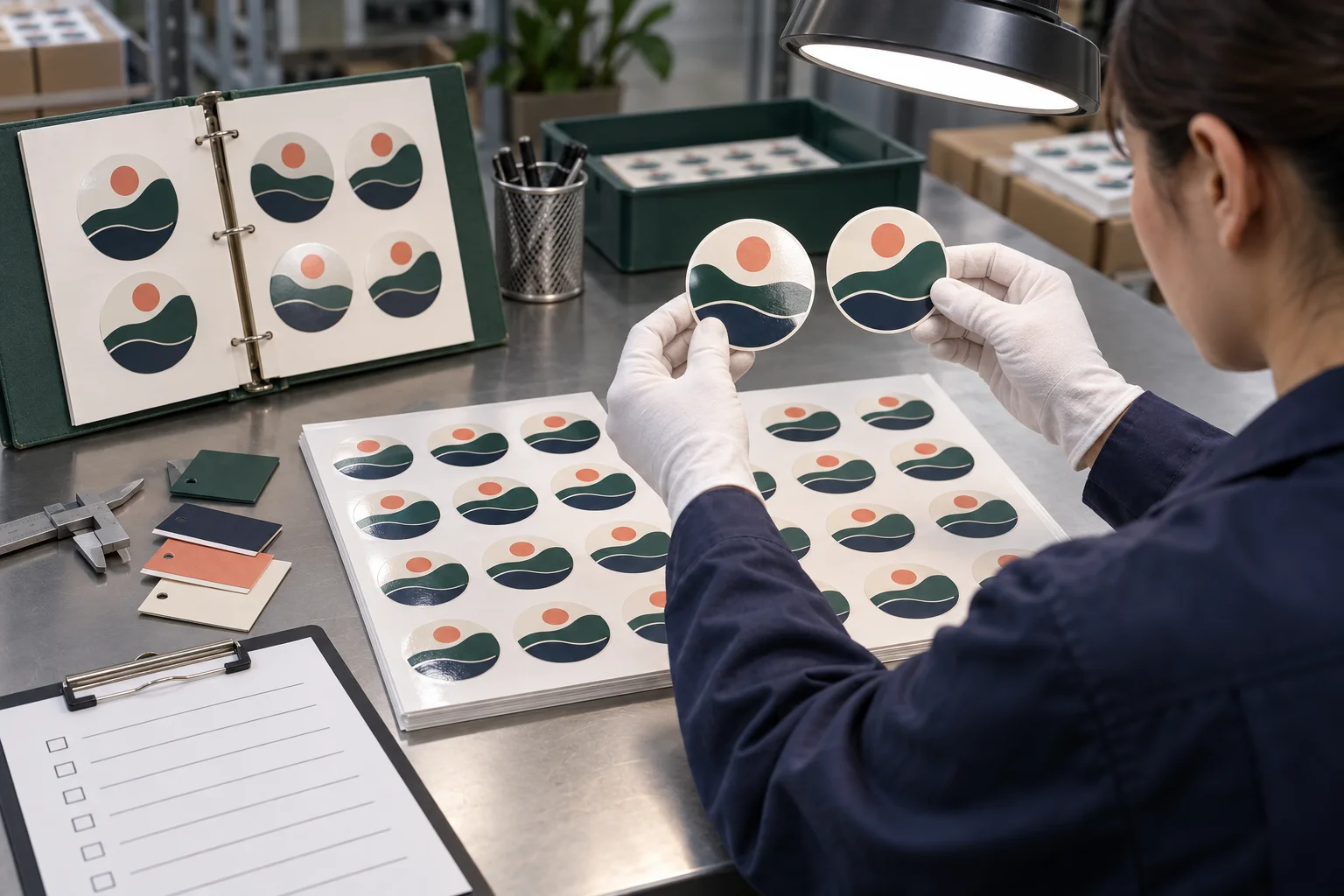
The shortest reorder email is also the one that makes production teams nervous: same as last time, please.
It sounds efficient because both sides remember the product. They may not remember the same product. The buyer remembers the finished label on a box. The artwork folder contains three finals. The invoice lists a material name but not the white-ink layer. Packing changed in a message thread. Everybody is confident until the new roll reaches the applicator.
Treat a Reorder as a Controlled Comparison
Start with the previous order number, but do not stop there. Retrieve the approved artwork, proof, specification and physical retain sample. Then compare them with the new request. The aim is to identify what stays fixed and what has changed.
A repeat order is not automatically lower risk. The brand may have updated a URL, ingredient line or color. The package supplier may have changed a coating. A new quantity may require different roll or packing decisions. Familiarity can hide these changes better than a new-project checklist.
| Reorder item | Evidence to check | Typical hidden change |
|---|---|---|
| Artwork | Approved file and proof version | Text, QR destination, color or cutline revision |
| Construction | Material, adhesive and finish record | Supplier substitution or new application surface |
| Dimensions | Finished size and shape drawing | New bottle, box or jar tolerance |
| Roll setup | Core, unwind, gap and roll diameter | Different labeling machine or co-packer |
| Packing | Count, sequence, bagging and carton marks | New warehouse or mixed-SKU requirement |
Lock the Artwork Version Before Price Becomes the Conversation
Buyers often request price first and promise to send the updated file later. That is reasonable for budgeting, but production approval must use a named final version. Record the file name, dimensions, cutline and approval date. For variable SKUs, keep a list showing quantity and file version for each design.
Re-scan QR codes and recheck barcodes when present. Proofread dates, URLs and regulated content. The previous batch can confirm construction; it cannot confirm that current information is still correct.
Use the Physical Sample for Color and Finish
A screenshot of the old label is weak color evidence. Retain several clean samples from an approved batch and store them away from strong light, heat and contamination. Compare the new proof or sample under consistent lighting.
Even with a retain sample, print and material processes have tolerances. Decide which colors are critical and what level of variation is commercially acceptable. If a material, finish or print route changes, treat the reorder as a new comparison rather than promising an invisible transition.
Confirm the Package Has Not Quietly Changed
A label that worked on the old jar may lift from a new coated jar. A wrap designed for one bottle diameter may overlap on another. Ask whether the container supplier, mold, coating, filling process, storage temperature or cleaning routine has changed.
This question feels excessive until it finds the one change that matters. Then it is the cheapest sentence in the order.
Roll Labels Need Machine Memory
For hand-applied stickers, the finished piece may be enough to identify orientation. For machine-applied roll labels, retain the core size, unwind direction, label orientation, gap, liner, maximum diameter and labels per roll. Confirm whether the co-packer or applicator has changed.
Do not infer unwind direction from a photo alone. Use a written diagram or approved roll sample. Rewinding a completed job consumes time and introduces handling that nobody wanted to buy.
Reorder Approval Checklist
- Previous purchase order and factory job reference
- Approved artwork file and proof version
- Finished size, shape and cutline
- Material, adhesive, white ink and finish
- Critical color reference and retained sample
- Current container or application surface
- Quantity by SKU or artwork
- Roll core, unwind, gap and labels per roll
- Bagging, sequence, carton and warehouse requirements
- Written list of every intentional change
Our Practical Recommendation
Create one reorder sheet for each recurring product family. Update it only after an approved change and keep the retired version. The sheet does not replace a proof, but it stops memory from becoming a production specification.
The experienced buyer is not the one who says same as last time with confidence. It is the one who can show exactly what last time was.