
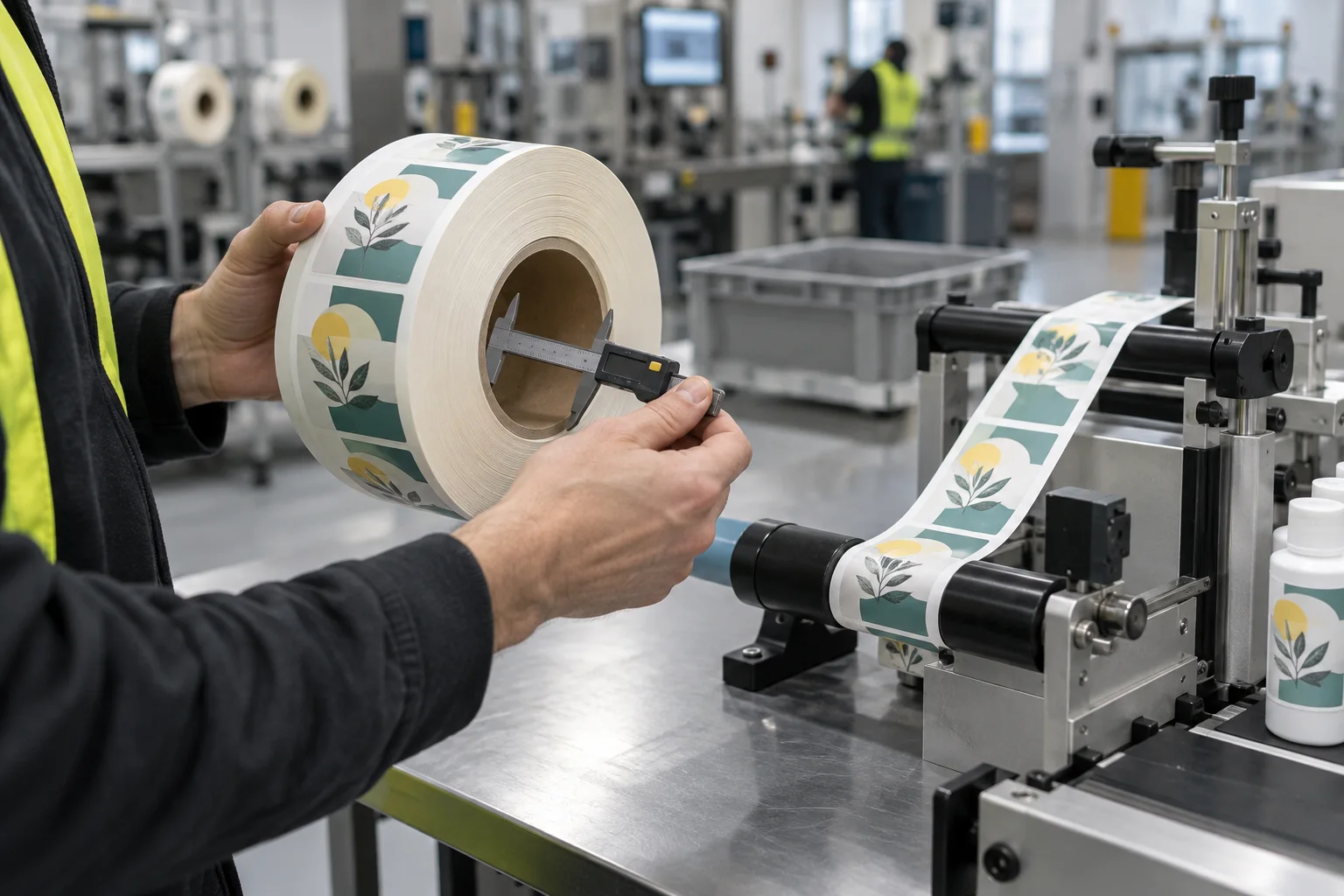
Roll labels can be printed beautifully and still arrive unusable on the packing line. The usual reason is not color. It is orientation: the labels unwind from the wrong side, the top edge leads in the wrong direction, or the core does not fit the applicator.
This is one of those specifications that feels minor until production stops. We prefer to settle it with a machine diagram before the order, not with a phone call beside a waiting labeling line.
Unwind Direction Has Two Parts
First, confirm whether labels face outward or inward on the roll. Second, confirm which edge of the artwork leads as the web feeds forward: top, bottom, left or right. A numbered unwind chart can help, but numbering systems are not always used consistently between suppliers and machine teams.
The safest instruction combines a marked diagram, a photo of the roll path and an arrow showing web travel. Include a correctly applied package so the factory can see the intended final orientation.
| Specification | Why it matters | Best evidence |
|---|---|---|
| Labels inside or outside wound | Changes which face reaches the peel plate | Applicator diagram or sample roll |
| Leading artwork edge | Controls final package orientation | Arrow on artwork and package photo |
| Core inside diameter | Must fit the spindle or holder | Machine specification or measured core |
| Maximum roll diameter | Must fit available machine space | Equipment limit and handling preference |
| Web width and liner | Affects tracking, sensing and peeling | Machine requirement |
Core Size Is More Than a Cardboard Tube
The core inside diameter must fit the shaft, chuck or dispenser. A larger roll may reduce roll changes, but it can become heavy and may exceed the applicator's outside-diameter limit. A small core can create tighter curl near the end of the roll.
Do not select core size from the label dimensions alone. Share the machine model or technical requirement when automatic application is involved. For hand application, discuss how operators store, carry and dispense the rolls. Practical handling still matters.
Gap, Liner and Sensing Belong in the Same Conversation
Automatic equipment needs to detect where one label ends and the next begins. Label gap, liner opacity, clear material and registration marks can affect sensing. A transparent label on a transparent liner may need a different detection approach from an opaque paper label.
The die-cut shape also matters. Very irregular outlines, narrow leading edges or excess matrix removal may change how the label releases at the peel plate. The artwork and the machine setup should be reviewed together.
Hand Application Is More Forgiving, Not Specification-Free
A person can rotate a jar or turn a roll around. That flexibility does not make every layout convenient. If workers apply hundreds of labels, consistent orientation and manageable roll weight reduce unnecessary motion. Ask which hand holds the package, how the roll is dispensed and whether labels must be counted in fixed quantities.
Roll Label RFQ Checklist
- Manual, dispenser or automatic application
- Machine model or written roll specification
- Inside-wound or outside-wound requirement
- Leading edge shown with a web-direction arrow
- Core inside diameter
- Maximum outside roll diameter
- Label gap, web width and liner requirement
- Labels per roll or maximum roll weight
- Clear-label sensor requirement
- Package photo showing final label orientation
Our Honest Recommendation
Never approve unwind direction from a number by itself. Send the number if your system uses one, then add a drawing and a machine requirement. Three minutes spent confirming the web path can prevent an entire roll order from becoming a rewinding project.