
Suppose a designer approves the PDF. Procurement forwards the email with “approved” in the subject line. The sample on the desk came from an earlier project, and nobody has recorded whether it uses the adhesive proposed for this order. Production can receive a clear instruction to proceed while the buyer still has an unanswered application question.
For sticker samples and digital proofs, I would separate permission to reproduce the artwork from permission to release the complete specification. An approval should name the question it answers, the version it covers and the items still open. That gives the next person something more useful than a reassuring picture.
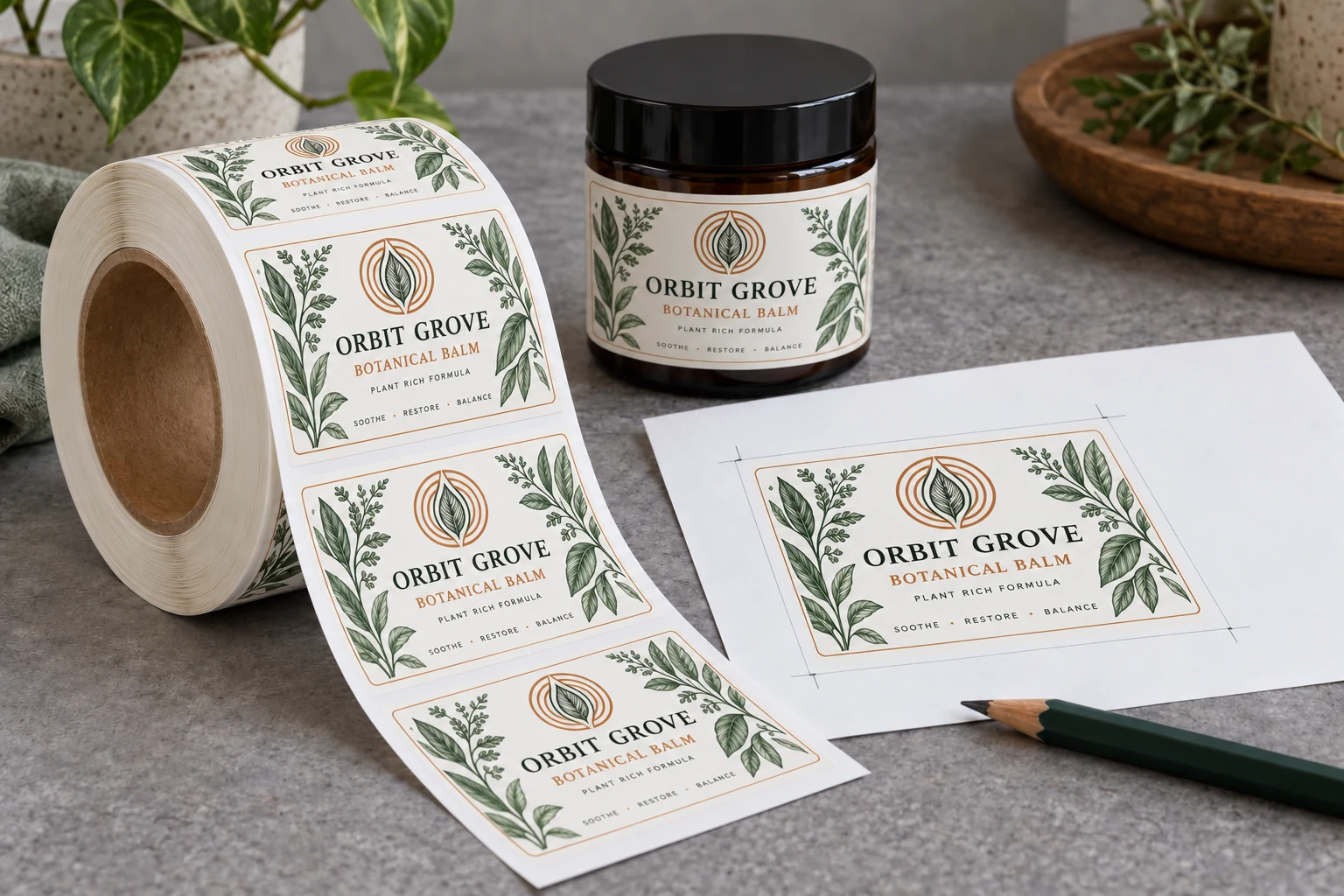
Start with the question that could stop release
Write down what remains uncertain before choosing a sample route. “We want to see quality” is too broad to tell a supplier what to prepare. You might need to verify the smallest product name, the appearance of a finish, the way a cut edge fits the container or the behavior of the proposed construction during use. Those are different requests.
A digital proof can record artwork content, dimensions, orientation and identified production areas. It cannot let someone feel a surface or observe adhesion on their own package. A stock material reference can help discuss texture or finish, but its usefulness depends on whether it represents the construction under consideration. An unrelated attractive sample should not silently become the order standard.
Identify the consequence of leaving each question open. If the design owner can approve text while the packaging owner checks fit, let those decisions move separately. If the unresolved item changes the dimensions or print construction, explain why artwork approval remains conditional. Parallel work is useful when the dependencies are visible.
Give each reference a defined job
| Reference | Decision it can help with | Information still needed |
|---|---|---|
| Identified digital proof | Content, layout and recorded production instructions | Physical appearance and use questions outside its scope |
| Existing material reference | A bounded discussion of an identified material or finish | Whether it represents this order and application |
| Project-specific physical sample | The particular appearance, fit or handling points it represents | Differences from the proposed bulk construction or process |
| Applied sample on the buyer's package | Observations under the agreed application and use conditions | Any unrepresented conditions and acceptance responsibility |
This is a planning table, not a description of a promised ZC Labels sample service. Ask which route is available, what it represents, whether there is a charge and what timing can be confirmed. An ordinary stock sample may be the sensible first step when the open question is only the feel of a finish. A bespoke sample is justified by the decision it needs to support.
Make the proof version unambiguous
Record the file name, revision, final size and SKU against the approval. Check the exported document rather than assuming that the editable file and PDF contain the same change. Include any white-print areas, cutting instructions and supply-format notes relevant to the order.
Keep the approval language specific. A useful internal note might say that the product wording and layout in a named revision are accepted, while application suitability remains pending. This is illustrative wording, not a substitute for the parties' own order terms. The important part is that “pending” survives when the email is forwarded.
When a proof changes, identify which previous decisions the change affects. A corrected phone number may need content reapproval without another material reference. A larger label or different white-print plan may affect a physical review as well. Do not automatically repeat every step, and do not assume every earlier sign-off still applies.
Ask what the physical sample actually represents
Connect the sample to its artwork revision, size, face material, adhesive, finish and delivered format where those details are known. If a detail differs from the proposed order, record the difference beside the observation it may affect. “Same appearance, different construction” is a limitation worth keeping visible.
For color-critical work, the color-reference approval guide explains a separate decision: which reference controls the comparison. A sample can exist without being an agreed color standard. Likewise, a successful hand application does not itself approve an automatic line.
Agree who will observe the sample and who can accept the relevant result. Procurement can coordinate the record; it should not invent technical acceptance limits on behalf of the responsible team. If the buyer needs a formal method, have that method and its interpretation agreed before describing the sample as passed.
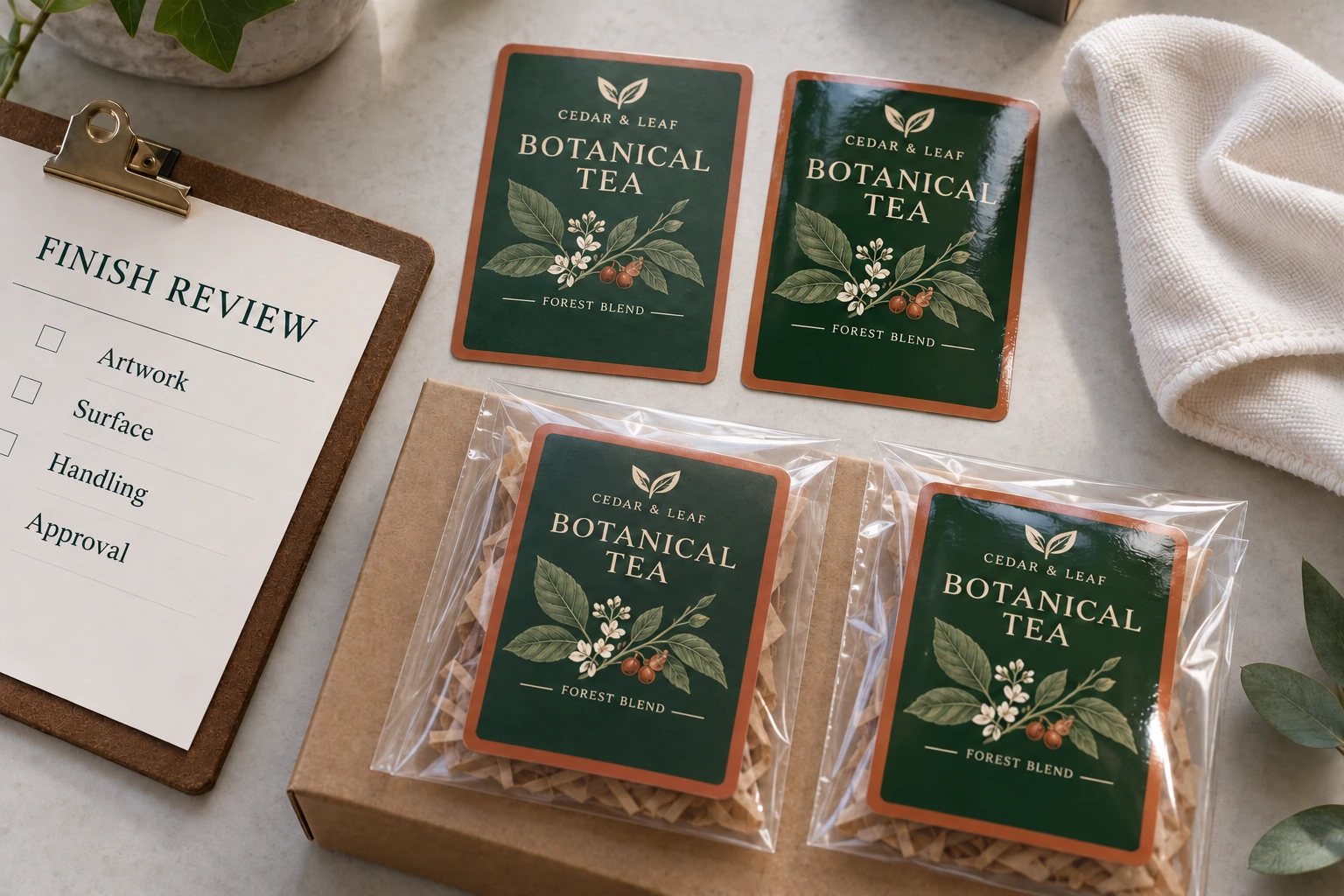
Close the open items before the release instruction
Use a short release record with four fields: question, controlling reference, decision owner and status. Attach comments to the exact item. “Artwork accepted” and “material suitability pending” can coexist until the dependency is resolved. Where the supplier needs one final release, assemble the separate decisions into that instruction explicitly.
There is a cost and timing tradeoff. Extra samples can clarify a meaningful uncertainty, but repeated requests with changing artwork can also leave everyone comparing different versions. Freeze the purpose of the next sample first. If a simpler reference answers the question, ask about that route. If nothing available represents the intended use, keep the limitation open rather than approving by analogy.
For the document handoff itself, use the artwork preparation guide. This article's job is to control the scope of approval, not to turn every sampling discussion into a complete file-preparation exercise.
Send ZC Labels your proof and sample review brief: artwork revision, final dimensions, the particular question each sample must answer, package photos or specification, application conditions and quantities by SKU. Include existing reference details and the decisions already accepted. Those inputs let the next discussion identify the missing evidence instead of treating one approval email as an answer to everything.