
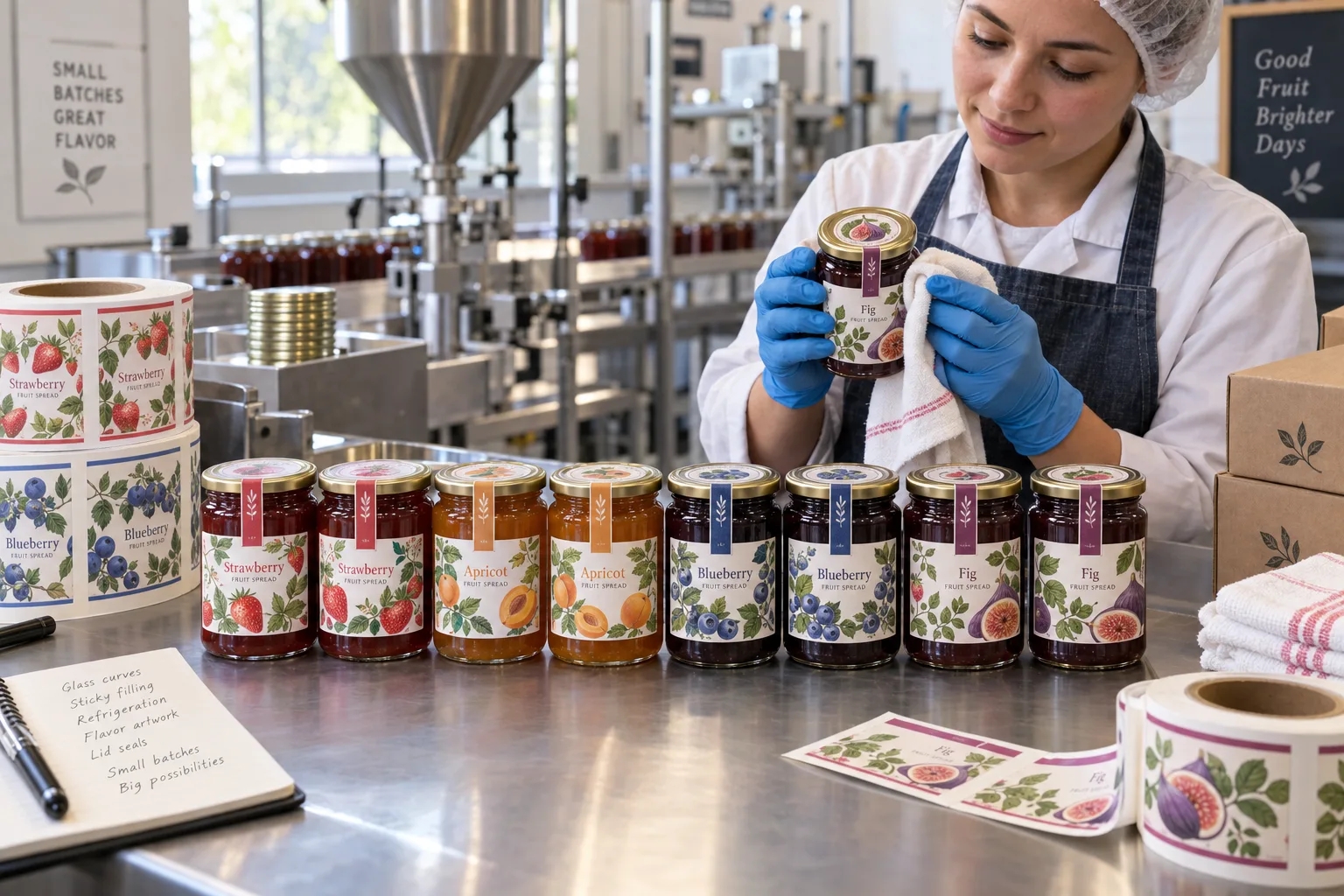
Jam labels often arrive at our desk looking finished. The fruit illustration is charming, the script is carefully chosen and every flavor has a color. Then we ask for the actual jar, and the useful conversation starts.
Glass jars are not just cylinders. They have shoulders, heel curves, mold seams and sometimes embossed panels. Filling adds heat, sugar residue and wiping. Refrigeration may add condensation later. A label that wins on the artwork screen can still lose on the packing table.
Start With the Filled Jar and the Wiping Routine
Measure the straight body panel on several jars, not the overall height. If the label enters a changing curve, its corners or seam may lift. Make a paper sample at the proposed size and place it on warm, room-temperature and chilled jars according to the real process.
Sticky residue is a separate issue. The best adhesive cannot compensate for syrup under the label. Ask when the jar is labeled, how the outside is cleaned and how long it dries before packing. We would rather reduce label size slightly than let the edge sit in the area operators struggle to wipe.
| Jar condition | Common failure | Useful test |
|---|---|---|
| Warm after filling | Moisture or weak initial bond | Apply at real temperature and inspect after cooling |
| Sugar residue | Edge lift and staining | Compare normal wiping with a clean control jar |
| Refrigerated storage | Condensation and paper change | Chill, remove, handle and repeat |
| Gift-box packing | Scuffing against dividers | Pack, transport and unpack filled jars |
Fruit Artwork Should Separate Flavors at a Glance
Jam is one of the easiest categories to make visually rich without copying anyone. Original strawberry leaves, apricot halves, blueberry clusters, fig cross-sections and citrus blossoms give each flavor a useful identity. Blank labels are not a compliance strategy.
The discipline is keeping the family together. Use one logo position, one product-name hierarchy and one back-information grid. Change the fruit illustration and accent color. This makes a mixed gift box lively while reducing the chance that a raspberry label is packed onto strawberry jars.
Use the Lid, but Give It One Clear Job
A round lid label helps products stored or displayed from above. A narrow bridge seal can connect the lid and body. Those are different jobs. If opening evidence matters, define what the seal should do after the lid turns and test it on the exact lid coating and glass.
Do not add fake inspection badges or country-of-origin seals just to fill the lid. A small original fruit mark, flavor name or batch field is more honest and more useful. Certification, organic, origin and award statements need current evidence and market approval.
Keep Required Information Readable
Ingredients, allergens, net quantity, storage, date coding and responsible-business information vary by market. The brand supplies approved wording; our job is to preserve space and point out when the final size becomes unrealistic.
Print the complete label at 100 percent. Put it on the jar and read it under shop lighting, not only at 300 percent zoom. If the story no longer fits, move secondary copy to a neck tag, carton or website rather than shrinking everything.
Our Jam Label Test List
- Measure several final jars and lids
- Mark the straight glass panel and mold seams
- Apply labels at the real production temperature
- Test normal wiping, sugar residue and refrigeration
- Check every flavor illustration and accent color
- Confirm lid-label or bridge-seal purpose
- Run gift-box, carton and shelf-rub tests
- Keep an approved filled jar for reorders
What We Would Put in the Quote Request
Send jar and lid dimensions, glass photos, filling temperature, labeling point, wiping routine, storage conditions, flavors, quantities by SKU, artwork, date-code area, lid-label needs and final packing. State whether any seal has a defined opening-evidence requirement.
The label does not need to be quiet to be responsible. It can carry a generous original fruit illustration and still respect the curve, the sticky process and the information customers actually need.