
A photograph of a black metal container is not a complete brief for a strong adhesive. The metal is beneath a coating; the label will touch the coating. The photo does not identify that finish, whether it changes between batches or whether the surface is dry when labeling happens. Naming an adhesive now would make the missing information look resolved.
For label adhesive specifications, build a surface brief before asking for a recommendation. Identify the contact surface, application route, service conditions and required end state. The useful output is a bounded selection discussion and representative review, not a universal instruction to use the strongest glue.
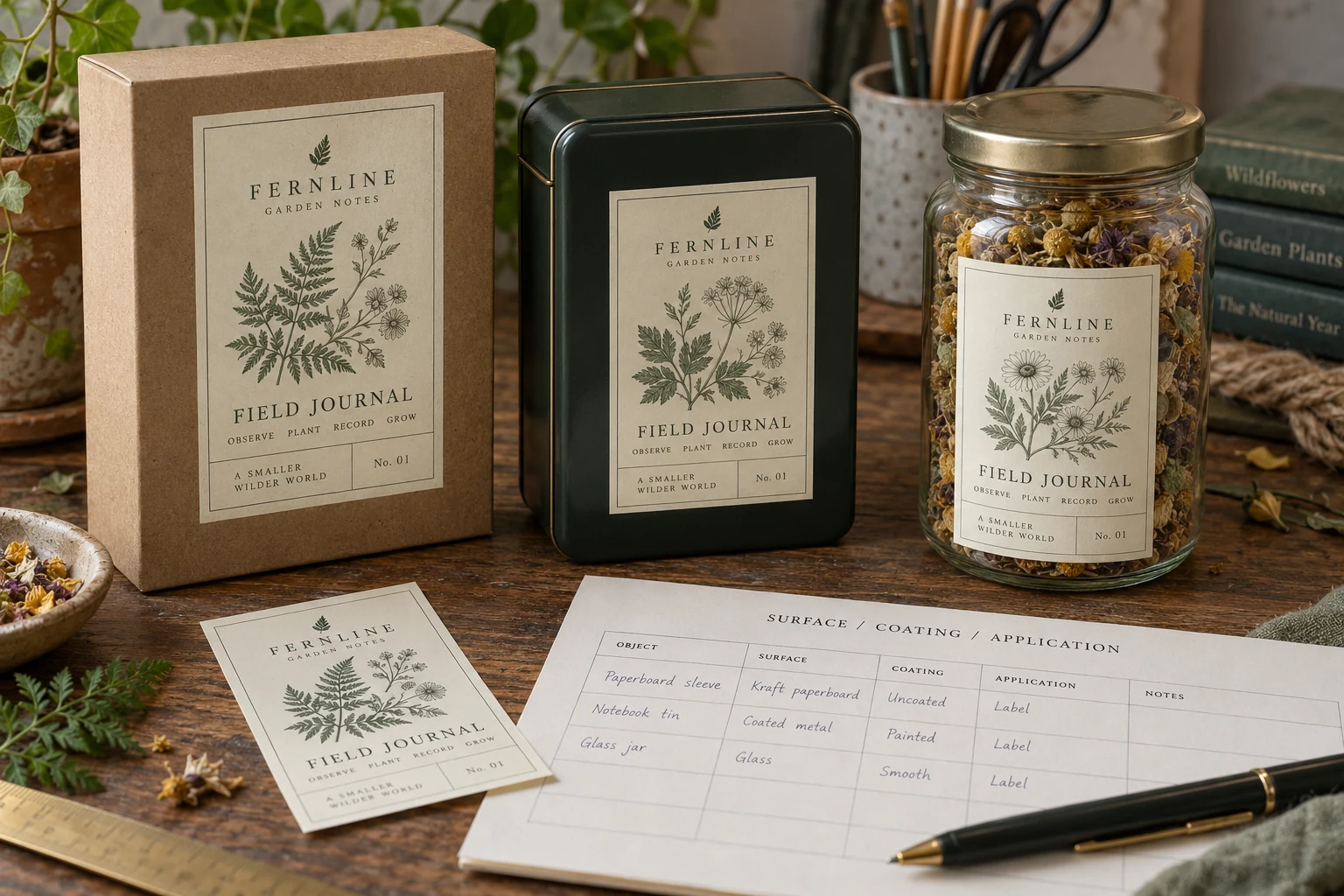
Separate the contact finish from the object below it
Record the package material using information from the responsible packaging supplier where possible. Then record any coating, paint, varnish, print, treatment or other finish in the label area. A coated paperboard box is not simply “paper,” and a painted metal part does not present bare metal to the adhesive.
3M's substrate guidance explicitly treats surface condition and coatings as selection factors. That supports asking what the label actually contacts. Its product recommendations and performance data remain specific to their own scope; they are not evidence that a particular ZC Labels construction has been approved.
Include the version of the package or component. Similar-looking containers from different suppliers may have different contact surfaces. Recycled content, treatments or finish changes should be reported when known, but do not diagnose a problem from those words alone. The purpose is to expose variables that need review.
Describe the label area at useful scale
A wide photograph explains the package. A close view explains the label panel. Include seams, recesses, texture, curves and any change in shape during normal handling. Mark where the proposed label starts and ends, rather than expecting the supplier to infer the location from a lifestyle image.
Send final dimensions or a clearly identified proposed size. If the label crosses an edge or joins two parts, explain why. A packaging seal, identification label and decorative sticker can occupy the same surface while having different acceptance requirements.
Where geometry is still unresolved, it may be sensible to review a smaller panel or a different shape alongside construction options. Changing the adhesive is only one possible response to a brief; it should not conceal an unsuitable label position.
Record application separately from service
| Brief field | Useful information | Do not assume |
|---|---|---|
| Surface identity | Material, actual contact finish and supplier version | Appearance identifies the chemistry |
| Application condition | Dryness, temperature context and normal handling | Later use conditions describe initial contact |
| Method | Hand or equipment application and relevant process | A hand sample approves the line |
| Service | Handling, movement, exposure and required duration | A generic material name proves suitability |
| End state | Retain, remove, reuse or another defined requirement | More adhesion is always the desired result |
Ask the supplier what preparation is suitable for the actual label and surface. Do not introduce an unapproved solvent or cleaning treatment merely to produce a good-looking sample. The sample route should represent a process the buyer can actually use.
If labels will be applied automatically, the equipment specification remains a separate input. Adhesive compatibility does not settle roll direction, web handling or first-run acceptance. The automatic-applicator review guide addresses that later release decision.
State what attachment must accomplish
Explain what the label must survive and whether removal matters. A short campaign on a delicate printed carton and a permanent identification mark on a reusable object may call for different priorities. “Permanent” does not mean indestructible; “removable” does not define residue, staining or substrate damage by itself.
Use the retention and removal guide to define those two stages. This surface brief supplies the inputs to that discussion. It should not pretend that a product-family word resolves the required result.
For moisture, formula contact, temperature or cleaning, list the actual routine and who can confirm its details. Keep the application environment visible as well. If either is unknown, ask for clarification instead of approving a construction against an invented condition.
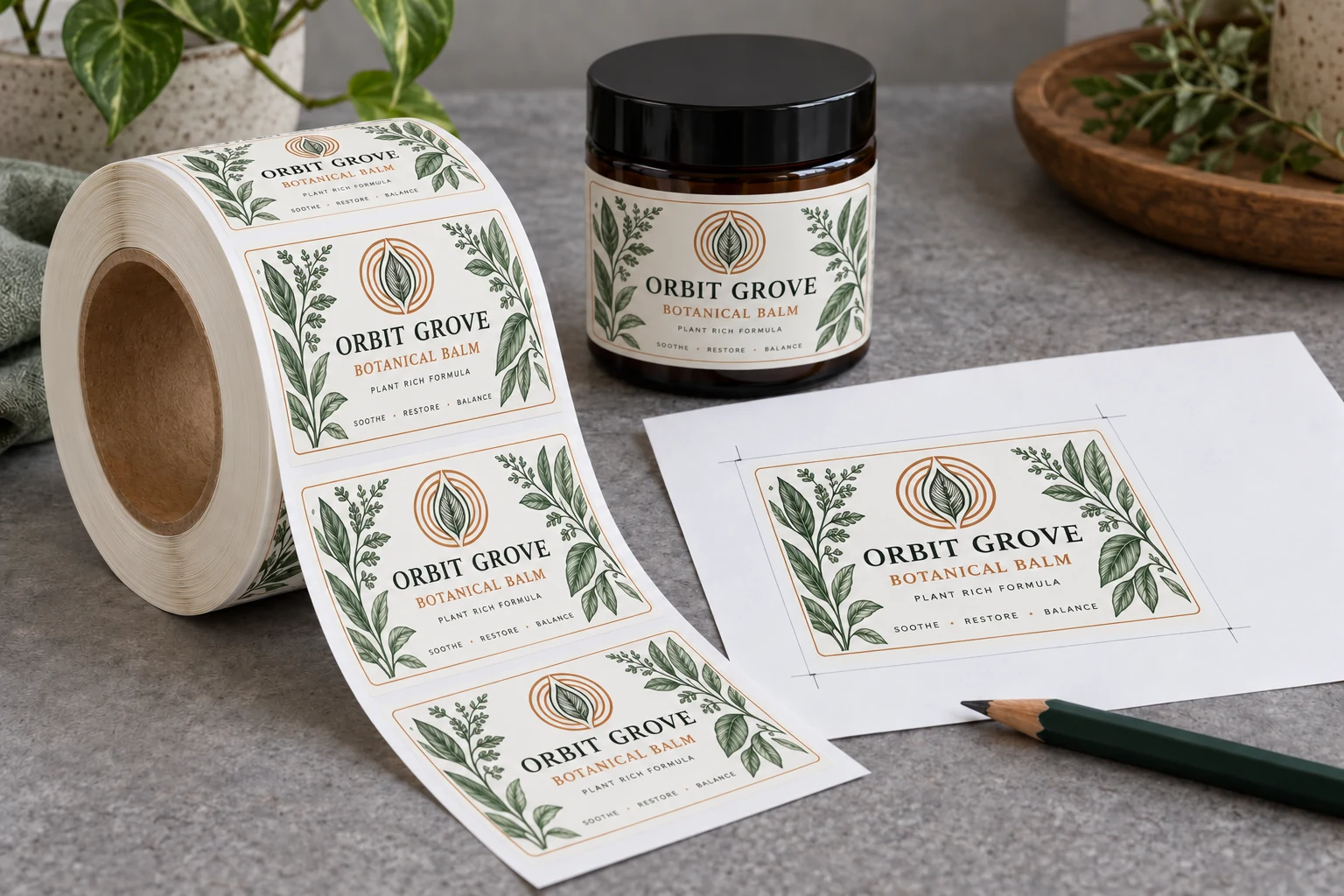
Use a representative sample to narrow the uncertainty
Identify the proposed construction and the surface represented in a review. Keep the package version and artwork or label size attached to observations. Ask the responsible technical parties to agree the relevant conditions and acceptance criteria. A generic swatch cannot answer every question about a shaped, coated or flexible package.
Separate observations from causes. Edge lift or a bubble is an observation; a photograph alone does not prove a particular adhesive fault. If a project is already showing defects, use the bubble investigation guide to organize that investigation rather than rewriting a pre-order surface brief as a diagnosis.
If the proposed construction is unsuitable, consider the available alternatives with the actual purpose intact. Options may include another label construction, a changed label area, another attachment route or a different package finish. Their feasibility and tradeoffs need confirmation; none is a guaranteed fix from a general article.
Send an actionable surface brief
For a surface and adhesive discussion with ZC Labels, provide the package specification or known material, contact coating, wide and close photos, intended label area, dimensions, application method, relevant conditions in use and the required end state. Add quantities by SKU and any available identified sample.
Mark unknowns plainly. A short brief with an honest gap is more useful than a confidently selected adhesive copied from another job. It lets the buyer and supplier decide which evidence to obtain before treating the construction as approved.