
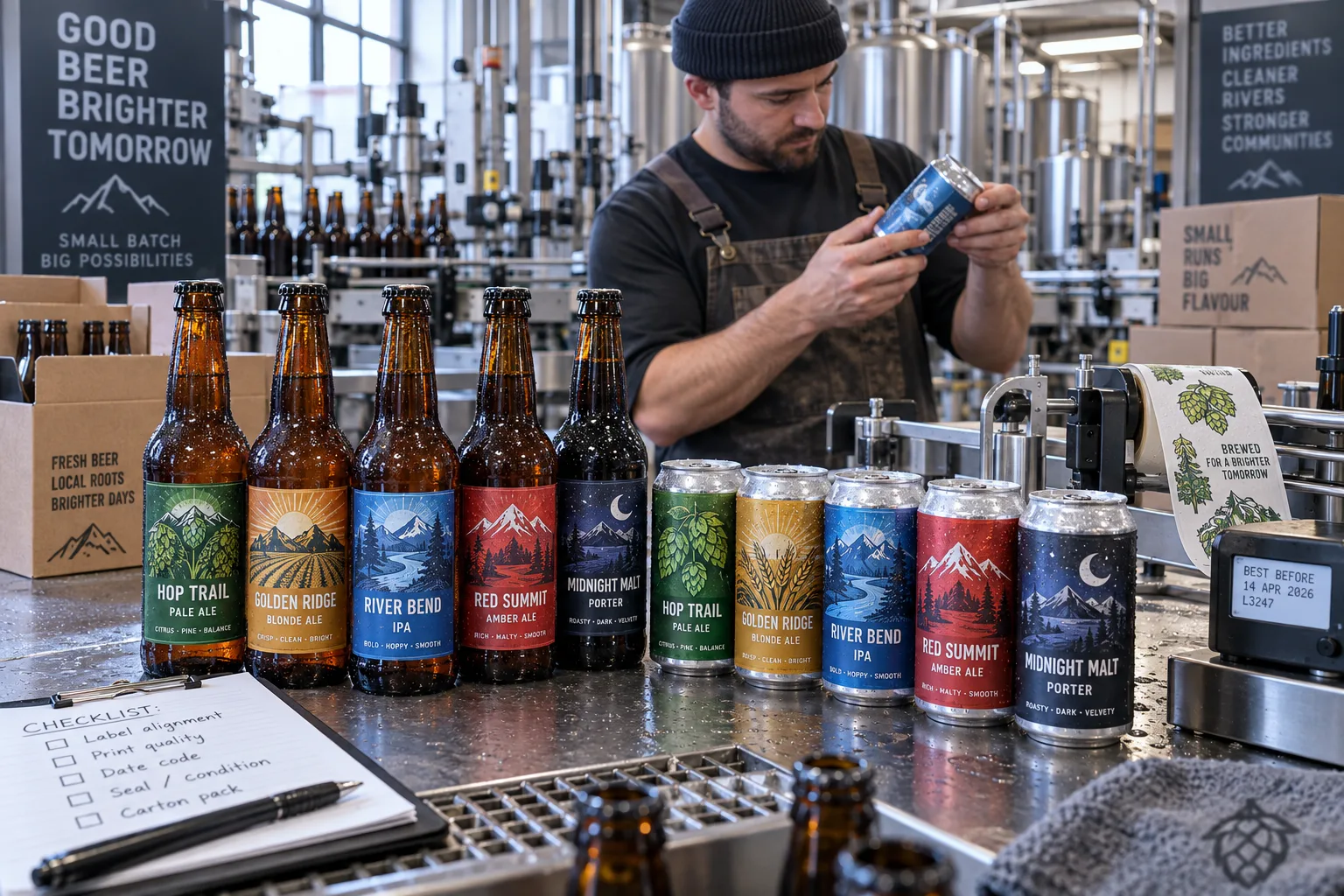
Craft beer buyers rarely ask us for a label that disappears. They want color, attitude and a story that can be recognized from the refrigerator door. Fair enough. The problem comes when the artwork is designed for a dry mockup and the package is labeled cold, carried wet and rubbed inside a carton.
We start by separating the bottle job from the can job. They may share a campaign, but they do not share the same surface or production behavior.
This page compares the two package types and the visual system they can share. If the can format is already fixed, follow the dedicated craft beer can label guide for wrap width, seam placement, condensation and seasonal SKU changeovers. Bottle projects can use the glass-panel checks below without borrowing a can dieline.
Ask Whether the Container Is Dry, Cold or Wet at Application
A clean dry bottle at room temperature is one application. A chilled can carrying condensation is another. Record the container material, temperature, surface treatment and the point in the line where the label is applied.
For glass bottles, check the body curve, mold seams and label panel. For cans, check diameter, top and bottom transitions and whether the label is a partial panel or wrap. If a wrap enters the shoulder or base curve, the edge may lift even when the main panel bonds well.
| Package condition | Risk | Review focus |
|---|---|---|
| Dry glass bottle | Mold seam and curved panel | Size, seam position and carton rubbing |
| Chilled glass bottle | Condensation before application | Surface dryness and initial bond |
| Aluminum can | Full circumference and top curve | Wrap height, overlap and wrinkle control |
| Ice-bucket service | Water, abrasion and handling | Finished pack test under realistic exposure |
Bold Artwork Still Needs a Range System
Original hops, citrus, grain, mountains, brewing tools and geometric characters give a beer range plenty of visual material. There is no reason to retreat to blank labels because copyrighted mascots are off limits.
What matters is control. Keep the brewery name, beer style, volume and required information in stable locations. Change the central illustration, style color and batch name. On a busy shelf, the customer should see both the individual beer and the family it belongs to.
Finish Changes Both Shelf Impact and Handling
Gloss can deepen color and suit bright illustrated work. Matte can reduce refrigerator glare and give detailed line art a quieter surface. Metallic or clear areas can create useful contrast, but only if the artwork is planned around the substrate and any white ink.
Finish names do not answer the durability question. Put labeled bottles or cans through chilling, condensation, case packing, transport and hand service. Inspect seams, edges, scuffing and ink protection after the full cycle.
Leave Operational Space in the Artwork
Small runs often need a date, batch, flavor or barcode change. Reserve a predictable code area instead of dropping a sticker over the main illustration at the last minute. If multiple variants share a base design, define exactly which fields change and who controls the final file names.
Alcohol statements, government warnings, deposit marks and business details depend on the destination market. Awards and competition medals need evidence. We can protect readability and print contrast, but the producer owns content approval.
Our Beer Label Test List
- Separate bottle and can specifications
- Record container temperature at application
- Measure the true straight panel and wrap seam
- Print all required statements at actual size
- Check SKU recognition in a mixed refrigerator display
- Run condensation, ice-bucket and wet-hand tests
- Pack into the real carton and inspect abrasion
- Control date, batch and artwork versions
What We Would Put in the Quote Request
Send bottle or can specifications, filled photos, application temperature, labeling method, package quantities, beer styles, quantities by SKU, artwork, finish direction, date-code method, destination market and carton details. Mention refrigeration, ice-bucket service or other wet-use conditions.
The best craft beer artwork earns attention. The best craft beer label keeps that artwork attached and readable after the customer has pulled the package from a cold, crowded refrigerator.