
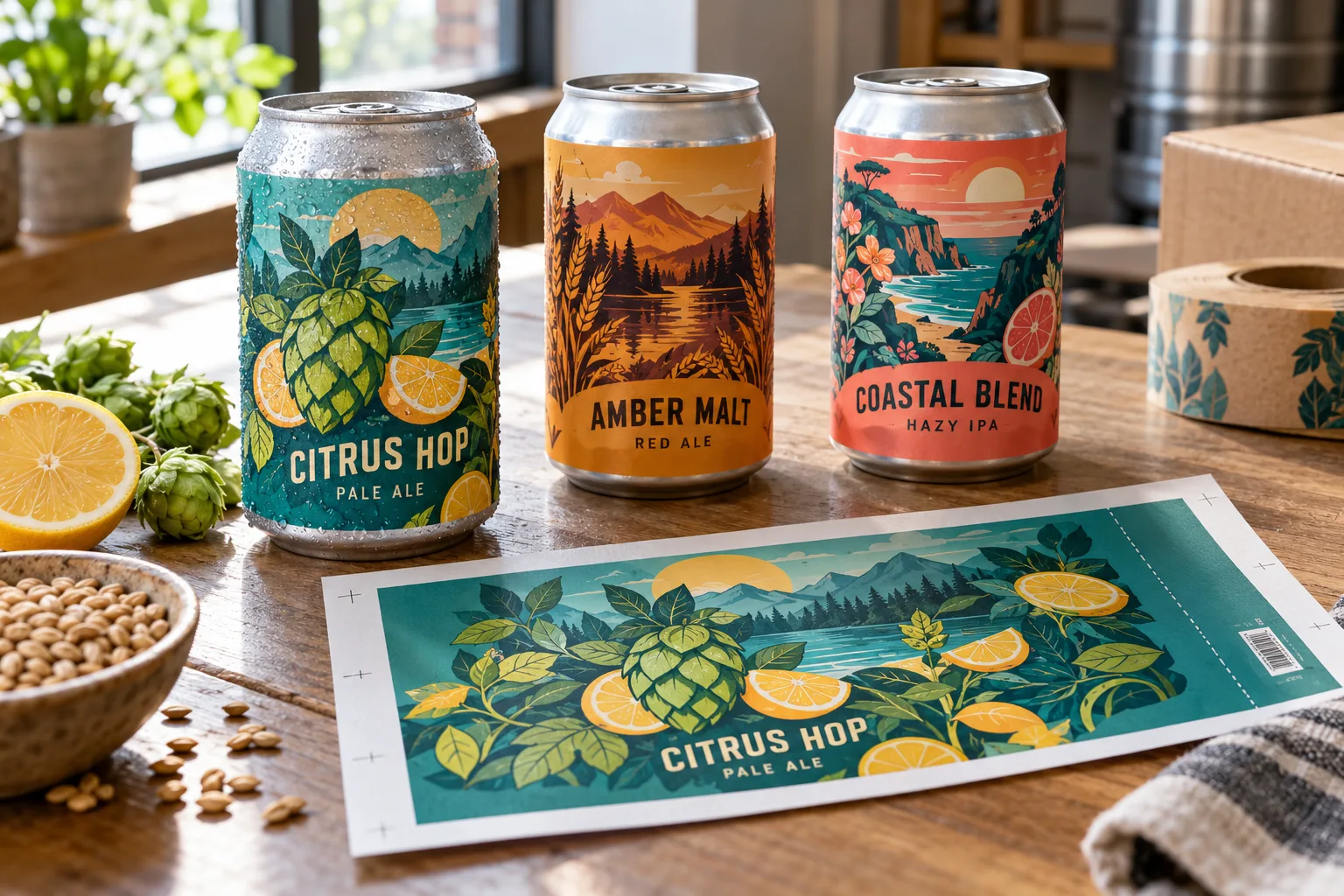
A craft beer can can look excellent on a flat artwork proof and awkward once the label is wrapped. The seam lands beside a flavor name, the bottom edge drifts toward the curved shoulder, and a cold can leaves the front panel wet before anyone takes a shelf photo. I would start with a filled can and a paper wrap, not the screen.
Measure the Can That Will Be Labeled
Record the straight-wall height and usable circumference of the actual can. Leave clearance from the top and bottom curves. Mark the intended overlap or gap on a full-size paper prototype. If the brand changes can supplier or can size, repeat this step. A generic template may be close enough to look plausible but still put important words at the joint.
Place the complete original artwork where a shopper can see it: a hop illustration, a citrus motif and a strong product name can share the front without forcing the style name into the seam. Reserve readable space for owner-approved product information and any later-applied code. The beverage brand must supply and approve market-specific copy; a label supplier should not invent it.
Test the Cold, Wet Route
Ask when labeling happens. A dry can on a packing line is a different application surface from a cold can pulled from storage. Trial the proposed construction at the actual application stage. Chill filled samples, handle them with damp hands and inspect edges, print rub and the joint. If the cans sit in ice water, include that exposure instead of calling ordinary condensation an ice-bucket test.
Small runs often mean many versions. Put can size, beer name, artwork revision, code field, quantity and pack-out order on one approved sheet. Check the first labeled can after every artwork or roll change. A pretty seasonal label is expensive if the wrong flavor reaches the wrong carton.
- Send a filled can and its dimensions
- Mark the seam and front viewing zone
- Trial the true application temperature
- Test condensation and any ice exposure separately
- Approve each SKU and code field
- Check a finished can at every changeover
Our craft beer bottle label guide covers the broader beverage brief. The roll label guide helps with application format. Send the can, artwork and variant list through the quote form.
Questions Before You Order
Can I use my bottle label artwork on a can?
The visual system can carry across, but a can needs its own usable width, height and seam proof. Do not reuse the bottle dieline without measuring a finished can.
Do craft beer can labels need a waterproof material?
Define actual condensation, ice-bucket and handling exposure first. Trial the proposed face material, print protection and adhesive on filled cans.
How should seasonal flavors be controlled?
Keep an approved SKU list covering artwork, product name, code and quantity, then verify the first finished can at each changeover.