
Suppose a quotation request says “waterproof,” but the packing team plans to apply the labels before chilling, while the product team expects the finished package to sit in water. Those statements describe different parts of the job. Selecting a material before separating them can leave the buyer approving a construction against an incomplete requirement.
For custom waterproof stickers, describe when water reaches the package, how it reaches the printed face and edges, and what must remain acceptable afterward. Keep the application conditions separate from the conditions in use. That brief gives the supplier a basis for discussing a construction without treating one broad word as a universal guarantee.
Put the exposure into a sequence
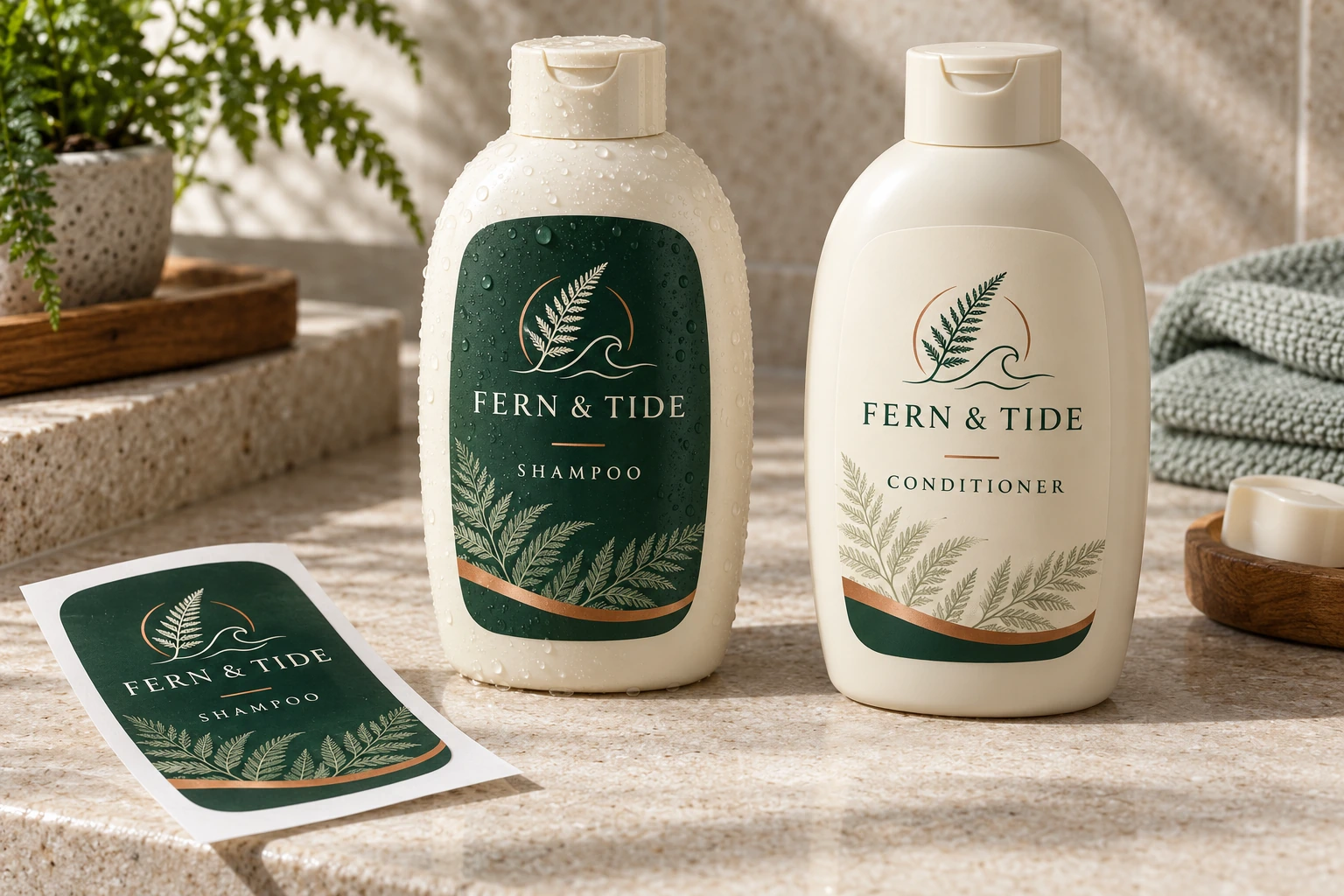
Begin with the package before labeling. Identify the actual surface, whether it is dry at application, how labels are applied and what happens next. A label applied before chilling faces a different initial contact condition from one applied to an already cold, wet package. Describe the intended route rather than assuming the same approval covers both.
Next, separate transport, storage, display and consumer use. Water can appear as condensation, splashes, repeated wet handling, standing contact or immersion. Record the relevant temperature conditions and duration or frequency the project owner requires. If those conditions are unknown, identify who must supply them; do not invent a test schedule to complete the form.
Finally, describe removal or disposal requirements where relevant. A reusable container may need both wet-use retention and a later removal process. “Waterproof and removable” is not a complete instruction until the two stages and their conditions are defined.
Define what the buyer needs to observe
| Part of the requirement | Question to settle | Observation to record |
|---|---|---|
| Application | What is the surface condition when the label is applied? | Initial placement, contact and visible defects |
| Water contact | What contact routine represents use? | Changes to printed face, edges and readability |
| Wiping or handling | What touches the wet label and how? | Scuffing, appearance change or lifting observations |
| Other exposures | Are formula, cleaner, heat or cold involved? | Separate findings under agreed conditions |
| End of use | Must the label stay, peel or enter another process? | The defined final package condition |
This table organizes a buyer brief. It is not a standardized test method and supplies no automatic pass criteria. Have the responsible team specify the method, observations and acceptance requirements for the actual project.
Review the construction as a whole
Ask the supplier to identify the face material, adhesive, print and any protective layer proposed for the task. A face-material name cannot establish the performance of the exposed print or adhesive on the actual container. A protective finish is also a proposed component with its own appearance and use questions.
The paper versus film comparison explains why apparently similar quotations may describe different constructions. If one price includes surface protection and another does not, retain that difference rather than comparing only a unit price.
For label contact, the actual surface matters. 3M's substrate guidance identifies coating and surface condition as selection considerations; it does not provide a ready-made ZC Labels recommendation. If the package has a coating, treatment or flexible panel, include those facts in the brief and ask what representative sample is needed.
Do not let water stand in for everything else
Clean-water exposure does not establish resistance to a product formula, detergent, oil or a particular cleaning process. If those contacts are part of use, identify them separately. The person responsible for the product or cleaning routine should supply the relevant information without exposing unnecessary confidential formulation details in public content.
Rain is not the same requirement as long-term sunlight, outdoor abrasion or repeated temperature change. A freezer project also needs application and storage conditions beyond the word waterproof. Record the combined routine where appropriate, while keeping individual observations distinguishable enough to investigate a problem.
For a shampoo or similar flexible bathroom package, the shampoo-label approval guide addresses bottle fit, formula contact and movement in that specific setting. This article supplies the broader exposure brief; it should not replace a product-specific review where the package adds those demands.
Make the sample answer a defined question
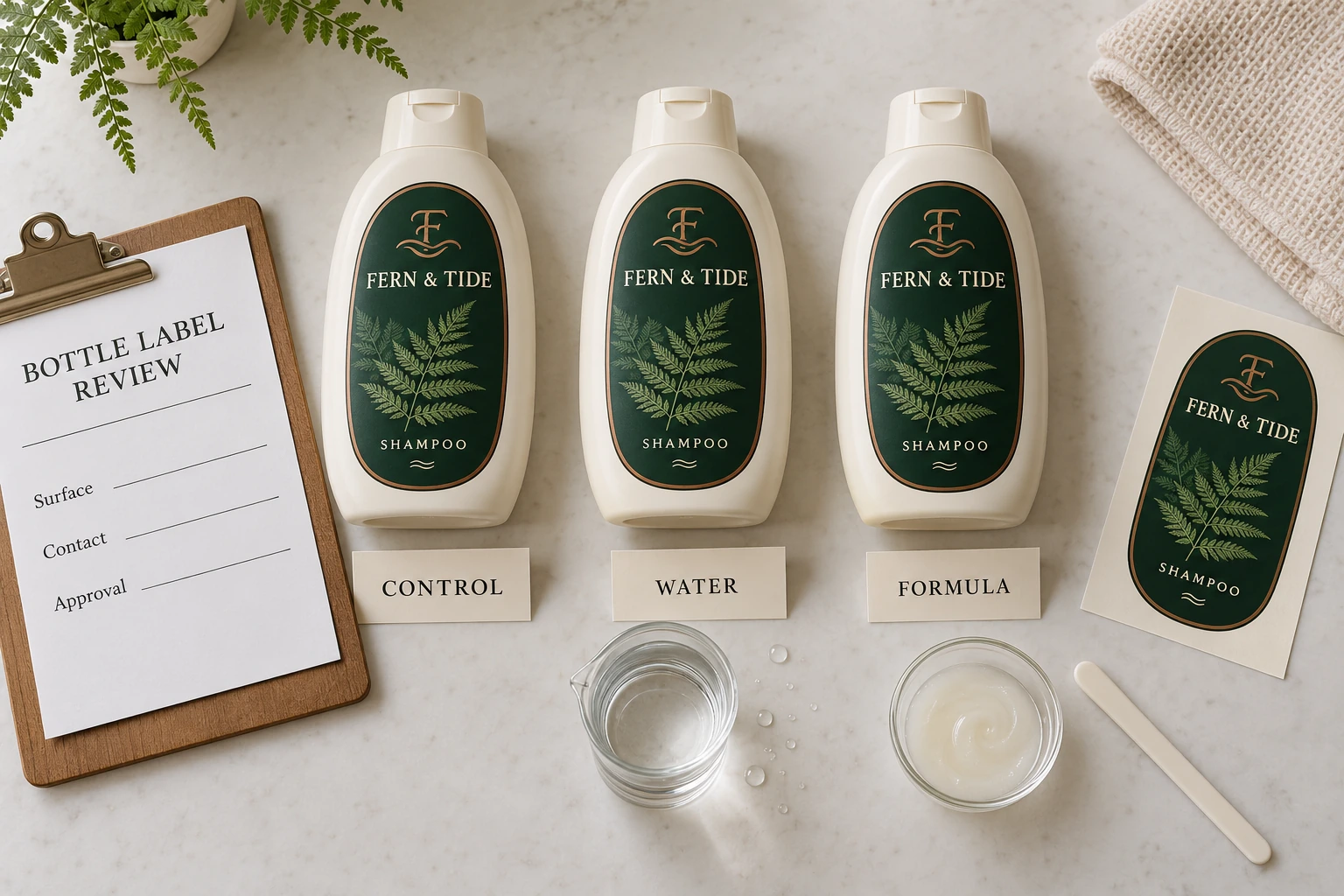
Identify the construction and artwork represented by a sample. Apply it through the intended route to the actual package when the question depends on that package. Retain an unexposed reference if the agreed review calls for comparisons. Record what was observed rather than labeling every appearance change as the same failure.
If a digital proof has been approved, keep its scope visible. It can confirm the print layout and identified instructions, but it cannot show a water-contact result. A generic material sample likewise leaves gaps when its adhesive, print or protective finish differs from the proposed order.
There is a practical tradeoff between adding protection, changing construction and changing the package or label position. An unnecessarily demanding use specification can add cost without serving the actual job. An underspecified one can leave a critical condition unreviewed. Resolve that choice with the project owner instead of hiding it in a reassuring material adjective.
Keep the final claim inside the evidence
Do not extend an agreed water-contact observation into a dishwasher-safe, outdoor-lifetime or certified compliance claim. Any such statement requires its own relevant support and approved scope. A supplier product description, a smooth mockup or this article cannot establish it for a buyer's finished package.
Send ZC Labels your water-exposure brief: package material and photos, final label dimensions, application sequence, relevant water and temperature routine, handling or wiping, other contacts, desired observations and quantities by SKU. Those inputs help decide what construction and sample review to discuss before the order is released.