
Two bottle labels look similar after application. One proposal supplies cut paper labels and expects glue to be introduced during labeling. The other supplies pressure-sensitive labels on a release liner. The buyer compares print amounts while the line team assumes the existing equipment will handle either delivery.
Start by identifying where the adhesive enters the process and which equipment consumes the supplied stock. Wet-glue cut labels and self-adhesive labels can require different application arrangements. Their finished appearance does not establish that one can replace the other on an unchanged line.

Name the delivered item
Ask what arrives from the label supplier: cut labels intended for a stated gluing route, pressure-sensitive roll stock or another identified format. Include the material, finished shape, dimensions, packing and quantity basis. Do not let the shared term bottle label hide a difference in the delivered object.
For pressure-sensitive stock, identify the adhesive and release backing in the proposed construction. For a wet-glue route, identify who supplies and controls the separate adhesive and which label material it is intended to work with. Keep any missing technical reference open instead of selecting glue by appearance or habit.
Krones describes its cold-glue system for cut paper labels on containers. It provides an identifiable example of a distinct equipment route. Its machine specifications and performance statements do not establish that the buyer's line has the same capability or that ZC Labels supplies that format.
Obtain the actual line owner's requirements
Give the responsible equipment owner both proposals. Ask which supported configurations consume each stock and what changes, if any, would be necessary. A similar container or a photograph of another application is insufficient evidence of compatibility.
Do not ask operators to add adhesive to self-adhesive stock, remove a required liner arrangement or improvise a magazine to consume an unsuitable delivery. Any equipment or process change needs its own authorized technical review. A purchasing comparison should expose that work, not turn into a retrofit instruction.
The automatic-applicator review guide covers a representative first run after a route has been selected. Here the earlier decision is which architecture the order and facility can support. A successful hand application cannot settle either machine route.
| Responsibility | Clarify before comparing proposals |
|---|---|
| Delivered stock | Cut label, identified pressure-sensitive web or another format |
| Adhesive | Part of supplied construction or separately introduced at application |
| Equipment | Actual supported configuration for that stock |
| Handling | Packing, loading, replenishment and unused material protection |
| Process inputs | Approved container and applicable operating references |
| Acceptance | Who reviews the representative finished application |
This is a responsibility map. It does not prescribe adhesive chemistry, machine settings, line speed or label tolerances.
Keep the container and use requirement constant
Use the same actual container version and intended label position in the comparison. Describe its contact finish, application condition, later handling and required end state. If one proposal assumes a dry new bottle and another is reviewed on a different surface condition, the apparent route comparison contains an unrecorded variable.
Keep print and finish requirements visible as well. A paper appearance, a transparent region and a decorative effect may affect which options are feasible. Ask the suppliers to identify limitations rather than declaring one technology universally superior for every design.
The adhesive surface brief organizes the contact information. It does not select a separate glue for a wet-glue line. The relevant material and equipment specialists should confirm that complete combination.
Compare operation and changeover work
List the real work associated with each proposal: receiving, storage, stock identification, loading, adhesive supply where applicable, normal cleaning, changeover and waste handling. Obtain the actual requirements from the responsible parties. Do not borrow another manufacturer's speed or downtime percentage.
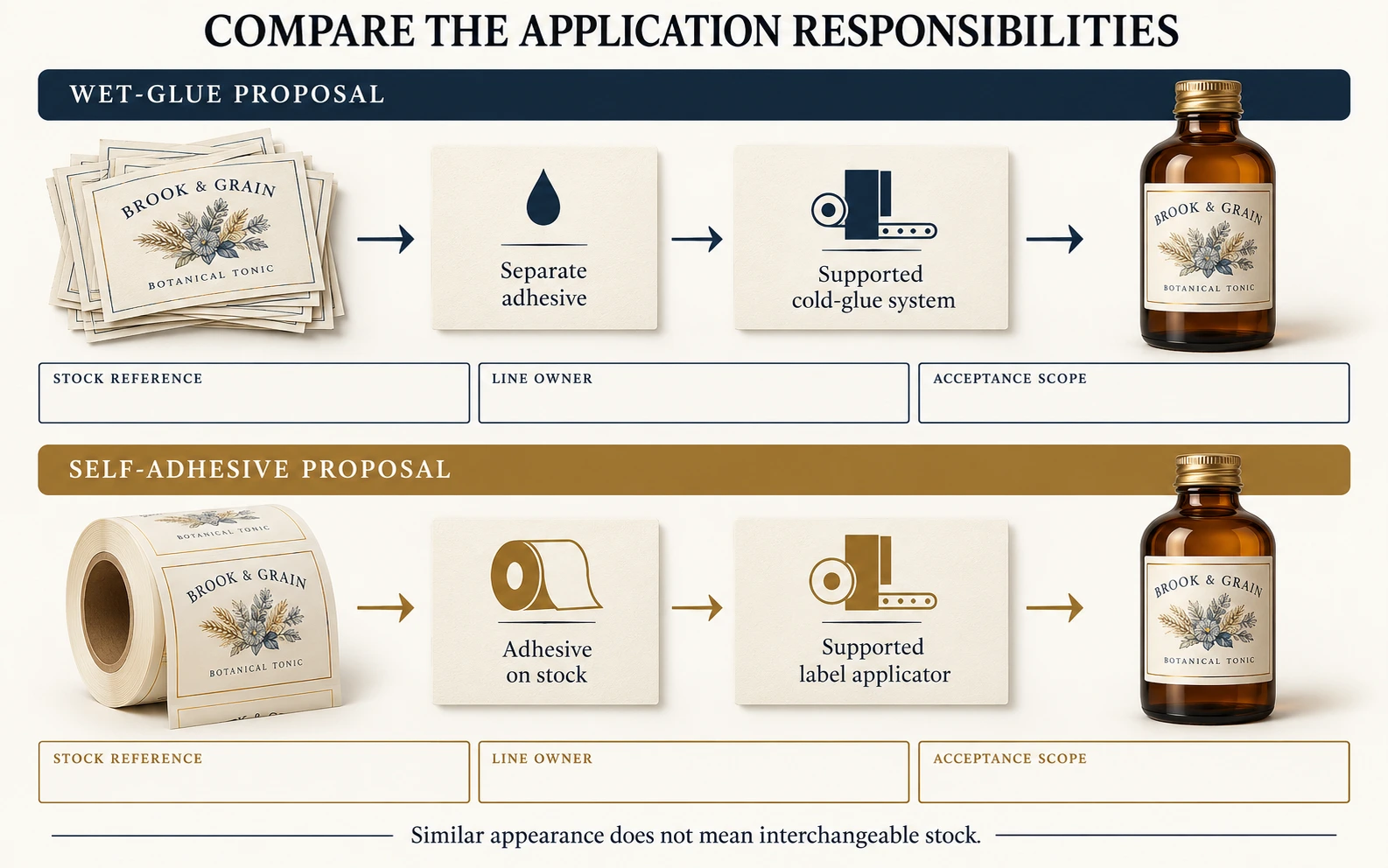
For a range with several artworks, ask how versions are kept separate and how the next one is identified at the station. A different physical format may change replenishment or leftover-stock work. It does not authorize a new product identity or make obsolete printed stock acceptable.
If a proposal requires different equipment or outsourced application, keep that cost and responsibility in the comparison. A lower printed-label amount can move work elsewhere instead of reducing the total required operation.
Review the physical result before transferring approval
Ask for a representative sample or trial appropriate to each proposed route. Identify the label material, adhesive reference, container and relevant conditions. Have the responsible owner agree the observations and acceptance needed. A digital proof can settle artwork while leaving attachment and process unresolved.
For removal or returnable-container use, specify the actual required route and obtain evidence for it. Do not assume that wet glue means wash-off or that self-adhesive means permanent. The identified construction and intended process determine which question must be answered.
Retain any difference between the sample and the priced delivery. If the proposal changes later, compare the changed material or application responsibility with the accepted record. The same label dimensions are not enough to establish equivalence.
For an application-route enquiry, send the actual equipment requirements, container specification and photographs, label footprint, artwork, intended handling and removal, quantity by version, destination and the two proposed delivery scopes. Use the roll-label supply route to explain the pressure-sensitive option and ask which formats are available. The supplier can then discuss an identified delivered product while the line owner retains the decision about the process that applies it.