
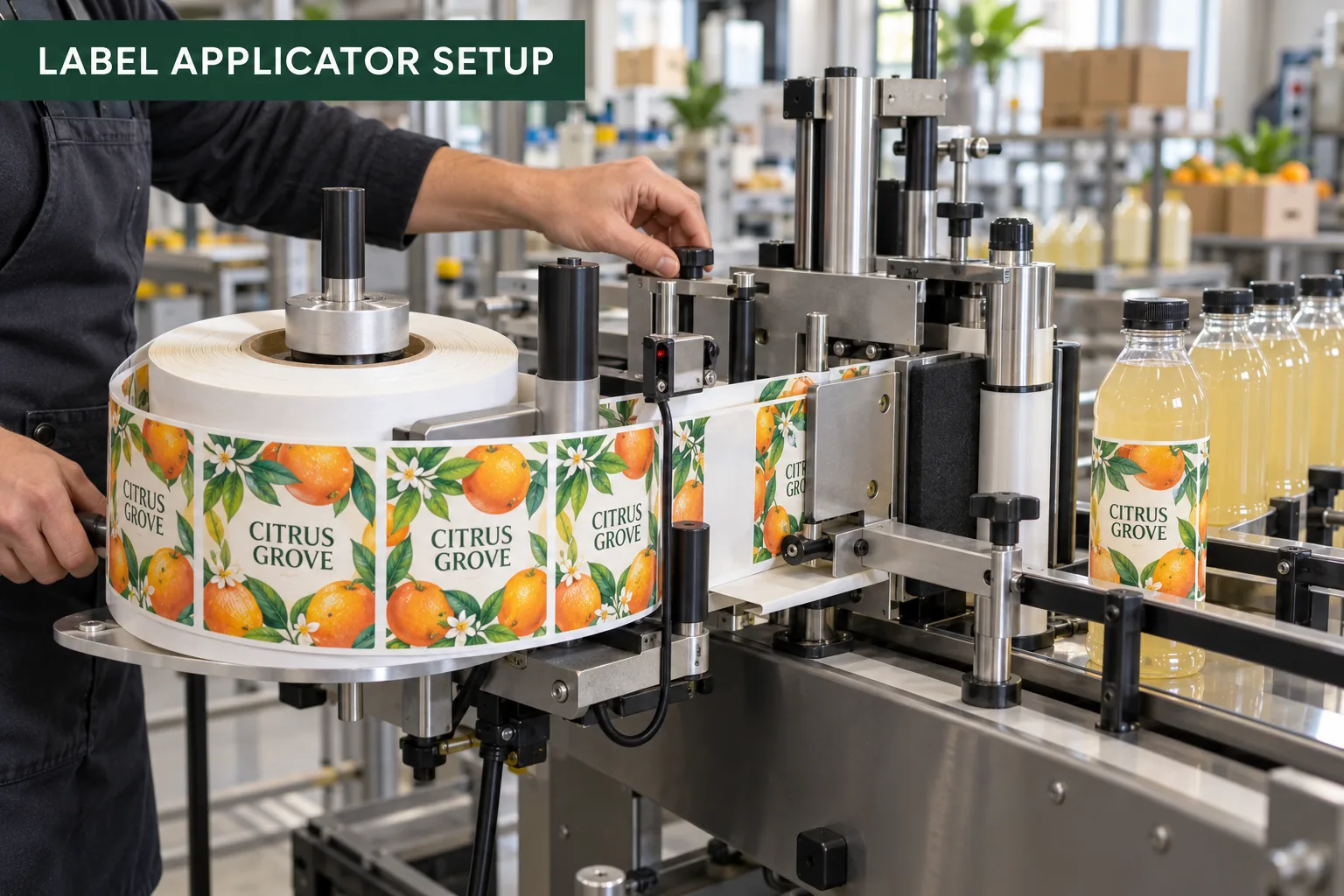
The label artwork is approved, the color looks right and the roll arrives on time. Then the applicator cannot see the gap between labels. The line stops for a reason no one considered during the design meeting. I would ask for the machine specifications before promising a roll is ready for automatic application.
The first-run checklist is not a substitute for the machine manual or operator. It is a bridge between the packaging buyer, printer and line team. Record the applicator model, sensor type, core, maximum roll diameter, label orientation and the container that will actually be labeled.
Confirm the Web Before Printing Bulk
| Specification | Why it matters | Confirm with |
|---|---|---|
| Core and roll diameter | Roll must mount and clear guards | Machine manual or operator |
| Unwind and label orientation | Artwork must face the correct way | Annotated roll sketch |
| Gap and web width | Sensor and guides need consistency | Trial roll |
| Liner type and release | Label must separate at peel plate | On-line observation |
For an original fruit drink label, send a diagram showing the bottle's front panel and the direction of travel. 鈥淟abels out鈥?can still leave the artwork upside down at the applicator. Use a physical sample to verify the drawing. If the line uses a camera or barcode check, include the final printed mark in the trial.
Watch the Whole First Run
Load a representative short roll, start at the normal setup speed and then observe the intended operating range. Check sensor misses, web tracking, label skew, bubbles, liner breaks and the waste rewind. Apply labels to actual containers, including the first and last units of the trial. A label that peels cleanly but lands across a bottle seam is still not approved.
Do not convert a handful of successful applications into a guarantee about full-run output. Record the conditions and any adjustment made: sensor setting, guide position, pressure, speed and container variation. The line team owns machine approval and safety; the label supplier owns the construction it provided.
Freeze the Approved Specification
- Collect machine model and operator-approved limits
- Confirm core, outside diameter and web width
- Approve unwind and artwork orientation on a sketch
- Check sensor detection on the intended liner
- Run the label on final containers at the line
- Save trial settings and reject examples for reorder
Use the core and unwind guide for the roll drawing and the liner guide for sensing and release questions. Send the machine specification and container photo through the specification planner. The first roll should teach the team something before the full order does.
Questions Before You Order
Is matching the core size enough for an applicator?
No. Unwind direction, outside diameter, web width, label gap, liner and sensor response also need confirmation.
Can a hand-applied label roll run automatically?
Only after a machine trial. A hand-friendly roll may have a different liner, perforation or winding than the applicator needs.
Who approves the first production roll?
The line owner should check a representative run on the actual machine, with the final container and an agreed reject or rework process.