
A paper quotation can look economical. The vinyl quotation includes a protective finish and a different adhesive, while the first price lists neither. Choosing the cheaper line does not yet mean choosing the less expensive way to meet the same requirement. The two suppliers may be describing different products.
For vinyl vs paper stickers, put the face material, adhesive, printed surface or protection and intended use into separate fields before comparing the quotations. The face-material name helps begin a discussion. It cannot carry every promise about moisture, handling, removal or outdoor use.

Start with the job both options must perform
Describe the surface receiving the sticker, how it is applied and the conditions it encounters afterward. A dry indoor gift box, a frequently handled promotional item and a package exposed to water deserve different reviews. If removal matters, include the required surface condition after removal as well as the retention requirement.
Record appearance and tactile priorities without turning them into performance claims. A buyer may value a paper-like feel, a smooth decorative finish, writing space or a flexible printed piece. Those are useful preferences. They do not establish how the complete construction behaves on the actual surface.
If the two quotations assume different jobs, align the brief before arguing about the materials. One supplier may have priced a dry indoor seal and another a protected label for repeated handling. Ask both to identify the assumptions they used.
Separate the layers in the quotation
| Field | Information to identify | Why the distinction matters |
|---|---|---|
| Face material | Actual paper or film identity and relevant finish | A broad family name hides meaningful differences |
| Adhesive | Proposed system or supplier reference, with limits | Retention and removal depend on the application |
| Print and protection | Print route and any protective layer | The exposed printed surface is part of the requirement |
| Delivery | Size, cutting format, quantity basis and packing | The price must refer to the same finished unit |
| Use conditions | Surface, handling and exposure assumptions | Alternatives may be acceptable for different reasons |
Vinyl is not a synonym for every film. If polypropylene, polyester or another material is proposed, keep its identity visible rather than putting it into a generic vinyl column. Paper also covers varied constructions; a coated paper reference is not interchangeable with every uncoated writing label.
Ask what is known and what needs confirmation. A supplier's complete construction reference is more useful than a buyer guessing the adhesive from how the sample feels. Where a component cannot yet be identified, leave the comparison incomplete instead of filling the field with an assumption.
Keep adhesive questions attached to the real surface
3M's substrate guidance highlights surface condition, coatings, flexibility and surface energy as relevant selection factors. It supports asking for the actual contact surface. It does not let a buyer choose a particular ZC Labels adhesive from a generic table or transfer another manufacturer's performance claim.
For a painted or coated object, describe the finish touching the adhesive, not just the material under it. Include application timing and relevant use conditions. The surface and adhesive brief sets out the information to collect before asking for a recommendation.
If one proposal is removable and another permanent, they are not equivalent alternatives until the buyer decides whether removal is required. Likewise, replacing paper with film cannot itself resolve an undefined adhesive requirement. Keep those decisions separate enough to see what changed.
Compare protection without assuming a guarantee
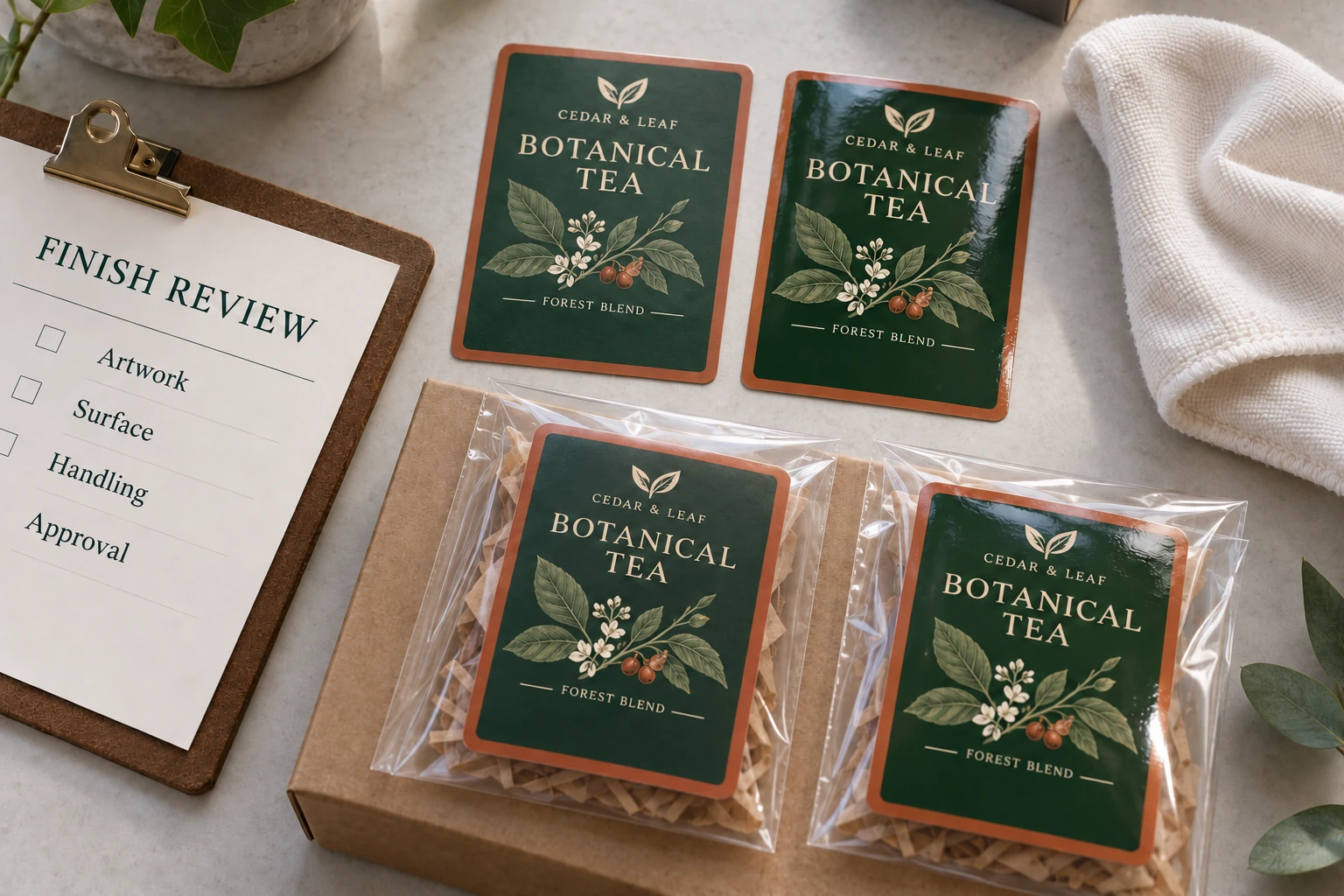
A coating or laminate may be part of the proposed construction. Ask what purpose it serves, what limits the supplier states and whether the reference sample includes it. Do not approve an unprotected appearance sample while silently expecting the quoted protective finish to look identical.
For water exposure, identify the actual routine rather than using “vinyl” as shorthand for waterproof. The waterproof sticker planning guide separates application conditions, water contact and other exposures. Dishwashing, freezing, oil and sunlight are additional questions, not automatic extensions of a water-related description.
Protection can also change writing behavior, glare, feel or edge appearance. If writing on the sticker is important, review the intended pen and finished surface under the relevant conditions. Do not infer writability from an unfinished material swatch.
Give alternative proposals their own reason to win
A paper option can be appropriate when its appearance and construction meet the actual dry-use requirement. A film option can deserve consideration when its particular construction addresses relevant handling or package requirements. Neither needs to be declared universally better to be a useful proposal.
If both satisfy the same documented task, compare the whole quoted scope: finished units, artwork variants, packing, sampling assumptions and delivery conditions. If they meet different tasks, explain the difference rather than forcing a single price ranking. No price table can replace an unresolved specification.
Also avoid unsupported environmental conclusions. A paper-looking label does not automatically establish that the whole labeled package is recyclable or compostable. Those claims require evidence for the actual construction, package and relevant system. Keep an appearance preference separate from a disposal claim.
Before accepting a substitution, record which original requirements it preserves and which observations need repeating. A familiar face-material name should not conceal a changed adhesive or protective finish on a reorder.
Send ZC Labels a construction comparison brief with the competing specifications, artwork, final size, contact surface, application and use conditions, removal needs, quantities per design and delivered format. Mark unknown fields. These inputs support a meaningful paper-versus-film discussion and show whether the price difference comes from the face material or from a different job entirely.