
The artwork is approved. The shampoo bottle looks right on a screen. Then procurement asks whether the label is waterproof, and the answer comes back as a material name.
That leaves too much undecided. Will the label be applied to a dry bottle before filling, or after a filling operation that leaves residue? Will the pack flex in a wet hand? Does conditioner collect around the label edge? Those questions affect what the buyer needs to approve, even when the artwork stays exactly the same.
For custom shampoo labels, I would make the sample request cover three separate decisions: bottle fit, application, and performance in use. A good-looking front panel earns its place in that review. It cannot sign off the other two decisions.
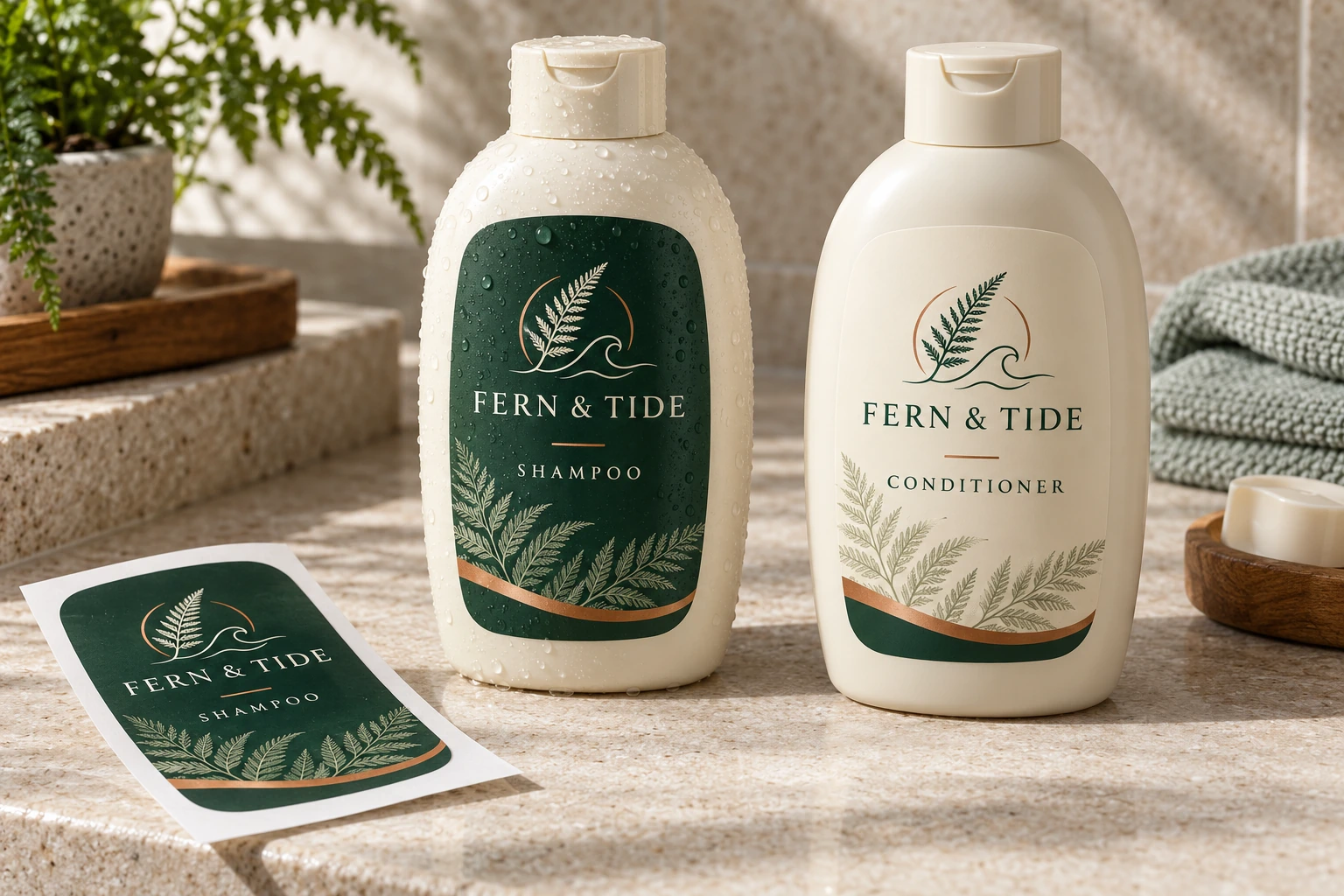
Send the bottle specification with the artwork
Two white bottles can look interchangeable in a photograph and still require different label reviews. Ask the packaging supplier for the actual bottle material, any surface treatment or coating, and the production version that will be filled. Do not identify the resin by appearance or copy the specification from a previous pack.
Polyethylene and polypropylene belong to the low-surface-energy plastics discussed in 3M's surface-energy guidance. That makes adhesive compatibility a question to resolve with the supplier. It does not mean every polyethylene bottle needs the same adhesive or that a particular construction has already been approved.
Measure the usable panel on the final filled and capped bottle. Keep the label within the intended area; identify shoulders, recesses, molded seams and the normal grip. Review the front and back separately if their shapes differ. A wider label is useful only if it can be applied and read in the space it occupies.
Match the film to the way the package moves
A rigid pump pack and a squeeze bottle can share a product range without sharing a suitable label construction. Ask whether the proposed face material, adhesive and protective layer have been considered together for the package's movement.
For example, Avery Dennison describes conformable films for semi-squeezable and full-squeeze applications. That establishes a useful material category to discuss, not a universal recommendation or a claim about ZC Labels' stock.
Request a representative label on the actual bottle, then review the pack during normal squeezing and recovery. Inspect the edges, the printed panel and any seam afterward. If the pack geometry keeps stressing one corner, moving or resizing the label deserves consideration alongside changing the construction.
Direct decoration may also deserve a quotation when a separate label edge is unacceptable and artwork changes are infrequent. It brings its own tooling, quantity and revision questions. The purchase decision should leave room for the route that fits the package.
Check the application step before blaming bathroom use
Imagine two illustrative projects. A salon brand uses rigid pump bottles that are labeled on a dry packing line. A retail brand uses flexible flip-top packs, with labels added after filling. Both request a botanical design and a matte surface. Their artwork preferences tell the supplier very little about how the adhesive will meet the bottle.
In the second project, the useful first question is what reaches the bottle surface during filling and handling. A problem present immediately after application should be investigated before anyone describes it as failure in a shower.
3M's adhesive-selection guidance identifies surface contact, cleanliness, application pressure, time and temperature as relevant factors. Agree on a preparation process compatible with the actual bottle and label; do not introduce a solvent or cleaning treatment without checking suitability.
If labels will run automatically, send the machine's roll requirements as well. The roll unwind and core guide explains the information needed. A construction approved by hand still needs the relevant application review before it is accepted for a line.
Separate water, formula contact and flex in the sample plan
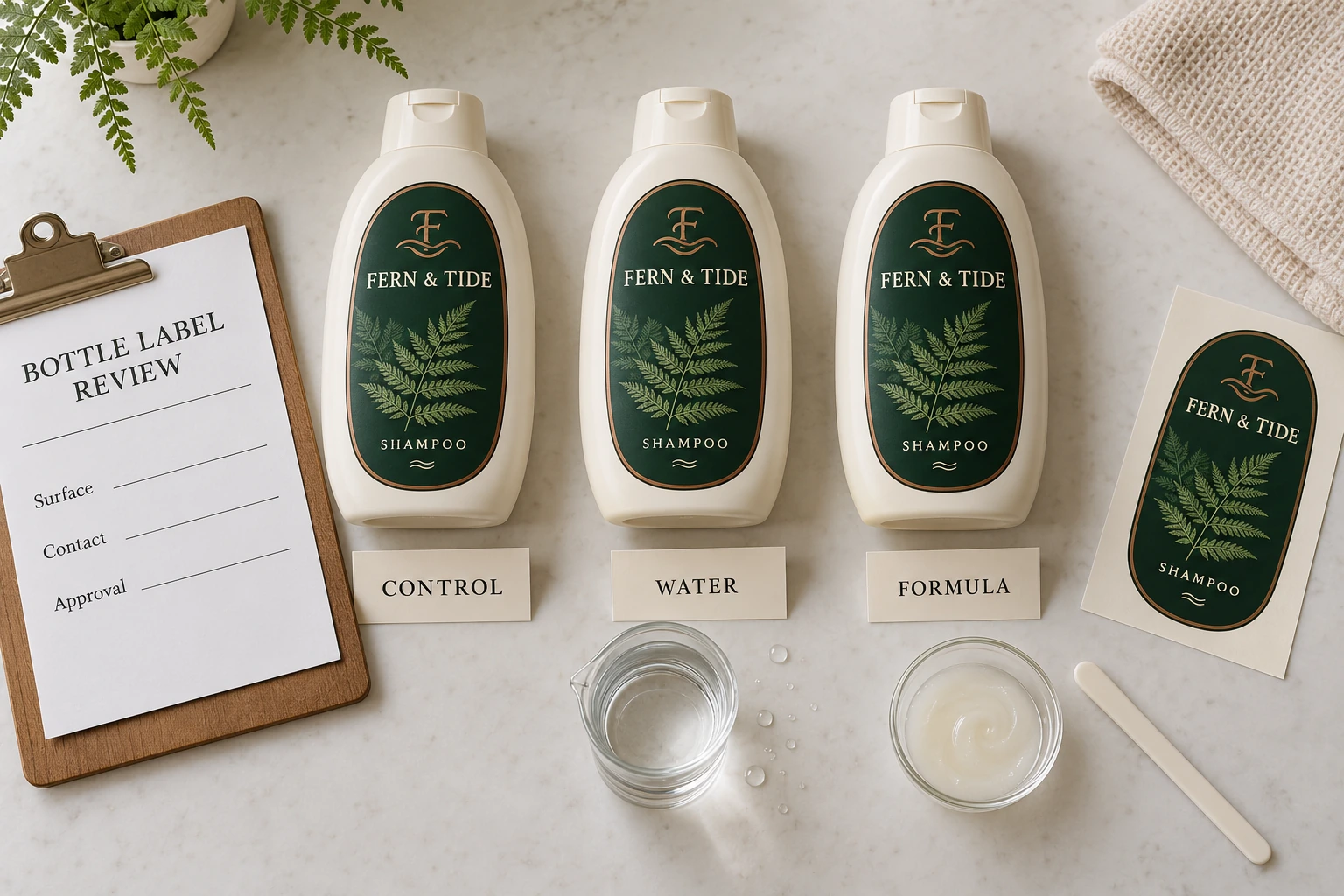
An untouched reference makes later comparisons easier to interpret. Keep one, and identify the remaining samples by construction and artwork revision. Agree with the responsible technical team which conditions matter, how the exposure will be carried out, and what observations will determine acceptance.
| Review item | Specify before the review | Record afterward |
|---|---|---|
| Application | Bottle version, preparation, application method and time before exposure | Initial placement, bubbles, wrinkles and edge contact |
| Water and wet handling | Relevant water contact and handling routine | Readability, surface change and adhesion observations |
| Formula contact | Actual product, contact location, duration and wiping conditions | Print, protective-layer and edge condition |
| Squeeze and recovery | Filled pack, intended grip and agreed handling sequence | Creasing, distortion and lifting after release |
This is a planning framework, not a standardized test method. Do not attach a certification name or invent a universal number of squeezes, hours or cloth rubs. When a formal method is required, have it specified and interpreted by the appropriate technical team.
Start with separate checks so a change can be investigated. Then consider the combined routine the package will encounter, rather than assuming that several isolated checks prove the whole service life. Clean water cannot stand in for the actual shampoo or conditioner when formula contact is part of the requirement.
Keep the product identity clear during the review
Original botanical artwork can give shampoo and conditioner a coherent family appearance. Keep the product-type word prominent enough to distinguish the two; an accent color alone may be an unreliable cue in an inconvenient viewing position.
Review the longest variant name at final size, with the cap fitted and the bottle turned through ordinary viewing angles. If another language creates pressure on the layout, use the multilingual shampoo-label guide to plan the information hierarchy rather than shrinking every line.
The responsible product owner must provide and approve ingredient wording, directions, claims and market-specific information. An attractive botanical drawing or laboratory-style badge cannot establish a product benefit. The printer's reproduction review and the brand's product approval are distinct responsibilities.
Make the approval specific enough to reorder
Record the bottle version, label dimensions, artwork revision, material construction and application conditions. Attach the agreed observations and acceptance criteria. Keep unresolved items visible. “Waterproof label approved” is a poor substitute for a record of what was actually reviewed.
If a bottle supplier, formula, protective layer or application process changes, decide which checks need repeating before treating the next order as identical. This is where procurement can prevent a quiet specification change from hiding inside a familiar-looking reorder.
For a project review, send ZC Labels your shampoo-label brief: bottle specification and filled photos, usable panel dimensions, artwork, quantities by SKU, application method, expected water and formula contact, and destination market. Include a sample-review requirement if you have one.
The useful approval is the one another person can reproduce when the next delivery arrives.