
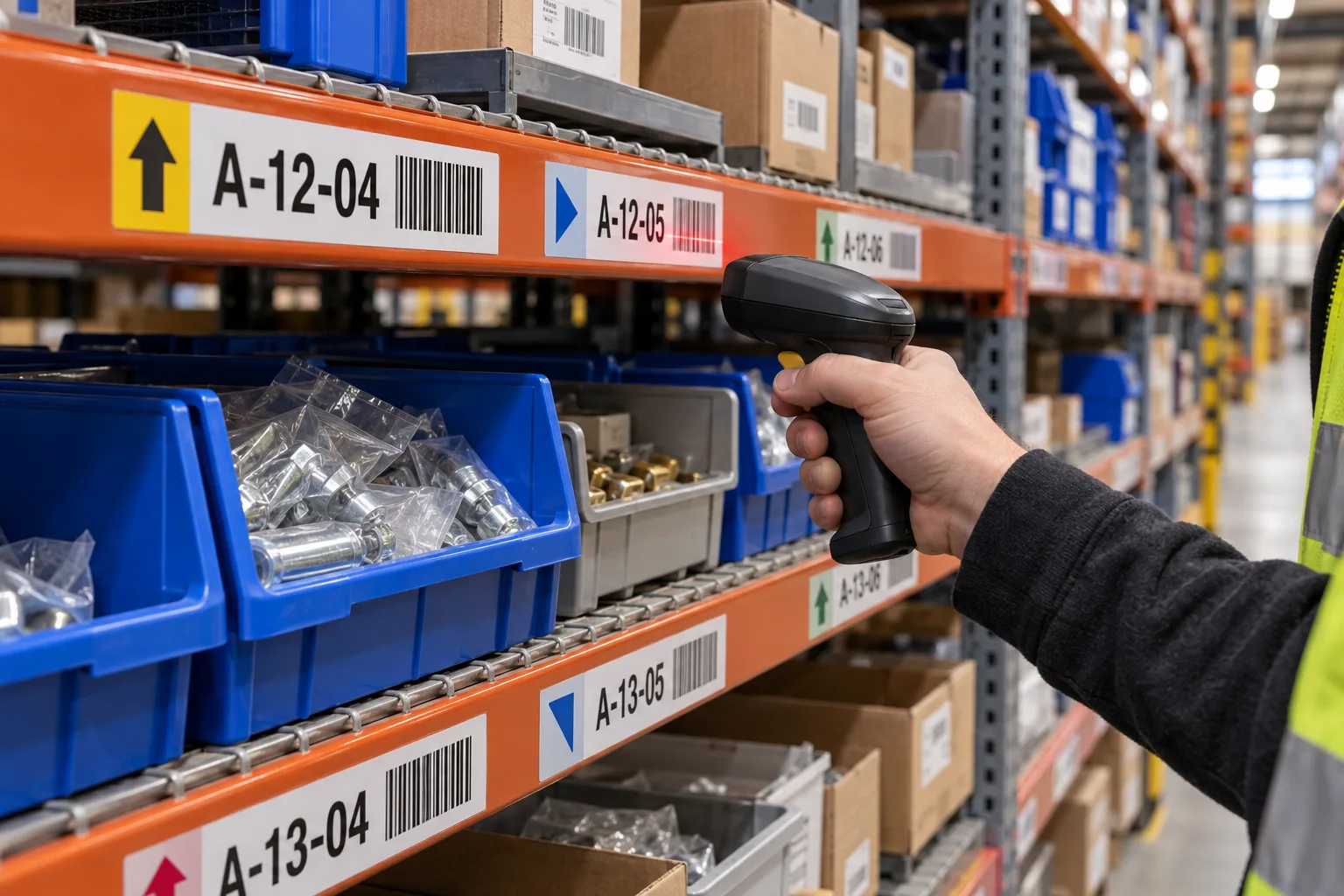
In a warehouse, the useful label is the one a picker can read before pulling the wrong bin. A proof viewed at a desk hides the aisle distance, the rack shadow and the angle of the scanner. I would walk the intended route with a full-size printout and ask where the person's eyes land.
Decide What the Code Identifies
A fixed shelf location is not the same thing as a movable tote or product SKU. Write down which record the printed code points to in the warehouse system. If bins move but locations do not, the two may need separate labels. The warehouse owner must supply approved IDs and the scan destination; a printer should not invent a location scheme because the sample code looks neat.
Proof the longest actual location ID in the aisle. Check reading from standing distance and from a step stool where relevant. Place a barcode where the intended scanner can reach without twisting around a beam. Test a final print on the rack and in the lighting of the operating shift.
Choose Surface and Changeover Together
Painted steel, powder-coated shelves and textured plastic bins may each need a different construction. Clean a representative area using the normal site process, then trial the label with real handling. If locations are revised regularly, plan removal, overlay or replaceable holders before buying a permanent roll. Stacking old codes under a new sticker can confuse both people and scanners.
Original high-contrast arrows or color blocks can make zones easier to navigate, but color should never be the only way to tell two locations apart. Keep a human-readable ID beside the code. On reprints, compare the approved file version to the system export and retire obsolete labels before the next shift uses them.
- Separate location, bin and product identifiers
- Supply real code data from the warehouse system
- Proof at aisle distance and scan angle
- Trial each rack and bin surface
- Define removal and changeover procedure
- Check first print against approved IDs
The returnable tote guide addresses movable containers; the carton ID guide covers outbound packs. Share shelf photos and the location export through the quote request.
Questions Before You Order
Should shelf labels and bin labels carry the same code?
Use the warehouse system as the source of truth. Decide whether a code identifies a shelf position, a movable bin or both, then print and inspect accordingly.
How large should a location code be?
Choose size from the actual viewing distance, lighting and mounting angle. Proof the longest real code at finished size in the aisle.
Can old labels simply be covered?
Only after checking scan interference, edge build-up and obsolete information. A clean removal or opaque correction plan may be safer.