
A multicolor botanical mark is intended to sit directly on a rigid gift item, with open spaces between the leaves and no continuous sticker panel. The supplier proposes UV DTF transfers. Before comparing them with ordinary printed stickers or cut-vinyl lettering, confirm the actual installed result, the supplied transfer arrangement and who performs application.
UV DTF is a production route, not a universal promise of adhesion to every object. A finished-looking photograph cannot approve a coated mug, textured case or acrylic panel that has not been represented in the sample review.
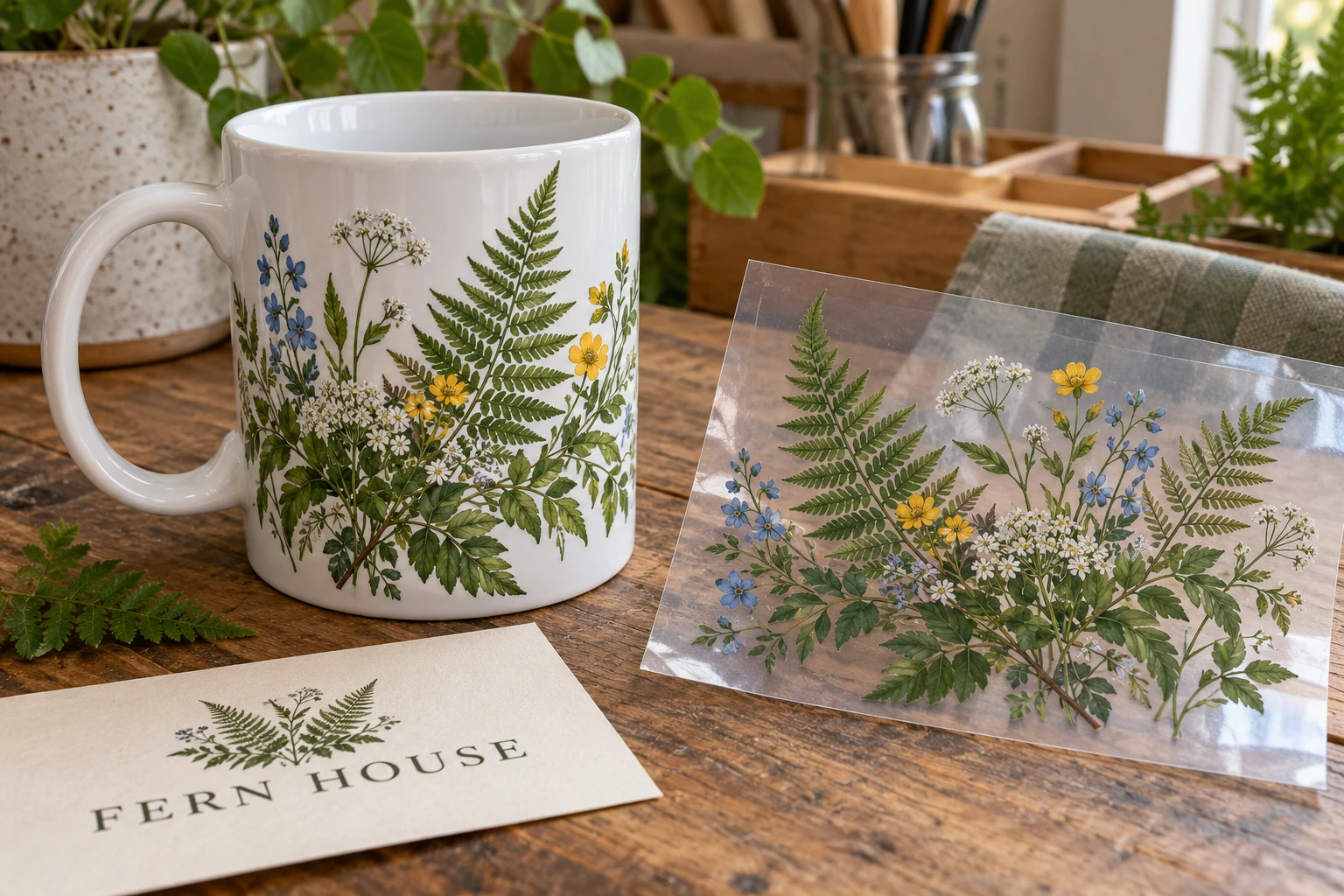
Identify the transfer process being quoted
Roland DGA describes UV DTF for hard-surface decoration using printed transfer media and a temporary transfer film. Its discussion distinguishes that route from textile transfer processes. Obtain instructions for the provider's actual media and ink system; do not apply a garment heat-transfer recipe because both products include the letters DTF.
Ask which layers arrive, which interfaces are separated by the user and what remains on the object. A printed conventional sticker retains its face material. A cut-vinyl composition retains cut graphic elements. A UV DTF proposal needs its own construction explanation rather than being approved solely because all three can create a botanical mark.
Compare the actual retained design
Mark disconnected details, fine strokes, spaces and any raised or glossy effect. Provide the smallest important feature at actual size. Ask the converter to identify feasible detail and any change needed for the proposed system. An attractive enlarged rendering may hide an impractical small dot or an edge that is difficult to transfer.
If a continuous clear sticker panel is acceptable, compare that route on the same object and artwork size. It may meet the design task with a different edge appearance and application sequence. If physically open gaps are essential, keep that requirement explicit. Compare actual quotations and labor responsibilities rather than assuming one technology is always cheaper.
Use the real object and its contact finish
Identify the object's material, coating, curvature and application area. A material name such as ceramic or plastic leaves important information unresolved. Supply a representative finished object where possible and ask the surface owner to confirm any relevant preparation restrictions.
Record the proposed preparation and application instructions with the transfer reference. Do not invent a universal cleaning solvent, primer, temperature or waiting interval. Advice for one transfer system may not be suitable for another, and an aggressive preparation step can affect the object independently of adhesion.
| Review stage | Question to answer |
|---|---|
| Supplied transfer | Are artwork, orientation and separation sequence identifiable? |
| Application | Can the intended operator position and transfer the complete design? |
| Carrier removal | Do all intended details remain in their correct positions? |
| Later use | Does the representative decorated object meet the agreed handling requirements? |
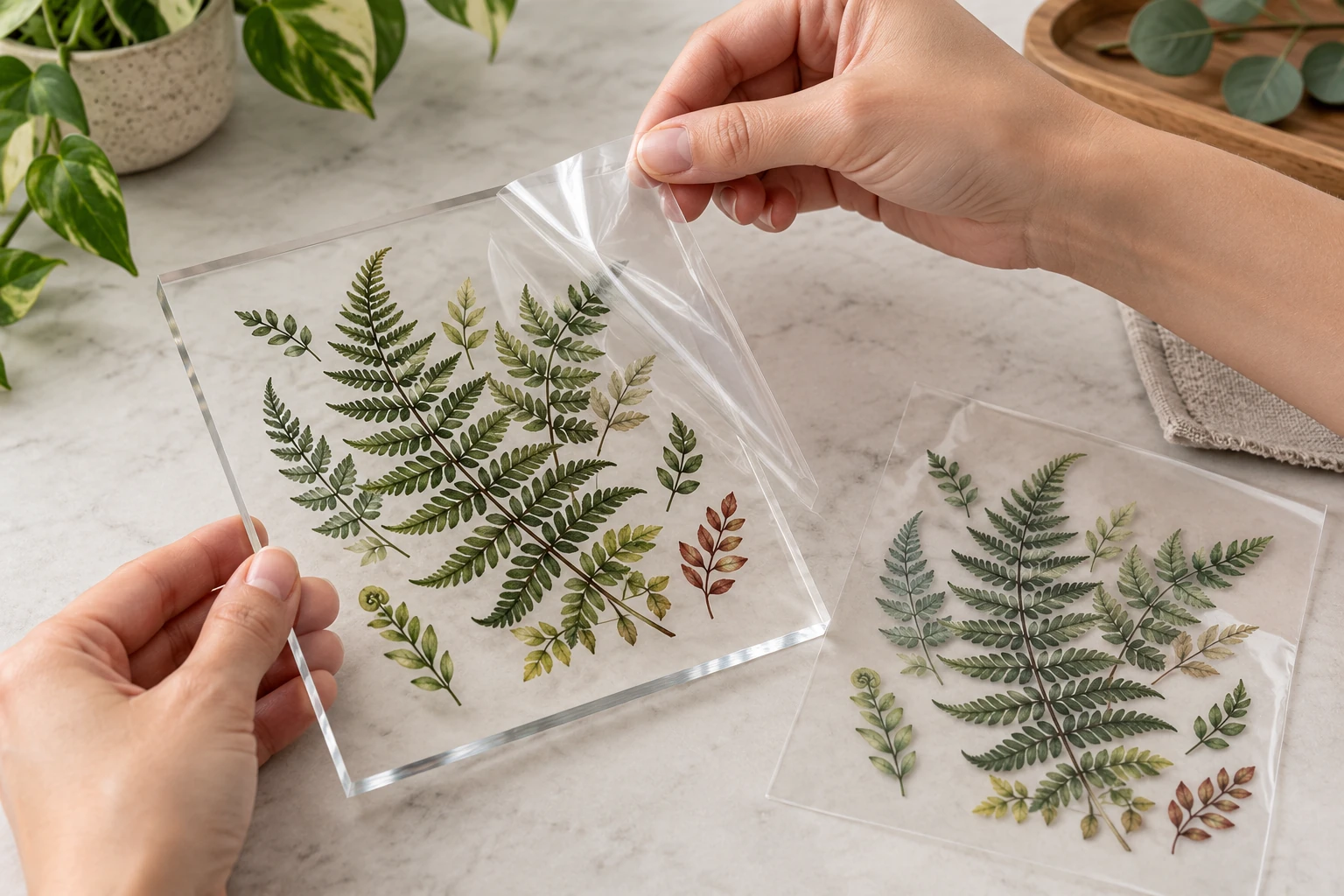
Keep care claims within the evidence
A successful initial transfer does not establish dishwasher suitability, resistance to every cleaning agent or an outdoor lifespan. Identify the intended handling and care route, then ask the technical provider and product owner what assessment is appropriate to that complete decorated object.
Keep evidence tied to the actual combination. A test on one glass finish does not approve a different coated mug. If the decoration could contact food or the mouth, raise that intended use explicitly with the responsible parties and require applicable suitability review. A decorative sample is not documentation for that use.
Quote the delivered job and preserve its reference
Specify whether the buyer receives unapplied transfers, decorated supplied items or another agreed state. Include who provides objects, who applies the design and who reviews the result. Ask how transfers are protected and identified before use, especially where several similar versions are ordered.
The cut-graphic and printed-sticker guide covers the related retained-film decision. The sample approval guide helps define which parts of the proposal a reference represents.
For a hard-surface graphic project enquiry, send the actual artwork, size, smallest important features, object photographs and contact-finish information, intended installed appearance, care conditions, quantities and delivery state. Ask whether a suitable transfer or sticker route is available and what representative sample is needed before release.