
One buyer calls a small visual difference acceptable. Another rejects it after the cartons arrive. Both point to the word “quality” in the order. The missing agreement is not a more enthusiastic quality promise; it is a shared reference for the feature being judged and a person authorized to decide.
Before releasing a sticker order, define the relevant acceptance questions. Separate appearance, information, cutting, application and delivered quantity. Give each a controlling reference and an owner. This does not require inventing a universal defect rate. It requires the buyer and supplier to understand what would actually prevent acceptance.
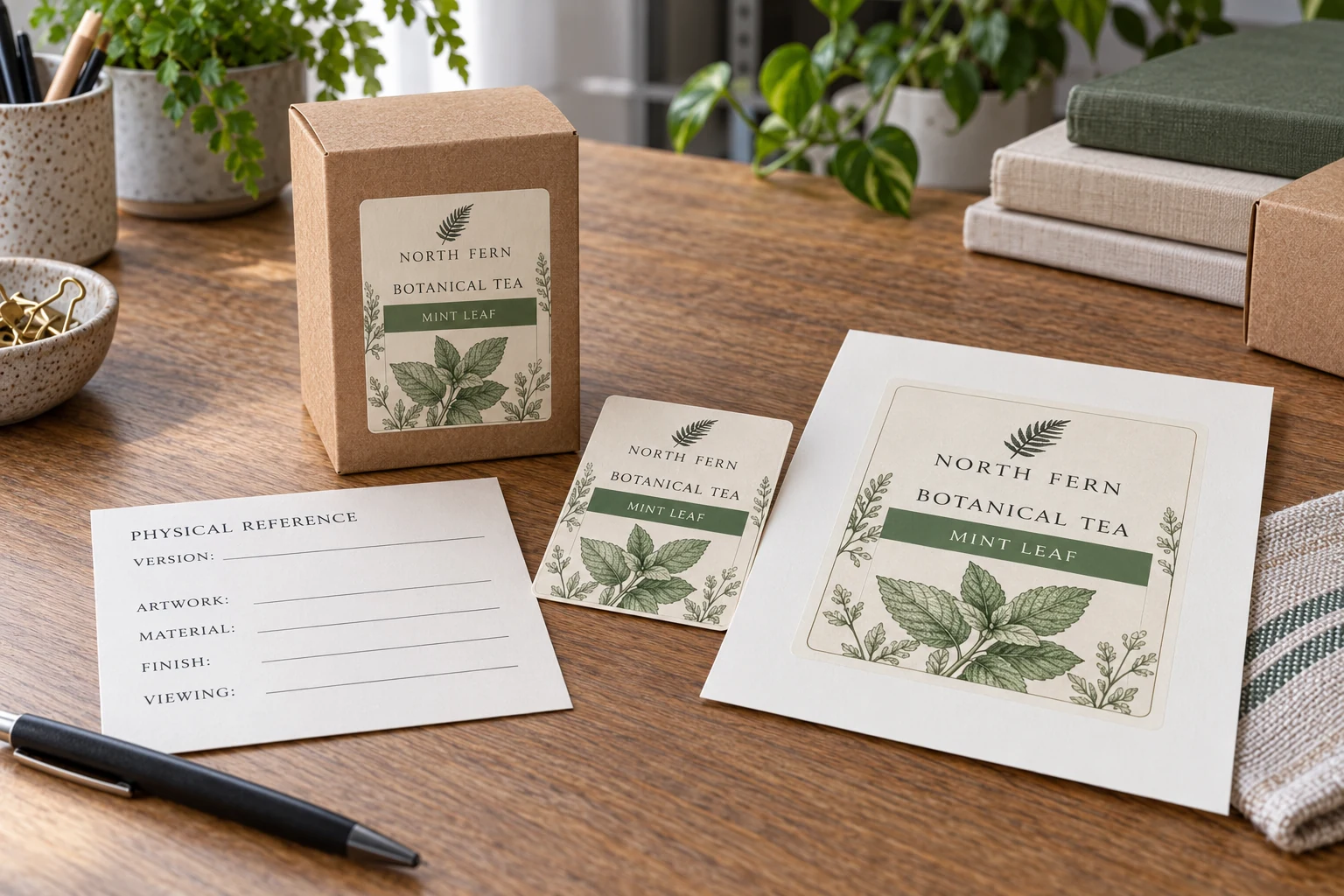
Replace “good print” with an observable feature
Name the important detail. It might be a product name remaining legible, an intended clear area, the appearance relative to an identified sample, a usable cut edge or a packing requirement. Keep the observation tied to the final size, construction and use where relevant.
A feature can matter differently by project. Decorative variation that is acceptable in one promotional piece may be unacceptable when it obscures essential information on a packaging label. Ask the responsible owner what the consequence is rather than assigning an arbitrary category from a generic checklist.
Keep information accuracy distinct from visual preference. A wrong product name is not simply a less attractive shade. A readable but incorrect code is not repaired by a pleasing finish. Define those questions separately so an overall appearance judgment cannot hide an unresolved identity issue.
Choose references with a defined job
Identify the current artwork proof for content and layout. Where physical appearance matters, agree which identified sample or reference controls that comparison and what it represents. A phone photograph of an old piece may help communicate a concern without becoming an exact physical standard.
The proof and sample guide separates the scope of those references. Use that distinction here. An accepted digital proof cannot establish adhesion, and a good material sample cannot approve a later wording revision.
For a color-critical feature, use the agreed reference and conditions described in the color matching guide. Do not require a new delivery to match several inconsistent old samples without deciding which one governs.
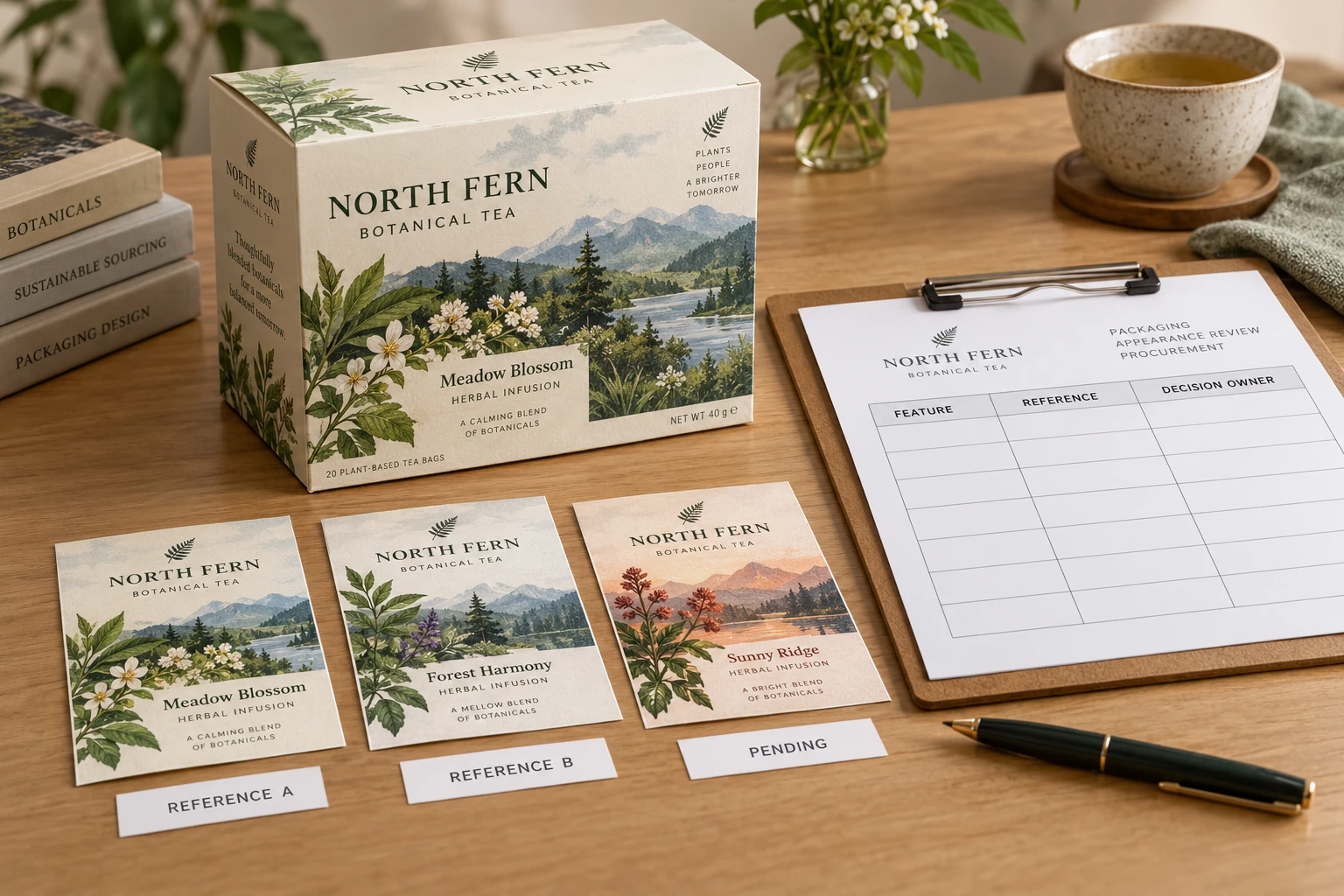
Build a compact acceptance record
| Decision | Reference and responsibility to agree |
|---|---|
| Content and identity | Current owner-approved artwork and data |
| Visual appearance | Identified physical or other agreed reference and limits |
| Shape and handling | Final drawing and relevant converted sample |
| Application or use | Actual conditions, method and acceptance owner |
| Delivered state | Agreed units, design allocation and packing |
Keep the record short enough to use. If a row has no decision purpose, it may not need to be there. If a meaningful limit is unknown, leave it pending with the next action. A completed-looking table of invented limits is worse than an honest unresolved item.
Where examples help, retain identified specimens or images that explain the feature. Record their origin and what they illustrate. Do not present an AI-generated mark or a fabricated defect photograph as a real rejected production sample. Illustrations can explain where to look; actual acceptance evidence must come from the agreed references and observations.
Do not confuse an acceptance rule with a sampling plan
Deciding what counts as an unacceptable feature and deciding how to inspect a lot are related but separate tasks. The team may need both. A few attractive pieces chosen for a sales meeting do not establish the condition of an entire delivery.
ASQ's sampling overview describes drawing inferences about a population or product lot from a selected sample and identifies sampling errors. It does not give this label order a universal sample size or acceptance threshold. If a formal inspection plan is required, have the responsible quality parties agree the applicable method and interpretation.
Avoid adding a familiar AQL number to the purchase order without knowing how it is to be applied. This article supplies a decision framework, not an inspection standard or statistical guarantee. Keep any formal plan with the actual lot definition and accepting owner.
Resolve the exception before it becomes an argument
If a specimen raises a question, identify the feature, controlling reference and decision owner. Ask whether a targeted correction, another reference or a changed requirement is needed. Preserve the relevant versions so the supplier can understand what was compared.
An illustrative team might accept a decorative detail while leaving product-name readability pending. Those decisions can coexist if the record states the limitation. They should not be compressed into a broad “approved” message that travels to production without the open item.
Agree how a proposed deviation is reviewed. Do not assume a supplier may silently substitute a construction, or that every difference automatically entitles the buyer to a particular remedy. The applicable commercial terms and accepted specification need to govern the actual order.
Make the enquiry support the decision
Use the custom sticker product route to identify the intended format and use. Send artwork, dimensions, construction if known, quantities, relevant samples and the specific feature that could block acceptance in a print acceptance review enquiry.
Explain who can accept that feature and which reference they intend to use. These inputs let the supplier discuss a meaningful review instead of guessing what “excellent quality” means for this particular label. Keep unresolved physical or formal inspection requirements visible until the responsible parties have agreed them.