
The enquiry includes a logo file, a purchased illustration and a screenshot of a competitor's sticker. All three explain the desired visual direction. They do not automatically have the same permission for reproduction. Sending them in one folder can leave the printer guessing which material is an actual production asset.
Before releasing custom sticker artwork, identify what may be reproduced, what is reference only and which permission questions remain with the owner. Keep that status attached to the relevant file and intended use. A technically clean vector file does not establish rights, and a useful inspiration image does not become printable artwork by being included in an enquiry.
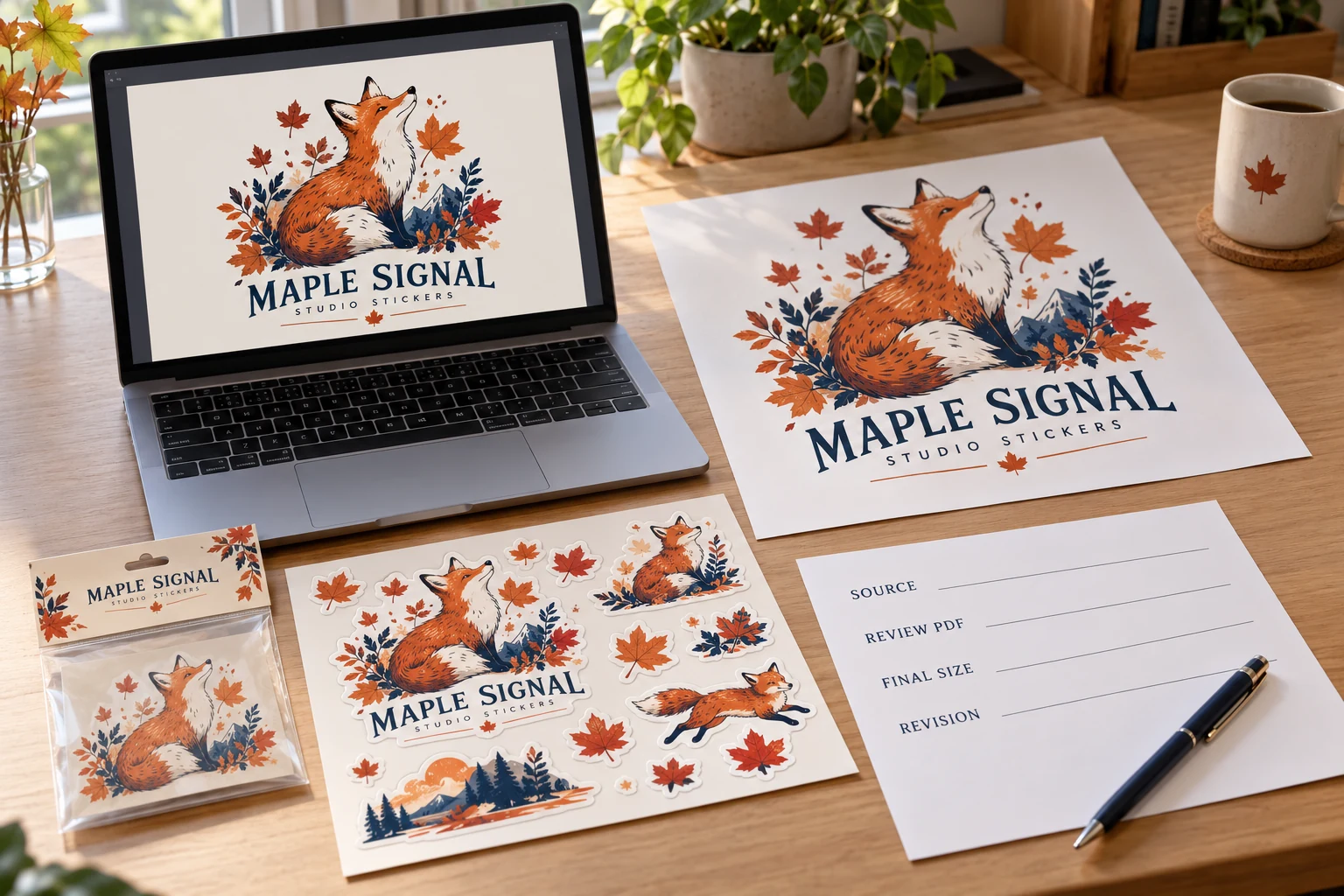
Give every supplied asset a role
Distinguish buyer-owned or otherwise authorized production artwork, editable supporting files and visual references. Mark an inspiration image as reference only where that is its role. Explain the design feature it illustrates without instructing the supplier to reproduce another brand's logo, character or distinctive artwork.
Use a file list that another person can follow. A note in a private conversation can disappear when a folder is forwarded. The role and current revision should survive with the asset so the next designer or supplier does not treat every attachment as an instruction to print.
The artwork preparation guide organizes the complete handoff. This article adds a narrower purchasing decision: whether the assets in that package are authorized for the intended reproduction and whether any restrictions change what the supplier may do.
Ask the responsible owner to confirm the actual use
Record the source or owner of a supplied asset and the person responsible for permission. If a license or authorization applies, ask the responsible business or rights holder to confirm its scope for the proposed product and use. Do not assume a permission for one purpose covers every quantity, modification, distribution channel or future version.
The U.S. Copyright Office's permissions FAQ identifies contacting the owner as a route to asking permission. It does not clear a specific sticker asset or interpret its license. This is a procurement record, not a legal opinion. Where terms are unclear, obtain review from the appropriate owner or qualified adviser before release. The printer's ability to open a file cannot settle a disputed right to reproduce it.
Do not ask the supplier to manufacture reassurance by placing a copyright notice, certification seal or “licensed” badge on an illustration. Any such wording or mark needs the actual owner's instructions and supporting basis. An attractive symbol cannot fill an unresolved permission gap.
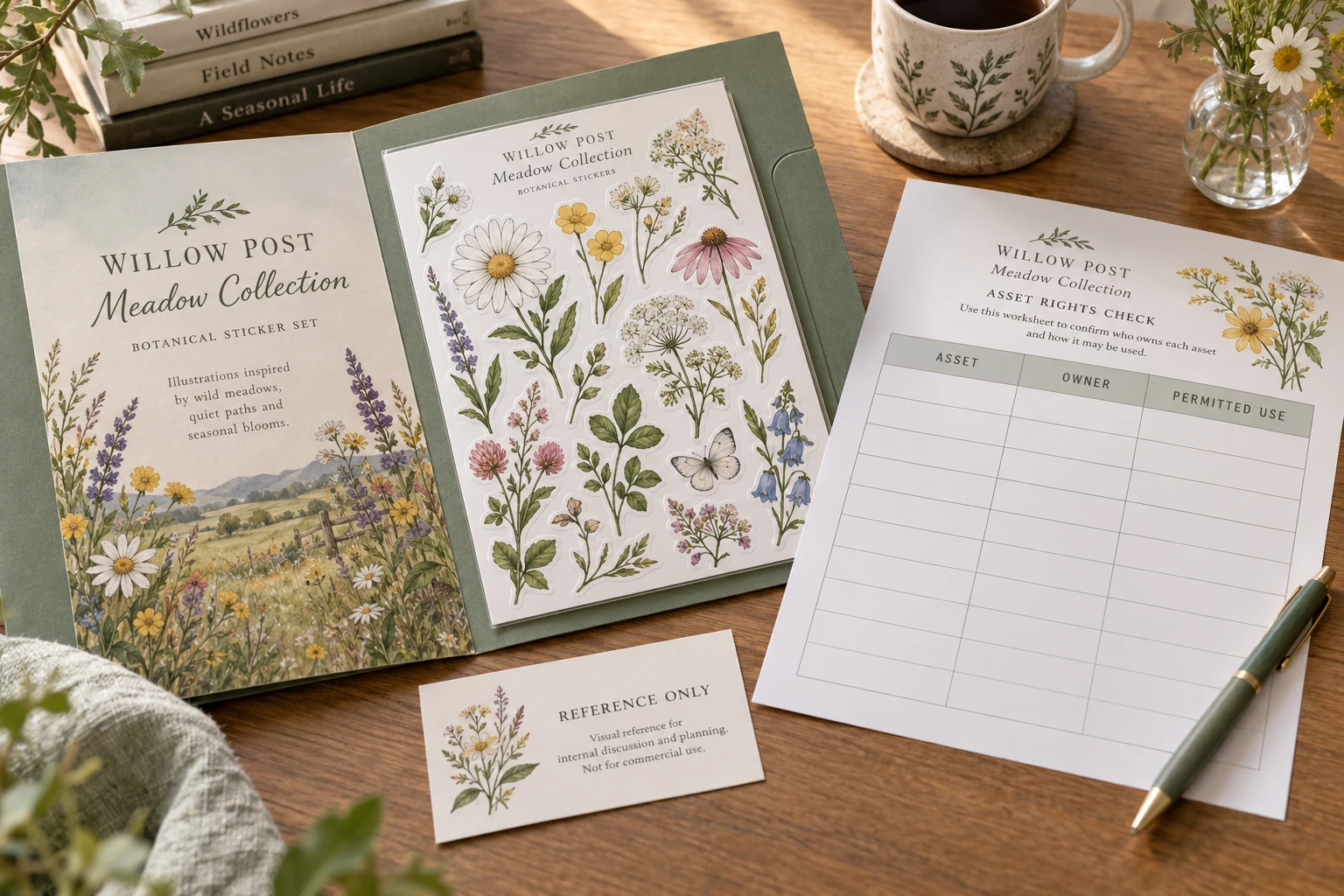
Keep font and image dependencies visible
An editable artwork file can depend on linked images or fonts. Ask the designer to identify what the receiving workflow needs and how it can be supplied within the relevant permissions. Do not indiscriminately collect and redistribute every font file simply because the document uses it.
Where an outlined or otherwise prepared export is appropriate, preserve the editable original and compare the export against the current appearance reference. That choice addresses reproduction and editability; it does not itself create permission to use the original asset.
The file-format guide explains those technical limits. Keep permission status beside the file review rather than expecting the extension, an outline conversion or a high-resolution export to prove ownership.
Separate production approval from portfolio permission
A business may authorize artwork for its order without deciding whether the supplier may show it in a public catalogue, social post or sales sample. Ask about those uses separately where relevant. Do not infer public marketing permission from an instruction to print the product.
Similarly, an existing sample in a supplier's collection can demonstrate a format or construction without establishing permission to copy its design. Identify what decision the sample supports. If the buyer wants an original replacement design, state the brief rather than treating the sample as an asset library.
| Asset or use | Confirmation worth keeping |
|---|---|
| Production artwork | Authorized version and intended reproduction |
| Third-party element | Source, responsible owner and relevant permission scope |
| Reference image | What it illustrates and that it is not an instruction to copy |
| Editable dependencies | Appropriate handoff within the relevant permissions |
| Public sample or portfolio use | Separate owner's instruction where required |
Do not let a revision lose the permission status
If a new illustration, logo or photograph replaces an earlier element, update the asset list as well as the visual proof. A prior approval for the old composition should not silently stand in for the rights review of a different asset.
An illustrative stationery buyer might supply an authorized brand logo and ask a designer to create original botanical pieces. The competitor screenshot remains a reference for the idea of a coordinated collection. Keep those roles separate in the final release instead of including the screenshot among printable files.
If permission is unresolved, identify the affected element and whether an authorized alternative can be considered. Ask about the consequences for artwork, quotation and timing. Do not assume a replacement can be produced or approved instantly, and do not label a placeholder as cleared artwork.
Send a permission-aware production package
Use the custom sticker sheet page for a coordinated sheet order. Send the current artwork, final dimensions, quantities, asset-role list and relevant owner-confirmed restrictions in an artwork handoff enquiry. Share sensitive documents through the appropriate agreed channel rather than publishing private license information in a sample.
The next useful decision is whether the supplied package is ready for reproduction review, needs an authorized replacement or still has an owner question to close. Keep that decision separate from whether the artwork happens to look finished on screen.