
The backup supplier offers the same size and calls the material “white film.” The sample looks close enough on a desk. The buyer still does not know whether it represents the adhesive, finish, cutting and delivered roll that the packing line will receive. A matching product-family name is a starting point, not a qualified alternative.
When evaluating a second-source label supplier, build one buyer-controlled baseline and ask each proposal to identify its differences. Approve the relevant application and appearance decisions against that baseline. Do not ask two suppliers to copy each other's undocumented assumptions and call the result equivalent.
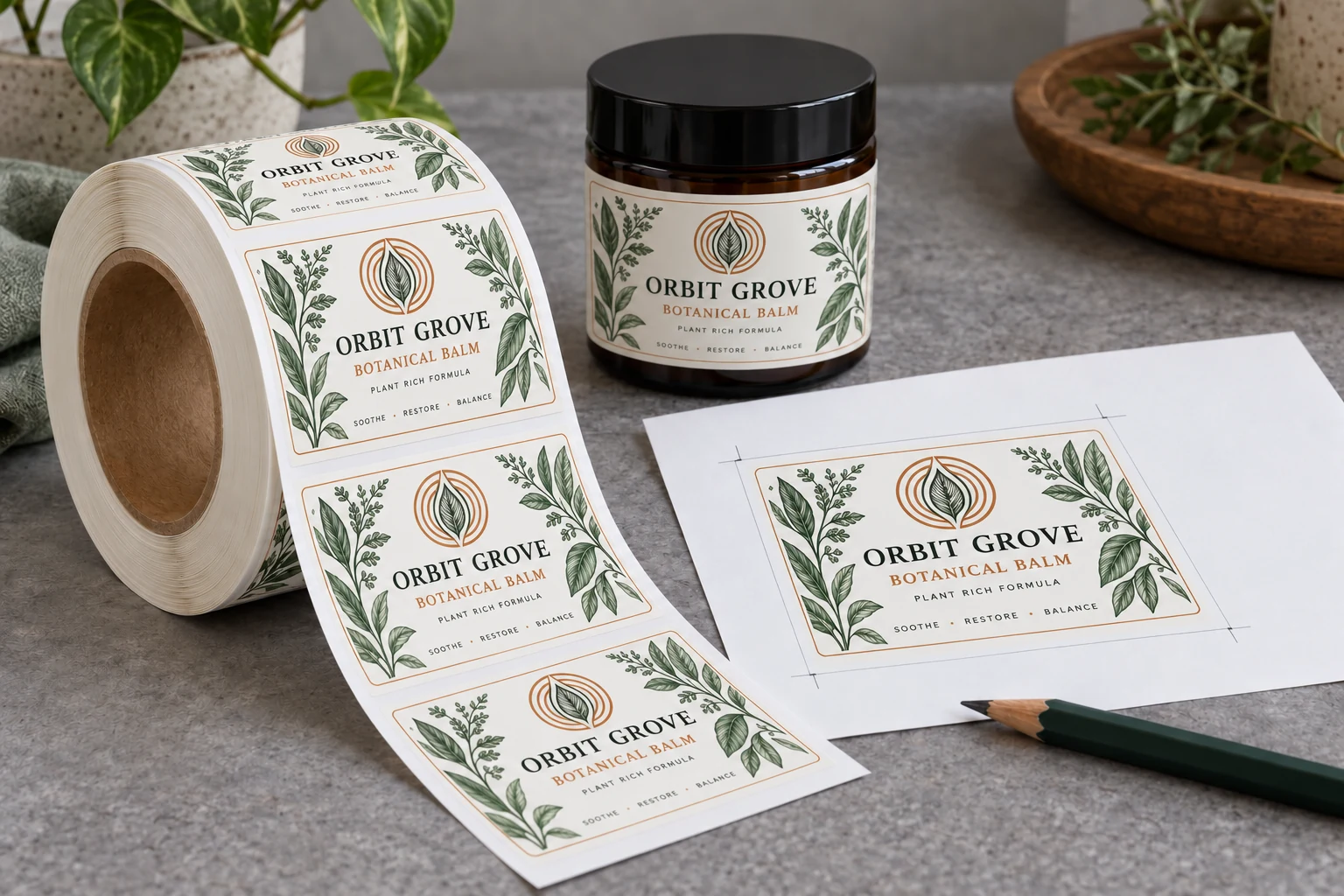
Reconstruct the product you need to keep working
Identify the accepted artwork, dimensions, cutting format, material construction where known, finish, application route and delivered packing. Keep a representative retained reference and its approval scope attached. A familiar sample cannot tell a new supplier which of its features are essential and which are incidental.
State what is unknown. If the original records identify only a broad material family, ask what can be confirmed without guessing an adhesive or coating from appearance. The buyer can still define the package, use conditions and required observations. An explicit gap is more useful than a false specification.
The reorder comparison guide organizes changes against a prior baseline. For second sourcing, the additional task is to obtain a proposed alternative with its own identity and limitations. Do not describe the earlier supplier's approval as if it automatically extends to the new construction.
Distinguish required outcomes from a preferred route
Name the decisions that must remain satisfactory: required text visible, the intended contour, acceptable appearance, application on the identified surface and a usable delivered format. Keep the relevant evidence or owner beside each requirement.
Then distinguish a mandated construction from a proposed way of achieving the task. If the buyer requires a specific identified material, say so and ask whether it is available. If an alternative is permissible, request its specification and the observations needed to approve it. Neither route should conceal a substitution.
Avoid asking for a universal promise to match “everything.” A physical appearance reference can control one decision while leaving application suitability unresolved. The supplier and buyer need enough detail to understand which result is being compared and under which conditions.
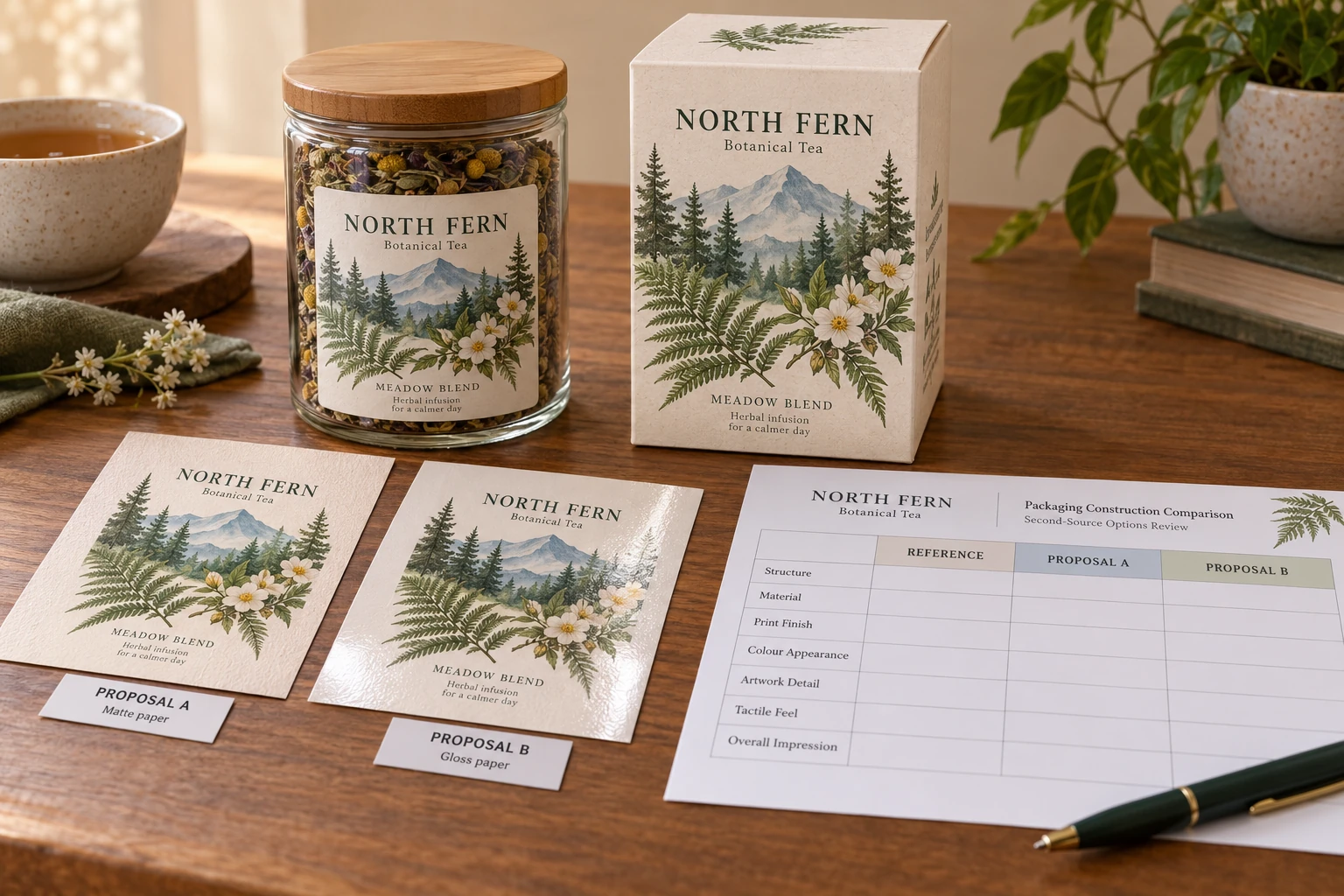
Give the proposals separate identities
| Comparison field | Record for each proposal |
|---|---|
| Artwork and dimensions | Exact revision and finished format |
| Construction | Identified face, adhesive, print/protection and liner where applicable |
| Appearance reference | What controls the comparison and its limits |
| Application evidence | Actual package and relevant review conditions |
| Delivered scope | Roll or sheet requirements, allocation and packing |
| Open difference | Decision owner and evidence still needed |
A sample from a supplier's catalogue may help begin a discussion. It should not silently become evidence for the proposed bulk construction. Ask what the sample actually represents and what differs from the quotation. Keep that answer with the sample so another buyer does not mistake it for a completed qualification.
Where the proposal uses a different print route or protective finish, compare the actual finished reference. The difference may be acceptable. It may also change appearance or handling in a way the buyer needs to decide. A claim of equivalence should identify its scope rather than erase the differences.
Prioritize evidence by the consequence of a difference
For a label applied by equipment, the line owner should identify the relevant web, mounting and dispensing requirements. For a decorative hand-applied piece, the meaningful handling questions may be different. Do not require a machine trial for a job that never uses a machine, or use hand application to approve a machine job.
If package contact is uncertain, use the surface specification guide to collect the actual finish and application conditions. A supplier change does not make those inputs less important. It makes their absence more visible.
For appearance-critical work, agree the controlling reference and which differences matter. Do not ask the new supplier to match several ageing specimens that disagree. Record the accepted comparison conditions rather than treating a phone photograph as an exact color standard.
Keep commercial approval and product approval connected
Compare the same quantities, format, packing and delivery scope. A backup source may propose a different practical run arrangement. Request that alternative explicitly and evaluate its consequences instead of forcing an apparently equal unit price onto a different delivered product.
Ask about the available sample or review route, any charges and what timing can be confirmed. This article does not promise a ZC Labels qualification service, a universal minimum or a fixed transfer period. The next supplier discussion should establish what can actually be provided.
If the alternative is accepted only for a limited application or a particular SKU, preserve that limit in the purchasing record. A successful decision for one label should not become blanket approval for the entire brand range.
Preserve the accepted alternative for the next order
Save the supplier's identified proposal, accepted differences, relevant observations and unresolved exclusions. Keep its reference distinct from the original supplier's construction. If the order switches back, the buyer should be able to tell which specification and evidence apply without reconstructing the conversation.
Use the custom roll label page to begin a supply discussion. Send ZC Labels a second-source comparison brief with the buyer-owned baseline, artwork, size, package/use information, equipment requirements if relevant, quantities and permitted alternatives. Provide only assets and information you are authorized to share. These inputs make qualification a bounded set of decisions instead of a request to reproduce an unidentified old sample.