
The printed card has a hidden reference beneath a scratch-off area. In the artwork proof, the covering panel is completely opaque. Before purchasing, the buyer still needs to know whether the proposed physical construction conceals the field during normal handling and whether the intended reveal leaves that field usable. The PDF has answered neither question.
Specify the concealed area, intact handling and deliberate reveal separately. Keep the validity of any code or promotion under its authorized owner's control. A scratchable covering can serve a physical information task without proving that a code is genuine, an offer is lawful or a security system resists every attack.
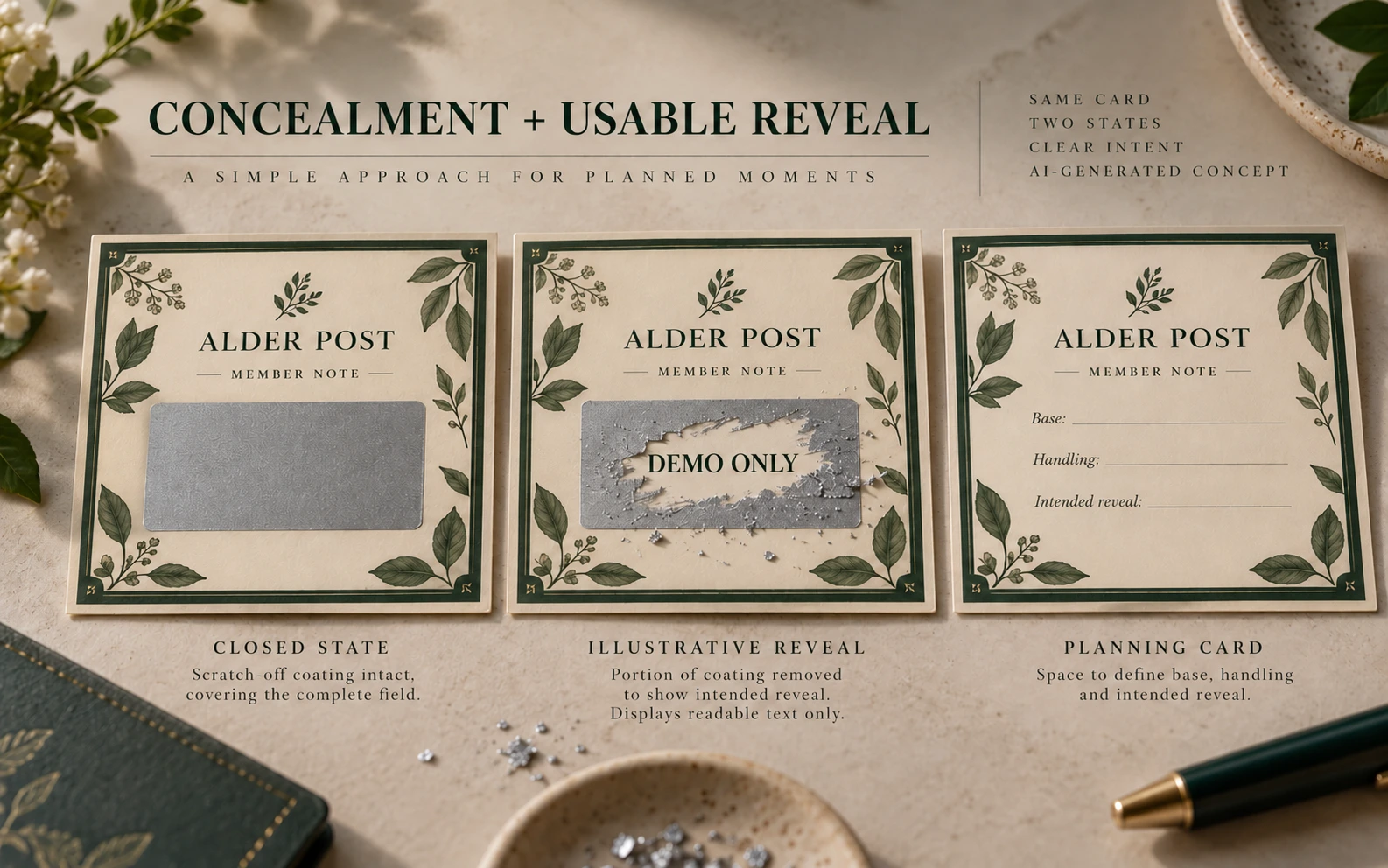
Define the information before choosing the covering
Mark the complete field to be concealed and the information that must remain visible around it. Include the longest authorized entry and its actual placement. A cover designed around a short placeholder may expose part of a later field or interfere with adjacent instructions.
State whether the covering is supplied separately for application or forms part of a complete printed item. Identify who prints the underlying information, who applies the covering and who reconciles the finished pieces. Those responsibilities affect the physical brief and should not be inferred from the phrase scratch-off label.
Scratch Off Systems lists scratch-off labels as a way to conceal information for later reveal. Its security-specific construction page also describes additional tamper-evidence features for its own products. That distinction matters: an ordinary decorative scratch-off appearance is not automatically an equivalent security construction or a ZC Labels capability.
Review the intact state on the actual base
Identify the card, package or other base, including its print and finish. Ask the supplier which proposed covering and application route suit it. A sample on a different base can explain the concept while leaving actual contact and reveal unresolved.
Have the responsible owner define the relevant concealment and handling review. Include the conditions the item actually encounters before intended use. Keep observations tied to the identified sample and conditions rather than turning a silver-looking photograph into an opaque-under-all-circumstances promise.
If incidental rubbing or packing could affect the covering, include that route in the discussion. The relevant question is whether the required intact state remains acceptable through the agreed handling. Do not invent a universal number of rubs or a security rating to make the specification look complete.
Make the intended reveal usable
Identify how the authorized user is expected to reveal the field and what instructions the content owner approves. Ask the supplier for guidance applicable to the proposed construction. Do not assume that every surface should be scraped with the same object or force.
After the intended action, review whether the underlying reference remains readable and whether the surrounding print is in the accepted condition. A coating that is easy to remove is insufficient if the operation damages the information the user needed to expose. A covering that resists handling may also create an awkward deliberate reveal; compare both requirements.
| Stage | Buyer question | Keep separate |
|---|---|---|
| Before application | Which field and base are identified? | Whether the code is authorized |
| Intact item | Is the required concealment represented? | A universal security guarantee |
| Normal handling | What changes before intended use? | Deliberate reveal |
| Intended reveal | Can the owner-approved action expose usable information? | Code acceptance by a system |
| Exception | Who controls damaged or exposed pieces? | Reissuing new information |
The appropriate method and acceptance belong to the responsible parties. This table is a review map, not a formal test standard.
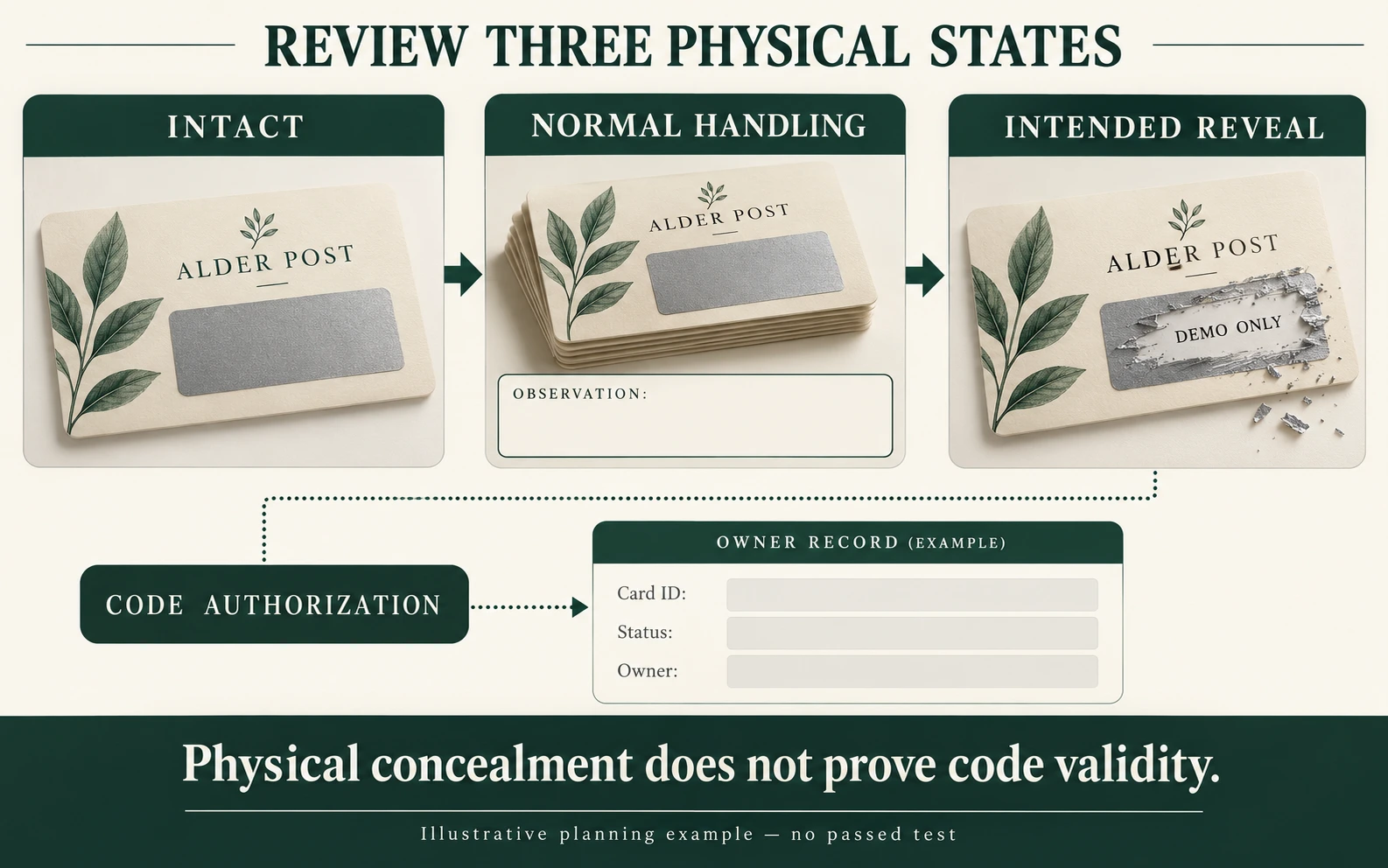
Separate physical concealment from code control
If unique information is involved, obtain representative non-live data for early layout work where appropriate. Have the information owner define the actual release, allocation and exception rules. The printer should not invent a working code or repeat one simply because it fits the artwork.
The variable-data guide addresses controlled files and print reconciliation. Concealment adds another physical stage. Count and identify rejected, prematurely exposed or otherwise held pieces through the owner's process instead of assuming that an unused-looking card is available for release.
For a value-bearing or security-sensitive use, have the responsible specialists define the threat model and required construction evidence. Do not describe a general procurement guide, AI image or ordinary scratch-off sample as a security assessment. Promotional terms and any applicable legal review remain with the campaign owner.
Keep masking and tamper evidence distinct
An ordinary correction label hides information that should remain covered. A scratch-off field is intentionally revealed. A package seal may instead need to show an opening attempt. These tasks can share visual features while requiring different constructions and observations.
The tamper-evidence guide concerns the required visible indication and its limits. If both concealment and evidence of access matter, specify both and ask which identified construction can address them. Do not assume that one has been approved because the other looked convincing.
For a scratch-off feasibility enquiry, send the base material and finish, full-size field layout, non-live representative content, application responsibilities, handling route, intended reveal, quantities and destination. Use the promotional sticker project route to ask what can be provided. Those details let the next discussion address an intact field and a usable reveal while preserving the separate decisions about authorized information, exceptions and any security requirement.