
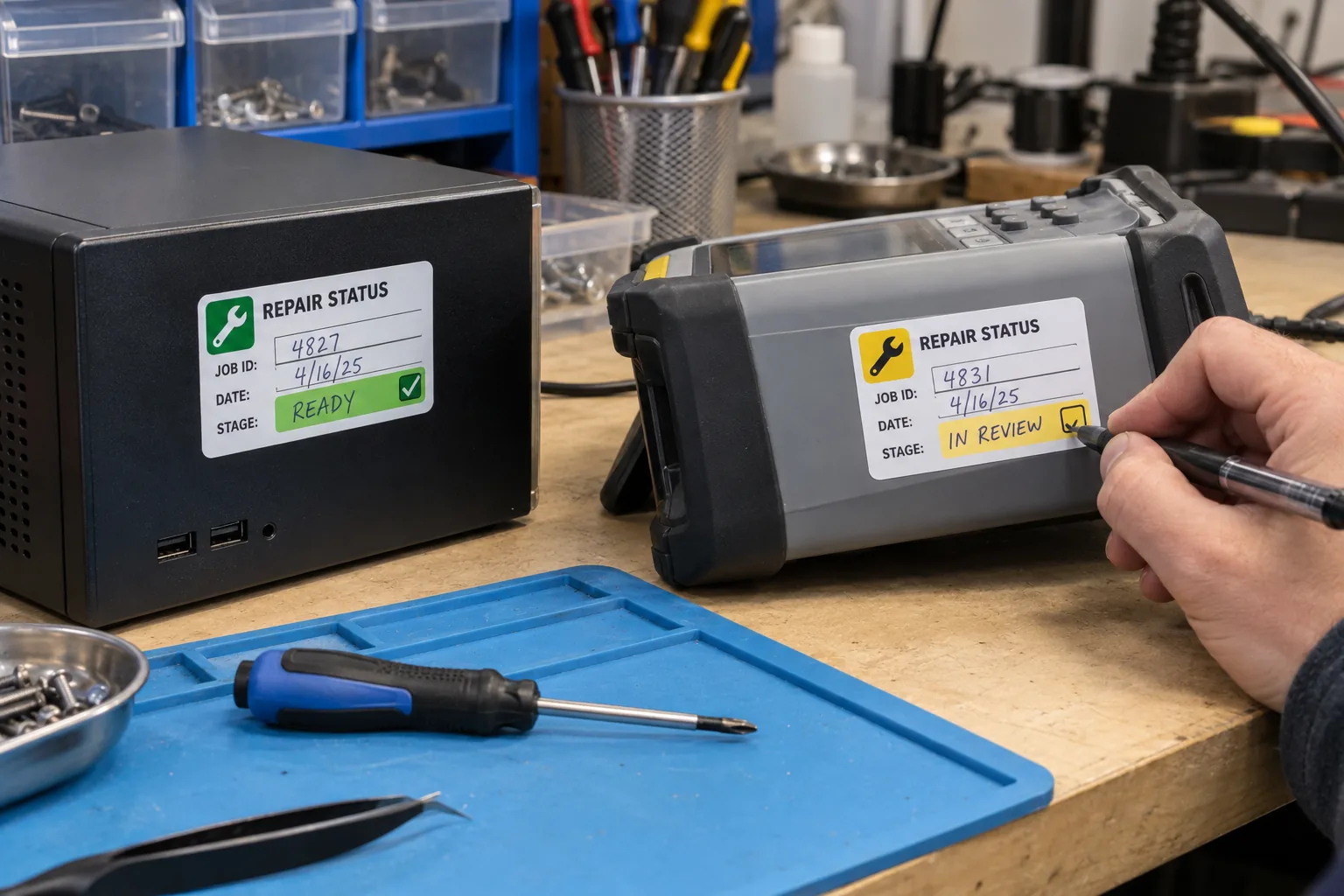
On a busy service bench, two similar devices can sit side by side with different problems and different owners. A repair status sticker is valuable because it makes the next hand-off explicit. I would put the job reference and present status first. A cute tool icon is fine, but it cannot be the only thing a technician sees.
Agree which fields are printed and which are written or overprinted: job ID, received date, stage, technician initials and any short handling note. Avoid exposed personal details unless the service operator has a clear need and permission. The label maker should not invent a privacy policy or a repair decision.
Pick a Surface That Will Not Cause Another Repair
| Location | Potential issue | Better check |
|---|---|---|
| Painted housing | Finish may lift on removal | Trial after real dwell time |
| Vent or control | Function may be blocked | Choose a separate panel |
| Serial plate | Identity becomes hidden | Keep existing ID visible |
| Carry handle | Frequent rubbing | Inspect during normal handling |
Test the intended pen or printer on the final face stock. A handwritten status that smears under workshop handling is worse than no status. Use original small status symbols only alongside readable words, especially if multiple teams work on the same job.
Follow the Sticker Through the Job
Apply samples to representative equipment using the normal intake routine. Handle, store and clean the item as usual, then remove the label after the expected service interval. Check residue, finish change and whether a label fragment remains near a control. Different device surfaces may need different attachment methods. Never imply one adhesive is universally safe.
Give the team a rule for status changes. Crossing out an old stage and writing a new one can be acceptable if the field is designed for it; piling labels on top of each other makes the last state ambiguous. The service operator owns the workflow and the final equipment check.
Make the Hand-Off Readable
- List the minimum visible job fields
- Mark approved placement away from controls
- Test writing or variable printing at final size
- Trial wear and removal after real dwell time
- Decide how status changes are recorded
- Keep customer details off exposed labels unless needed
The removable adhesive guide frames the removal test, while the serial label guide explains identifier discipline. Send equipment photos and field requirements through the specification planner. The best service label keeps a job moving without leaving a mark behind.
Questions Before You Order
Can a removable sticker be placed on any device finish?
No. Coatings, textured plastics and aged paint vary. Trial the label on representative equipment and confirm acceptable removal.
Should a repair label include customer contact details?
Use only information the service operator needs and is authorized to display. A job reference may be preferable to personal details on exposed equipment.
Can the sticker cover a serial plate?
Avoid covering existing serial numbers, safety markings, vents or controls. Choose a separate stable panel and approve placement with the equipment owner.