
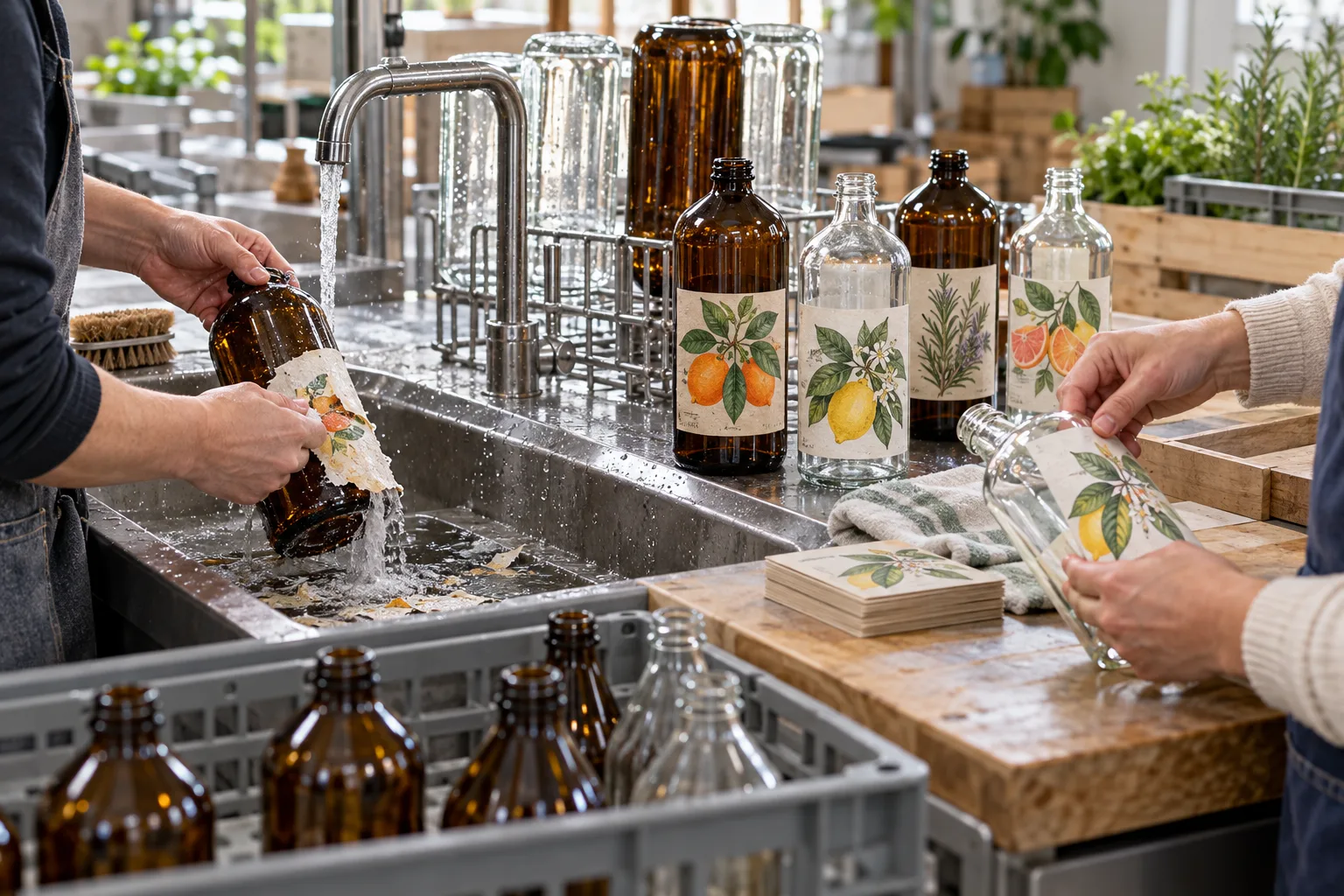
A refillable bottle label has two lives. The first is on a full shelf, where the illustrated citrus or herb design helps someone pick the right product. The second is at the wash station, where someone has to decide whether that label stays, comes off cleanly or leaves a sticky ring for the next cycle. I would ask about the second life before approving the first artwork.
Define the reuse model. Is the bottle refilled at home, returned to a shop or washed in a central facility? Does the brand keep a permanent front mark and replace only a small batch label, or remove the whole wrap each time? These choices change adhesive, face material, ink protection and how much work the relabeling step creates.
Test the Removal Route
Use the final glass bottle with its real surface finish. Apply labels using the intended pressure and allow the usual dwell before washing. Then follow the operator's actual wash method. Observe edge lift, tearing, residue and how long removal takes. A label that peels beautifully after one hour may behave differently after weeks on a filled bottle. Do not promise residue-free removal without a representative trial.
If the front label is meant to stay, check repeated wet handling and washing instead. Inspect print rub, adhesive edges and whether a new variable-data label can be applied without creating a layered mess. Do not use a broad "washable" claim until the project owner and supplier have agreed what wash cycle is being tested.
Make the Next Fill Easy to Identify
Keep the complete original product illustration and a strong product name, but reserve a practical field for the current variant, fill date or other owner-approved information. Return sorting matters: a similar-looking herb and citrus bottle should not rely on a tiny color shift alone. Test relabeling on bottles after they have been washed and dried, then check whether the fresh label sits flat on the cleaned surface.
- Define keep-or-remove for each label panel
- Provide final glass bottles and wash method
- Trial realistic dwell before removal
- Inspect residue, print and operator time
- Proof current variant and data fields
- Apply a new label after the real wash
See the removable versus permanent guide and the refill jar label guide for related material choices. Share bottle photos, washing details and the intended number of reuse cycles in the project brief. The best label is the one the next operator can work with.
Questions Before You Order
Does removable adhesive guarantee residue-free washing?
No. Glass finish, wash chemistry, dwell time, label construction and handling all affect removal. Test the real bottle and process.
Can a permanent label stay through repeated washes?
That depends on the construction and washing conditions. Define whether the artwork should remain or be replaced before choosing materials.
Who verifies food-contact or reuse claims?
The product owner must assess the bottle, washing process and applicable market requirements. A decorative label alone does not establish compliance.