
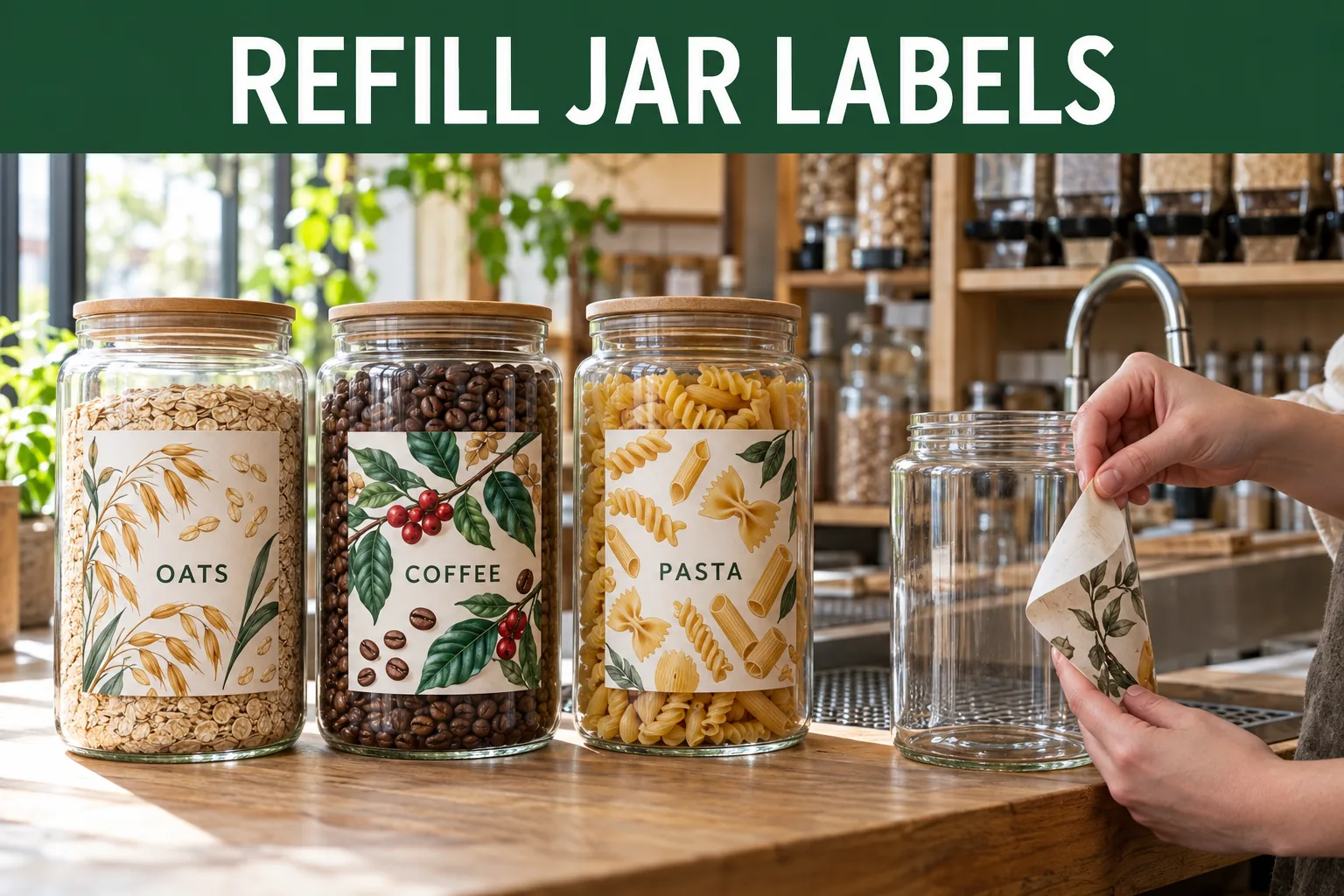
A refill shop can make a glass jar look lovely once. The harder job is making it clear and usable after the jar is emptied, washed and filled again. If a paper label leaves a stubborn rectangle on the glass, the next refill starts with scraping. If the label is too easy to remove, it may fail while the customer is carrying the jar home.
I would separate two questions: what information belongs to the reusable container, and what information belongs to this fill. A permanent decorative mark might identify the shop. The food name, batch or other approved details may need to change. Designing those as one inseparable label can create avoidable waste and confusion.
Map the Jar's Second Life
| Moment | What to inspect | Possible choice |
|---|---|---|
| First fill | Curvature and clear viewing area | Front identity plus separate detail area |
| Handling | Grip, condensation and abrasion | Test material on a filled jar |
| Emptying | How the old contents are identified | Clear removal instruction |
| Washing | Water, detergent and temperature | Trial the exact removal process |
| Next fill | How new data replaces old data | Approved version or variable label |
Use the actual jar shape and fill level. A label that wraps around a short, broad jar may hide most of the contents. A small original illustration of grain, beans or tea can identify the category while leaving a window onto the real product. Avoid assigning a fixed food illustration to a container intended for many different foods.
Choose Removal by Testing, Not by Name
Ask what the shop actually does: hand wash, dishwasher, soak, scrape or return to a central wash. Apply a proposed sample to the cleaned production glass, let it sit for the expected use period and then run that process. Check both the label's hold during use and the residue afterward. A material called removable may behave differently after heat or months on a shelf.
If the shop expects customers to relabel at home, legibility and easy handling matter. A small writable area may be more useful than a dense printed panel. The food business remains responsible for required contents, allergen, origin and date information in each market; the print proof should use only supplied, approved copy.
Keep the Refill Routine Simple
- Photograph the actual jar and lid together
- Identify information that changes with each fill
- Measure the clear viewing area in mm
- Test grip, storage and the real washing method
- Check removal residue after a realistic dwell time
- Approve copy and version control for every product
Read the removable versus permanent guide before choosing a construction, and compare the spice jar label guide for smaller containers. Send jar photos and the wash routine through the specification planner. A useful refill label respects the next person who has to remove it.
Questions Before You Order
Will a removable label always wash off cleanly?
No. Glass preparation, adhesive, water temperature, dwell time and washing method affect removal. Test the exact construction in the intended process.
Can one jar label serve several foods?
A fixed brand mark can remain, but product identity and owner-approved information must match the actual contents. Plan a controlled way to replace variable details.
Should the label go on the lid or jar?
Choose based on the handling and washing sequence. The lid and jar may be separated, so do not put essential identity in a place that can be mismatched.