
One decorated planner spread closes comfortably. A whole issue can be a different product: the same heading position may receive an applied sticker on many leaves. Approving one page therefore leaves a question about the completed book, even when the individual sticker is readable and its date content is correct.
For repeated planner sticker overlays, review the complete intended placement pattern in a representative bound book before fixing the supplied collection. Keep that review separate from sheet usability and calendar proofreading. The procurement decision is whether the assembled book still serves its intended handling and closing routine.
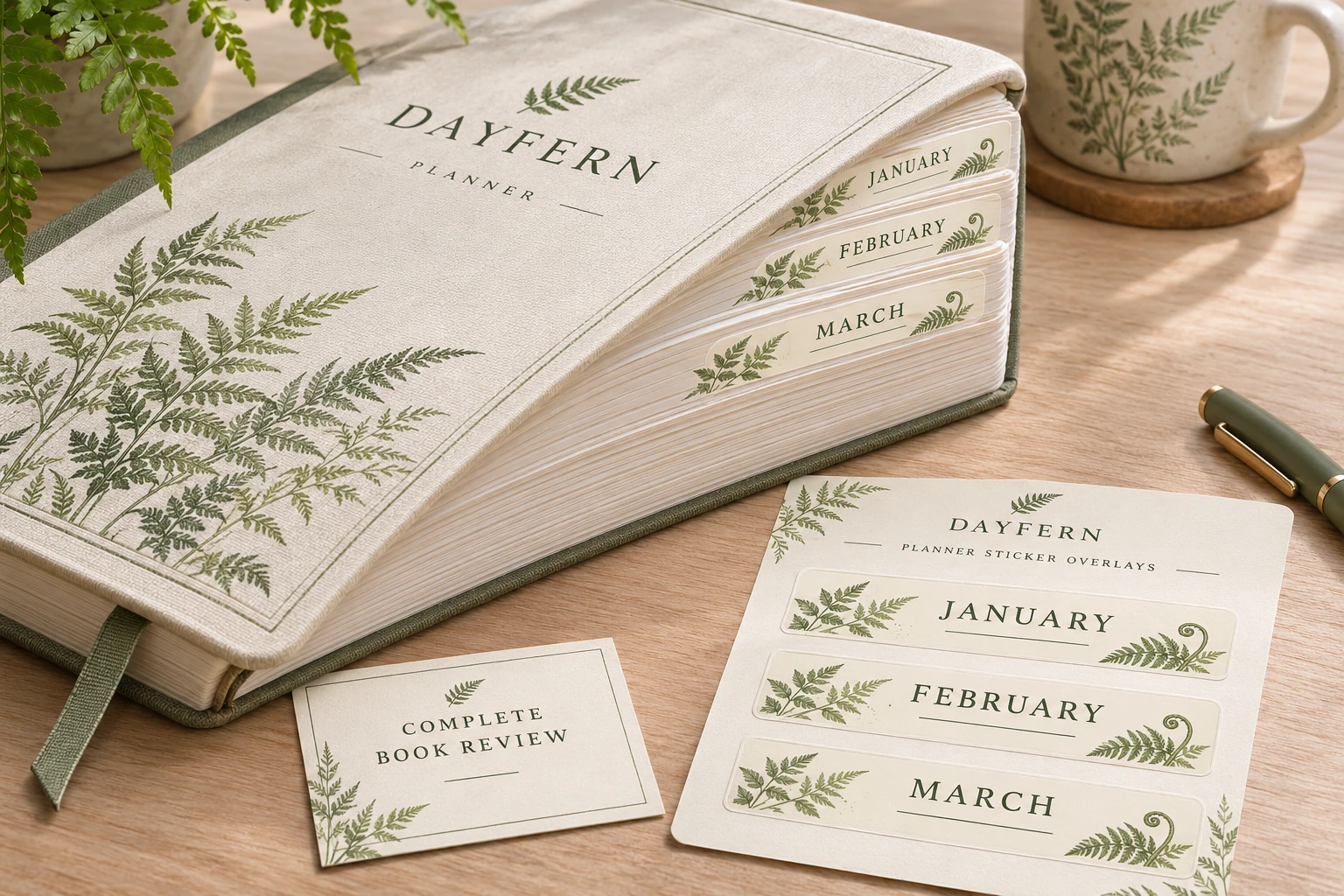
Map placements by region, not just total sticker count
Identify the planner edition, page size, binding and cover. Show where each overlay will sit and whether it appears on one side of a leaf or both. Include any existing labels that will remain underneath. A total piece count does not reveal whether added material is concentrated in the same area or distributed across the page.
Mark the beginning, middle and end of the intended coverage. A shortened mockup should retain its limitation: it represents only those placements, not a whole-year product. If users can add optional decoration, distinguish the proposed normal arrangement from an expressly defined additional-use scenario. Do not invent a heavy-use condition merely to create a dramatic failure photograph.
The stationery product range includes planner and calendar directions, with actual layout and use submitted for review. It does not provide a standard maximum number of overlays for every binding.
Use the applied construction in the discussion
The release backing normally leaves the sticker during application. Its thickness should not be treated as material remaining on every planner page. Ask which face, adhesive, print and protection make up the proposed applied item, and which parts a quoted thickness includes.
The 3M 7903 data sheet is an example of a document listing face, adhesive and liner separately and qualifying its values as typical. It is not a recommended planner material or a ZC Labels specification. Use an identified reference for the actual proposal rather than borrowing its dimensions.
Multiplying a stated applied thickness by a repeated count can be a rough planning aid where positions align. It does not predict the finished book's shape, closing force or page-turn behavior. Placement, existing paper and the binding arrangement remain relevant. The thickness-basis guide addresses what a number includes; a full-book review addresses what the accumulated application does.
Build the book in its intended end state
Ask the product owner and supplier which representative specimens are needed. Use the intended printed construction where a physical conclusion depends on it. Paper placeholders can explain a placement map; they do not establish adhesion, surface feel or the behavior of the final layered arrangement.
| Input | Observation to retain | Limit to record |
|---|---|---|
| Named book edition and page reference | How the undecorated reference opens and closes | A different binding or paper is not represented |
| Complete overlay map and construction | Where material is added through the issue | Missing or substitute pieces remain identified |
| Completed proposed placement | Closed-book profile, cover relationship and normal page turning | A neat isolated spread cannot approve the complete arrangement |
| Actual closure or sleeve, if supplied | Whether the finished assembly follows its intended handling route | Additional pressure used only for the photograph is not normal use |
Agree the relevant observations and the person accepting them. This guide specifies no universal allowable swell, force, sticker thickness or placement count. If the book requires forceful closing to appear normal in a photograph, preserve that handling condition rather than describing the picture alone as an accepted fit.
Check the intended writing and page-turn actions after the complete arrangement is present. A step between decorated and undecorated areas may matter to the owner's writing task even where the cover still closes. Describe the observed effect without claiming it will occur in every planner.
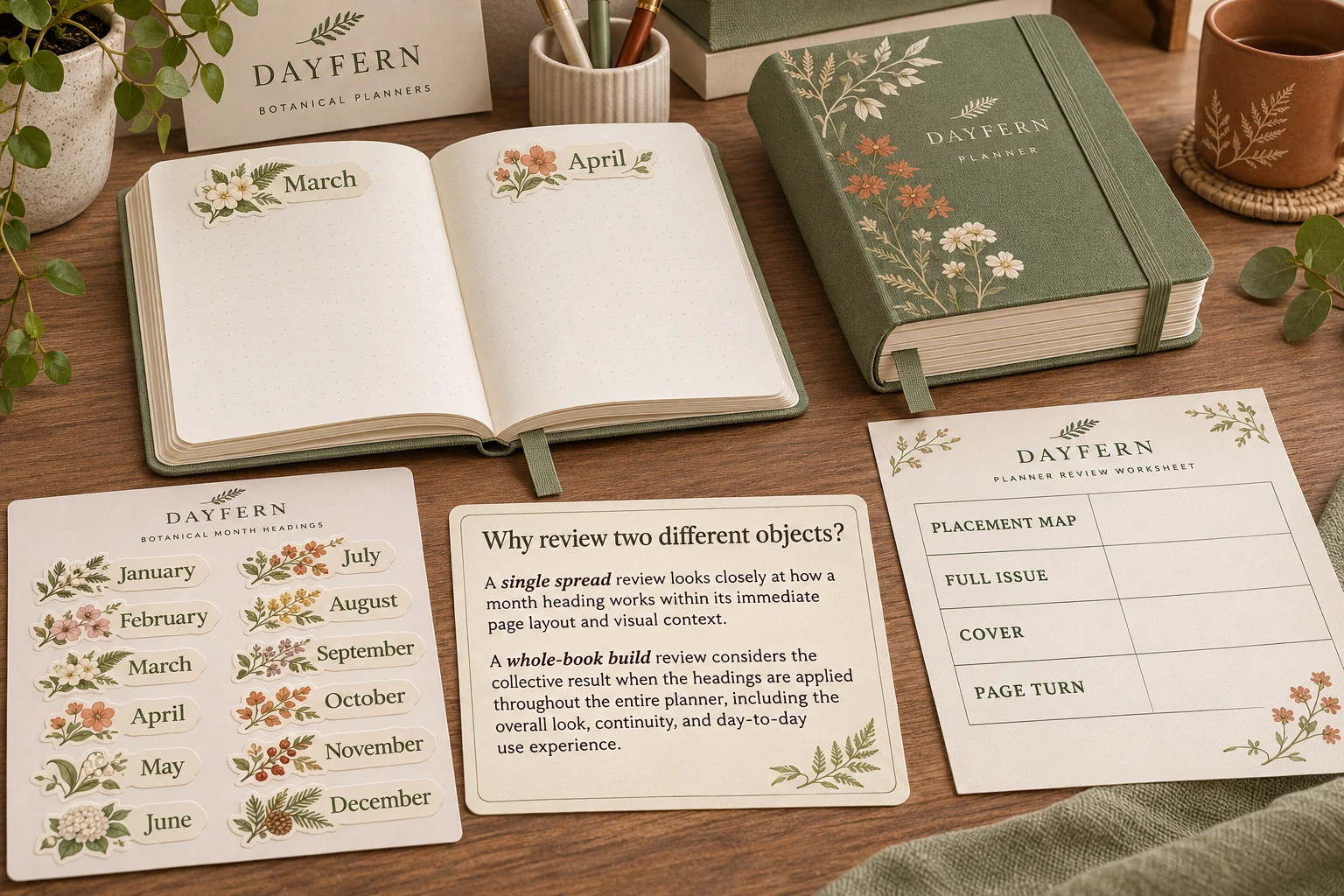
Change the variable that caused the unresolved use question
If the complete arrangement needs revision, compare options against the actual task. Fewer overlays can reduce added material but may remove intended information. Moving a heading changes placement and could affect readability or the planner layout. Another available construction changes the material proposal and needs its own writing, print and attachment review.
A different book format is another owner decision, not a free production correction. Retain the consequences for cover, binding, sleeve, artwork and packing. Do not promise that changing sticker stock alone makes every existing planner suitable.
If an overlay replaces printed dates or wording, the calendar-content guide controls the dated arrangement. A book that closes well can still contain a wrong date. Likewise, a correctly redated page does not establish whole-book handling. Resolve both within their own scope.
Keep the complete reference with the order
Retain the book edition, placement map, construction reference, supplied sheet versions and accepted full-book observations together. A change in page count, application position or added finish should trigger a review of the affected conclusion rather than automatic reuse of an earlier single-page sample.
If only a partial book or substitute construction is available, state what the present review can support and what remains pending. A shorter demonstration can explain the concept without approving the full issue. Ask for the missing representative reference before declaring the assembled product ready.
Send ZC Labels a planner-overlay brief with the actual book edition or representative sample, full placement map, repeated quantities by position, existing layers, final-size artwork, intended writing and closing routine, sheet quantities and packing. Ask which proposed construction and sample scope can be reviewed under the current sample policy.