
Two quotations list the same thickness. One refers to the face material. The other includes the adhesive and backing. The buyer believes the products are comparable until a sample feels different or the delivered web raises another handling question. The missing information was the measurement boundary, not another decimal place.
When specifying custom sticker thickness, name the included layers and the condition of the specimen. Keep the printed face, adhesive, any additional protection and removable liner identifiable. Then ask what the supplier's stated value represents. A thickness number without that basis cannot reliably describe the label that remains on the package or the complete material supplied to the line.

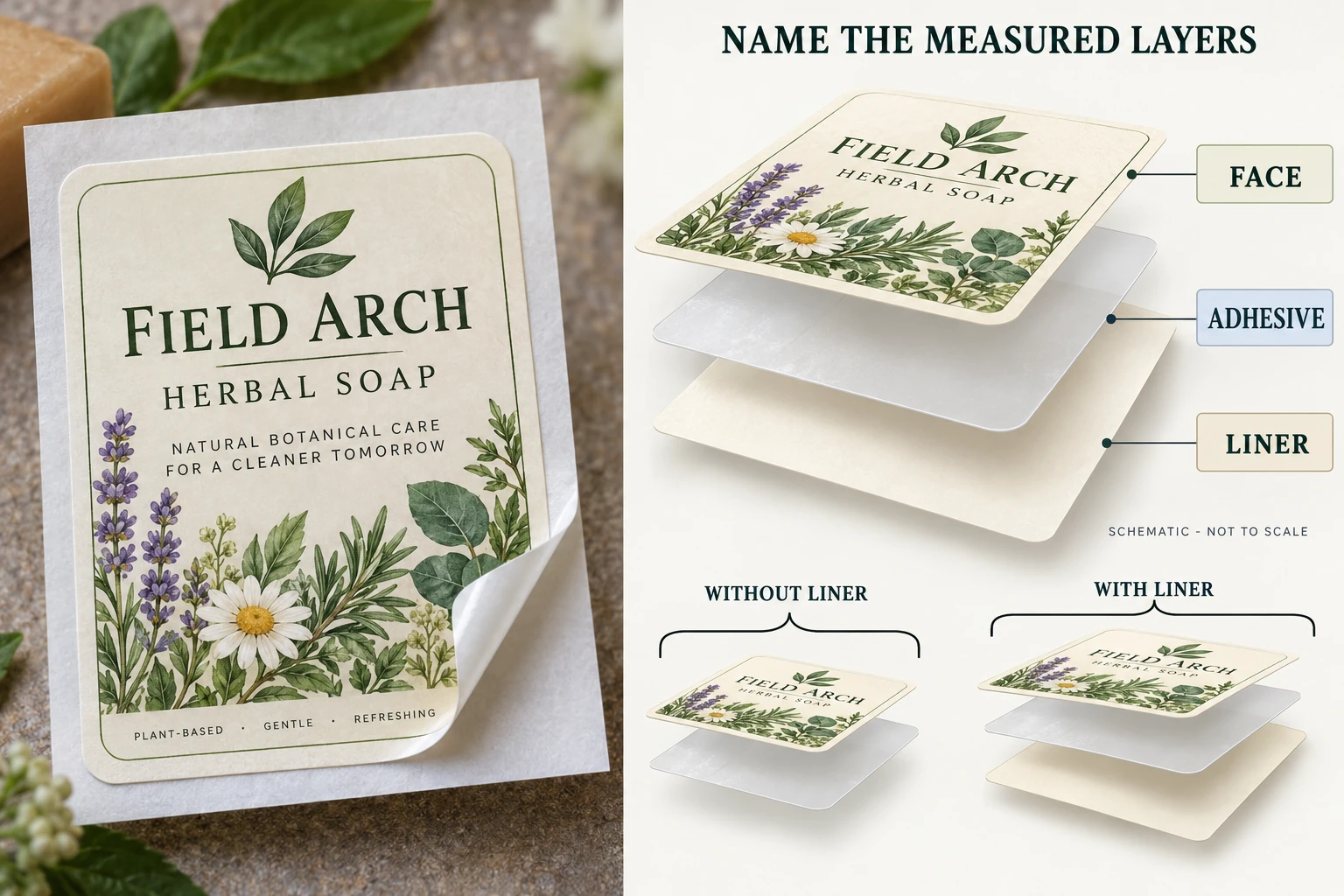
Draw the stack before comparing the number
Identify the face material carrying the print, the adhesive and the release backing. If a laminate or other protective construction is proposed, keep that separate as well. Ask which of these the quotation's thickness includes and whether it describes raw material or the proposed finished label.
Do not assume that a thicker-looking backing becomes part of the applied sticker. The liner supports and protects the label before separation; its role in delivered handling is different from the layers that remain after application. A sample can illustrate those parts without establishing their actual dimensions.
3M's Sheet Label Material 7903 technical data sheet lists face, adhesive and liner thickness separately. It also identifies its technical data as representative or typical rather than specification limits. Those are properties and limitations of that product's document, not ZC Labels specifications or a recommended stock for this order.
Keep the unit and value type visible
Record the unit exactly as supplied, including whether a value is nominal, typical or an agreed acceptance requirement. Ask for clarification where the document does not say. Do not promote a typical data-sheet value into a guaranteed manufacturing tolerance.
If quotations use different units, normalize them carefully while retaining the original value and source. A conversion does not fix a mismatch in included layers. Two precisely converted numbers can still describe different objects.
| Thickness field | Question for the supplier |
|---|---|
| Face material | Does the stated value describe only the face? |
| Adhesive | Is it separately identified or included? |
| Protection or finish | Is it part of the proposed finished construction? |
| Liner | Is its thickness listed separately? |
| Complete supplied material | Which layers and specimen condition are included? |
| Value status | Typical, nominal or an expressly agreed requirement? |
If the project requires a measured limit, have the responsible technical parties agree the specimen, method, conditions and interpretation. This guide does not prescribe a measurement instrument, pressure or tolerance. The purpose is to make the requirement comparable before a technical acceptance decision is made.
Explain why the dimension matters to the job
Tell the supplier what decision the thickness requirement is intended to support. The buyer may be concerned about the edge on a package, the feel of an individual giveaway, the supplied web or a defined equipment requirement. Those are different reasons to ask for a number.
Do not use thickness as a complete ranking of quality. A larger number alone cannot establish adhesion, print protection, flexibility or suitability for a curve. Review the identified construction and relevant sample against the actual purpose instead of making the number carry unrelated promises.
The construction comparison guide keeps face, adhesive and protection separate in the quotation. Use the same discipline here: changing one component can alter the comparison even when another component's thickness remains familiar.
Separate applied feel from supplied-web handling
For an individual sticker, examine a representative finished piece and the applied result where relevant. Record what the buyer is actually judging: edge appearance, handling or another defined feature. A thick backing can make the unpeeled item feel substantial without establishing the feel of the applied label.
For rolls, obtain the actual equipment requirements instead of inferring compatibility from a total caliper. Core, outside diameter, web width, winding, sensing and dispensing remain separate inputs. A thickness statement is useful only within that wider identified construction and application route.
The liner selection guide covers backing release and handling. Do not change the liner solely to achieve a preferred total number without reviewing the behavior that the proposed substitution must preserve.
Compare substitutions against the same boundary
An illustrative supplier may propose a different liner while retaining the same face material. The complete supplied material could then have a different stated thickness even though the face value is unchanged. Ask what changed and which observations need repeating; do not describe the whole product as equivalent from the face value alone.
Another proposal may add protection to address a particular use requirement. Record whether the quoted finished construction includes it and whether the reference sample represents it. A photograph of the earlier unprotected sample cannot settle the appearance or thickness of the revised proposal.
If the original specification is incomplete, clarify it before ranking the prices. The custom roll label page provides the supply route, but the actual layer references and requirements still need confirmation for the project. No default ZC thickness or tolerance is promised in this guide.
Send the number with the question behind it
For a thickness-basis review enquiry, send the current specification or data-sheet reference, artwork, finished dimensions, delivered format, actual package or equipment requirement, quantities and the reason thickness matters. Mark which layers the existing number is believed to include and which remain unknown.
These inputs let the supplier confirm the measurement basis or propose the reference needed to resolve it. The useful approval names the construction and relevant evidence. It does not rely on two similar-looking numbers that were never measuring the same stack.