
The product label needs to travel with a box and later move to a receiving record. The buyer asks for a removable sticker. That request may describe only the first separation, while the real job also needs an identified piece that can attach to the next surface without losing its information or its connection to the box.
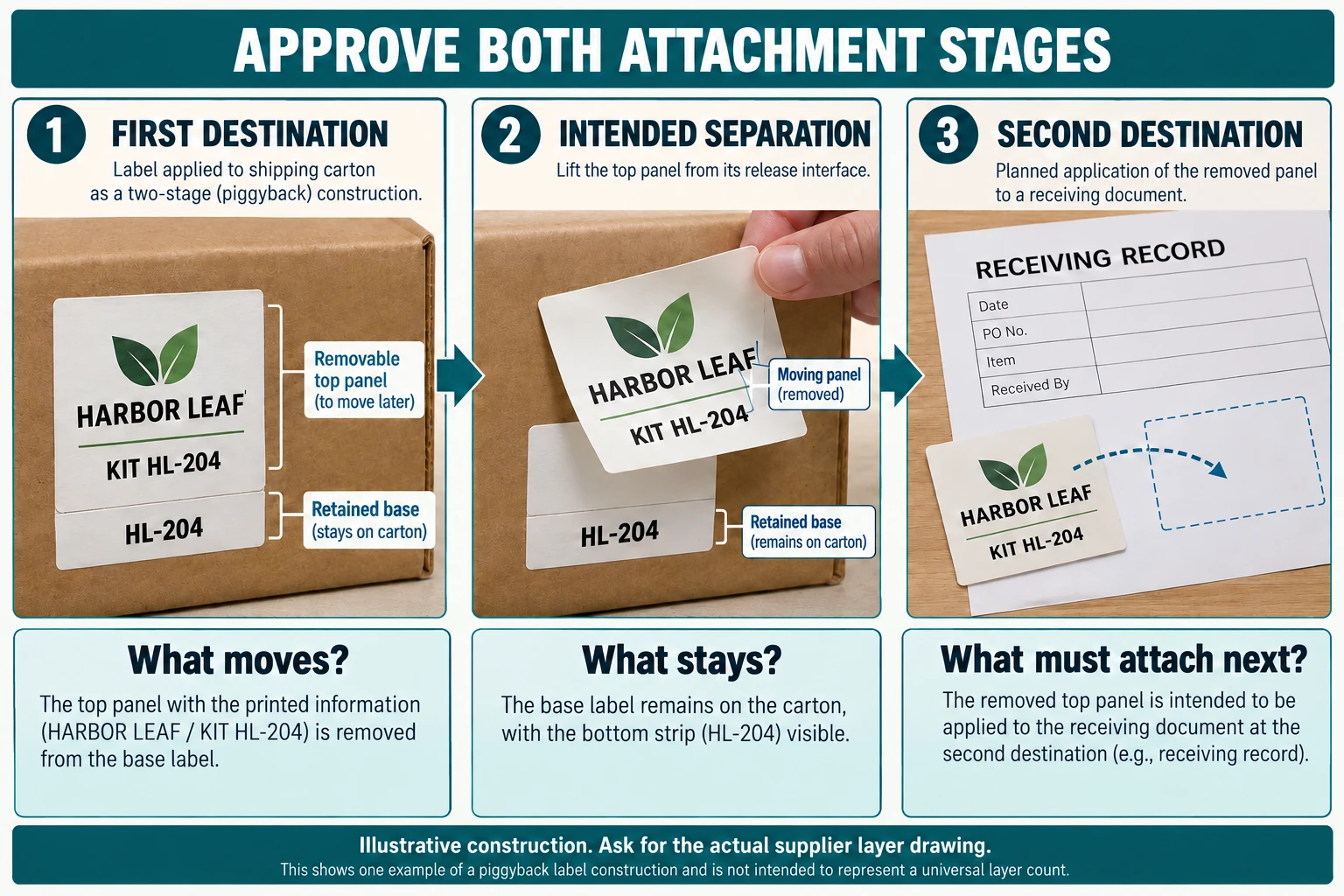
For piggyback labels, begin with the two destinations and the layer that moves between them. Ask the supplier to show the proposed construction in its supplied, first-applied and transferred states. A familiar format name does not specify which part stays, which part leaves or what each attachment must accomplish.
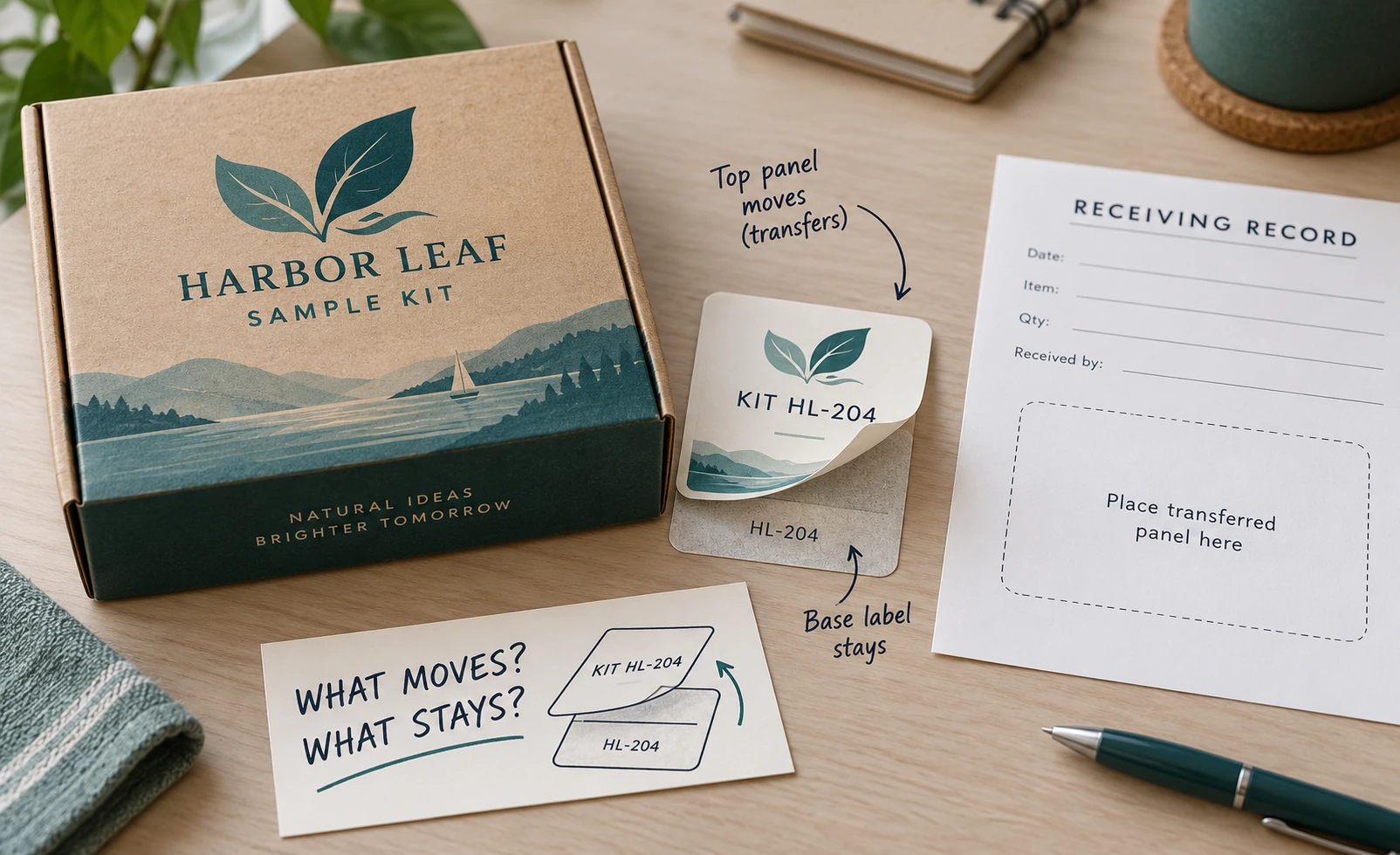
Draw the two destinations separately
Identify the first contact surface and the later one. A carton, plastic item, paper record and another package can have different finishes and handling requirements. State where the label starts, when it is moved, who moves it and which information must remain readable at each stage.
If only part of the label is supposed to transfer, mark that piece. If a reference must remain on the original item, identify it as well. Do not expect an illustration of the complete label to explain a removable panel that is absent from the drawing.
The record should describe the work rather than assume a particular layer count. Suppliers may use the same informal term for different constructions. Obtain the actual proposed arrangement before approval, especially if the business already uses another product called piggyback.
Ask the supplier to identify every separation
A conventional label on its liner has a separation before initial application. A two-stage transfer construction adds another intended separation or retained carrier relationship. Ask which interface the user opens at each step and which adhesive surface becomes available for the later attachment.
Zebra's supplies selector includes a particular piggyback construction for a later application. It is evidence that such purpose-built material arrangements exist, not a layer drawing, supply promise or approval for this project. Request the proposed supplier's own reference and interpretation.
Do not try to create the same outcome by peeling and reusing an ordinary permanent label. That would be a different material and evidence question. Equally, a removable adhesive label is not automatically designed to preserve a second controlled attachment after its first use.
Keep identity attached to the physical move
Decide whether the transferred piece repeats the original item's identity, carries a different reference or serves only a visual administrative task. The business that owns the information must define the relationship. The printer should not invent a serial, barcode or matching rule to make the sample look complete.
If two readable references remain after separation, ask how the operation prevents them being associated with the wrong item or record. A good-looking duplicate can still produce a bad handoff if the operator does not know which copy belongs where. Quantity reconciliation and identity association are separate checks.
The variable-data guide covers supplying and releasing information fields. The serial-label guide covers controlled individual identities and replacements. Here the narrower purchase decision is how the physical construction carries the approved information through two attachment stages.
Review the complete sequence with identified samples
Use representative first and second surfaces, and identify the proposed material and artwork. Review the piece as supplied, its first application, the relevant dwell and handling, the intended separation and the later attachment. Agree observations with the responsible owner rather than choosing a convenient immediate peel and calling the whole route passed.
| Stage | Question the review should answer |
|---|---|
| Supplied item | Can the operator identify the correct piece and its intended starting interface? |
| First destination | Does the specified part attach and remain usable through the agreed first stage? |
| Transfer action | Does the intended part separate in the required state? |
| Second destination | Does it attach and communicate the approved information there? |
| Remaining item | Is the leftover label or reference in an acceptable state? |
Record anything that changes between attempts: construction, surface, dwell, size or handling. If several factors change together, preserve that limitation. One improved result cannot tell the supplier which change mattered.
For machine-fed material, include the actual printing or application equipment requirements. A hand demonstration does not establish whether a thicker or more complex supplied web will load, track, print or dispense. Keep the complete construction within the line owner's review.
Compare two ordinary labels as a legitimate alternative
Sometimes two separately supplied labels fit the workflow more simply. That route can avoid a specialized separation, but adds a selection, matching or application task. A purpose-built piggyback format can keep the pieces physically connected at first, but still requires agreement about construction, handling and identity.
Compare those routes using the actual process and quotation. Do staff need to move information at the point of use, or can the second label be applied earlier? Would an approved duplicate supplied in a controlled group complete the job? Is a paper record still needed, or does the authorized operation use another information route?
Do not assume a specialized label is automatically more professional or two labels automatically cheaper. Obtain the available scope, packing and quantity basis. If a proposal changes how the information is controlled, keep that decision with the business owner rather than burying it in a material substitution.
Release a drawing that survives the handoff
Retain the three physical states, the identified moving piece, artwork revision, surface references and accepted observations together. Distinguish a supplied-piece count from the number of panels printed on it. If one item contains two information areas, that does not automatically mean the order consists of two supplied labels.
When the first package, later record surface or timing changes, compare that change with the original review. An accepted transfer on one paper does not approve a coated plastic destination by resemblance. Keep the required separation and the later retention result visible as different parts of the same task.
Use the custom roll label project route to describe the proposed supply format. Send sketches of all states, photographs and known finishes of both surfaces, approved information, timing and handling, dimensions, equipment requirements if any, quantities and destination through the two-stage label enquiry. Ask which construction or alternative can be provided. Those references let the next discussion assess a real physical transfer instead of treating removable as a complete specification.