
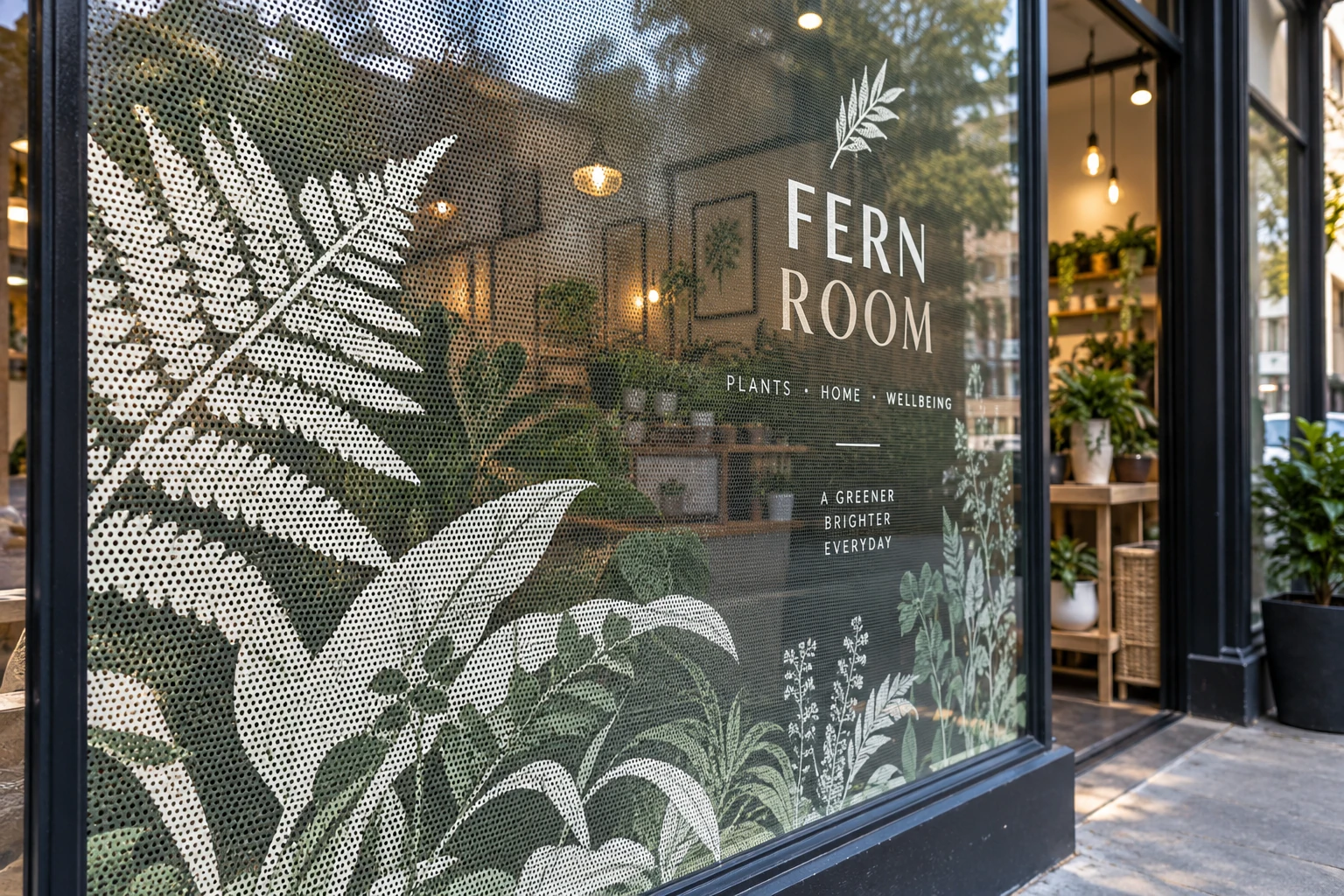
A shop window needs a large promotional image while staff still want a view through the glass. The proposal says one-way vision film. Before approving it, define the view from each side and the lighting conditions in which those expectations must hold. Perforated graphics are not a universal privacy barrier.
The purchase combines an image surface, open perforations, a particular installation side and a real window. Treat those as one viewing system rather than choosing a material from an attractive outside photograph.
Define both viewing tasks
Record what pedestrians should read outside and what occupants need to see inside. Include normal viewing distance, occupied positions and relevant day and night conditions. Ask the installer and film provider to review the actual glass, installation side and lighting relationship.
ORAFOL's ORAJET 3676 datasheet describes a particular perforated printed face and dark backing for transparent substrates. Its stated open/printed geometry and application conditions belong to that product; do not treat them as universal specifications or a promise of privacy in every environment.
Review detail at actual distance
Perforations are part of the image-bearing surface. Print the intended important word, logo and fine feature using the proposed process, then view a representative reference at the relevant distance. A smooth screen rendering can conceal how small details interact with the holes.
If the message becomes difficult to read, compare larger text, simpler artwork or a different allocation of window space. A smaller solid graphic may serve an important message better while leaving an uncovered view elsewhere. The owner must choose the balance rather than assuming maximum coverage is the only useful option.
| View | Decision to document |
|---|---|
| Outside promotional view | Required reading distance and critical content |
| Inside occupied position | What must remain visible through the window |
| Different lighting states | Which changes in appearance are acceptable |
| Installed edges and obstructions | Where handles, frames and required clear zones interrupt coverage |
Let the glazing and installation owners review compatibility
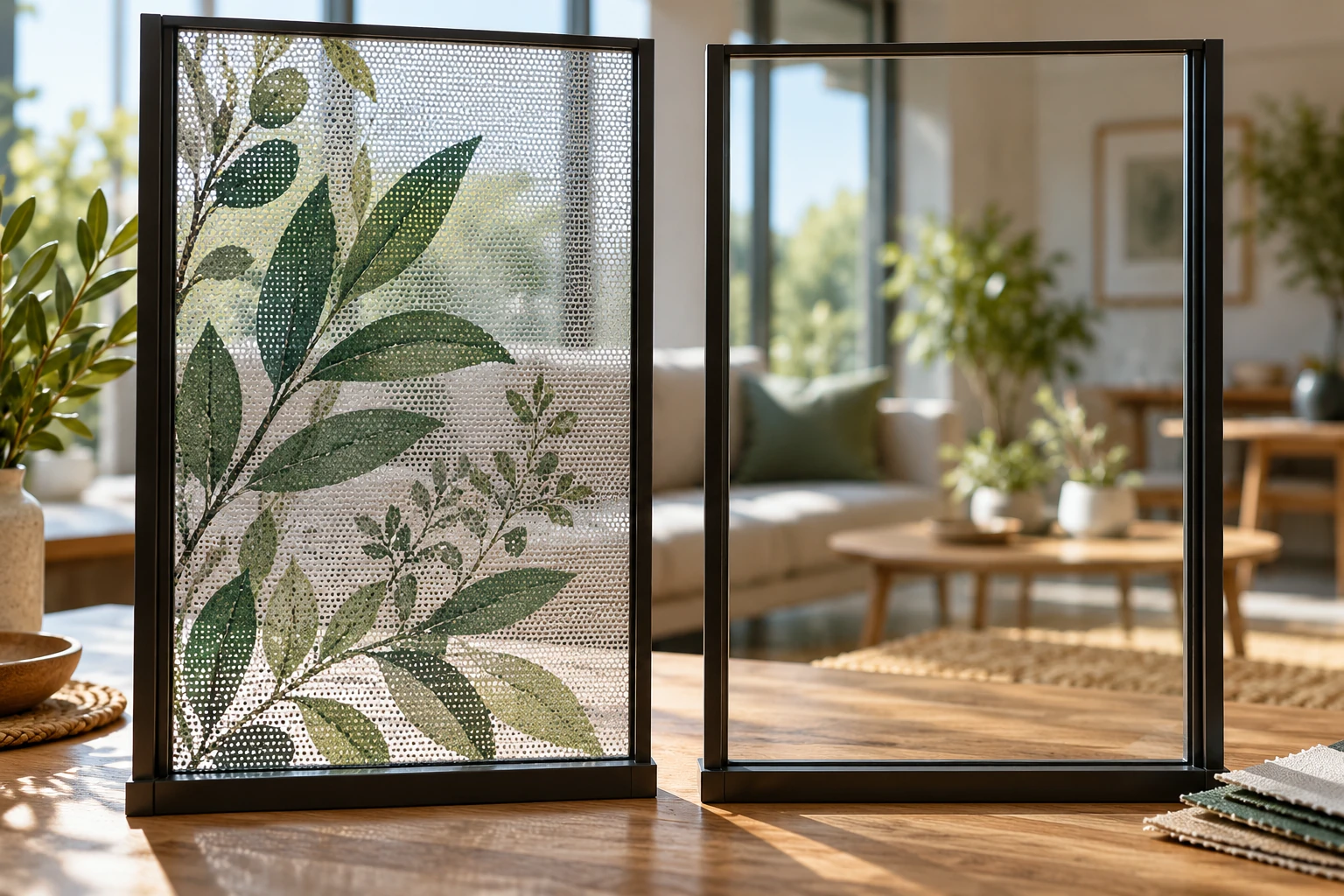
Supply known glass type, coatings, existing treatments, dimensions and condition. Obtain the relevant installation and surface-compatibility review before applying a large graphic. A product intended for one glazing arrangement should not be approved for another by appearance alone.
Ask whether an overlaminate, edge treatment or other protection is part of the proposed system and how it affects the perforations and view. Use the provider's current instructions; do not improvise an ordinary solid-film finish because it looks similar in a sample book.
Keep maintenance and removal in scope
Agree cleaning access, relevant exposure, intended display period and removal responsibility with the installer and owner. Record observations of the complete installed reference. Moisture, dirt or another changed condition can affect the viewing task without changing the artwork.
The double-sided window guide concerns two printed views; the window attachment guide compares another physical choice. This article owns the tradeoff between a perforated image and through-view on one actual pane.
For a window graphic enquiry, send pane photographs, known glazing details, coverage drawing, both viewing needs, lighting conditions, artwork and installation responsibilities. Ask whether a suitable perforated or alternative route is available and what on-site sample review is needed before release.