
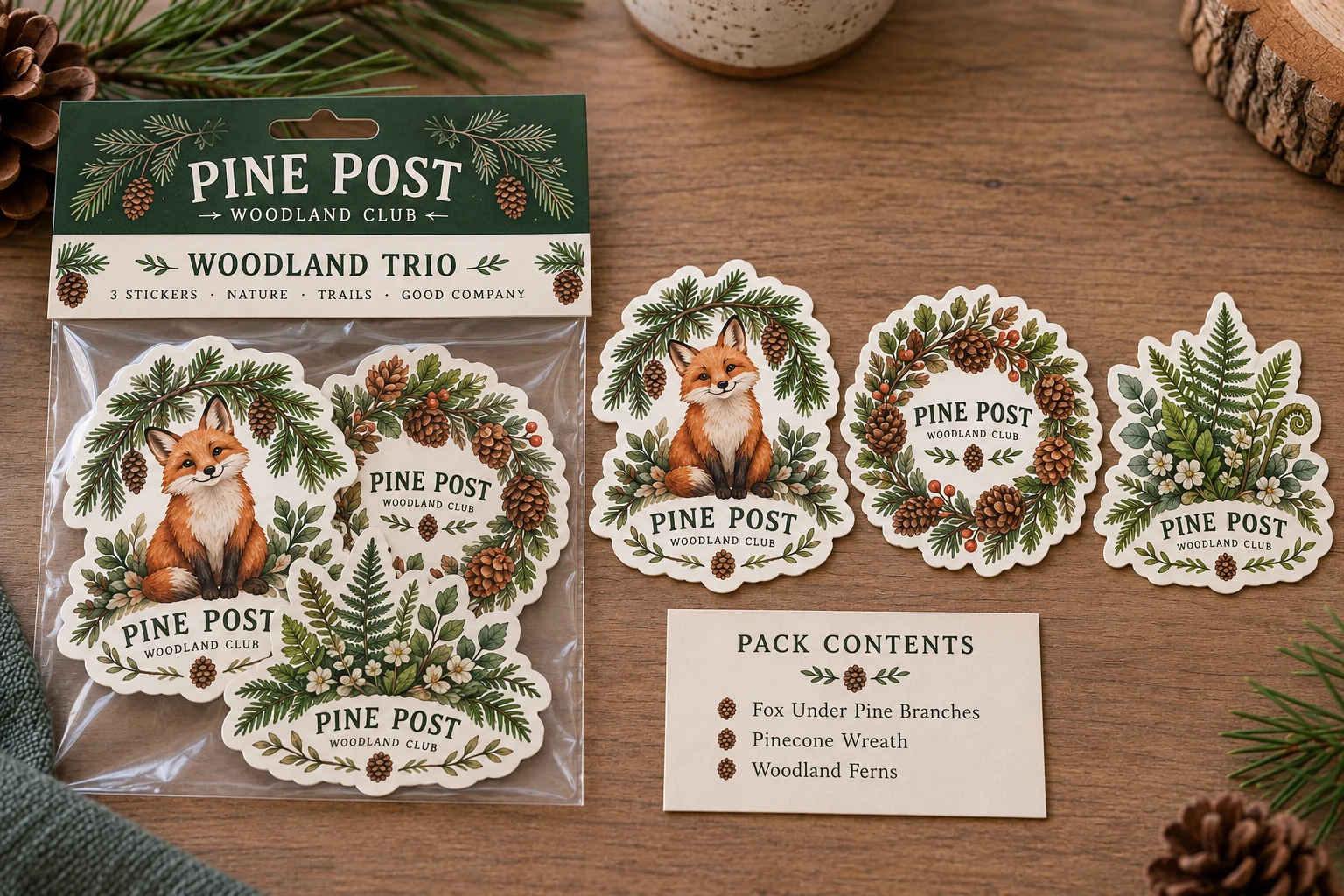
Consider an illustrative enquiry for a small order of 600 stickers. The attached retail concept contains three different designs in each pack, and the buyer actually needs 200 complete packs. Another supplier reads the request as 600 pieces of each design. Both can reply with a number while discussing different quantities.
For low MOQ custom stickers, turn the desired first order into a clear allocation before asking for a minimum. Show designs, pieces per design, finished packs or sheets and the purpose of the trial. A total quantity alone cannot explain which production and packing tasks must remain workable at the smaller scale.
Define the smallest order that answers the project question
Name what the buyer needs to learn or supply. A material review, a trial on a packing line and an initial retail assortment are different tasks. The smallest useful quantity depends on that task and on what the supplier can confirm, not on a generic promise that every sticker format has the same starting point.
If the open question concerns appearance or fit, ask which reference or sample route is available before assuming it requires a retail-ready order. If the buyer needs saleable packs, keep the required composition and packaging in the brief. A sample and a small commercial order should not be treated as interchangeable.
State confirmed demand separately from a possible reorder. Future volume may help explain the project, but it is not an existing order or a guarantee that a supplier can price the first run as though the later quantity were already committed.
Build an allocation that can be checked
Use one row for each artwork or SKU. Record the finished size, required quantity, material or use requirement, format and any packing destination. If designs go into sets, identify the pieces of each design per set and the number of finished sets required.
| Quantity field | What it means | Common ambiguity to resolve |
|---|---|---|
| Pieces per design | Quantity carrying one identified artwork | Total project quantity mistaken for each design |
| Pieces per pack | Contents of one finished assortment | Loose-piece count mistaken for finished pack count |
| Number of packs | Complete units needed for sale or distribution | Assembly excluded from a loose-piece enquiry |
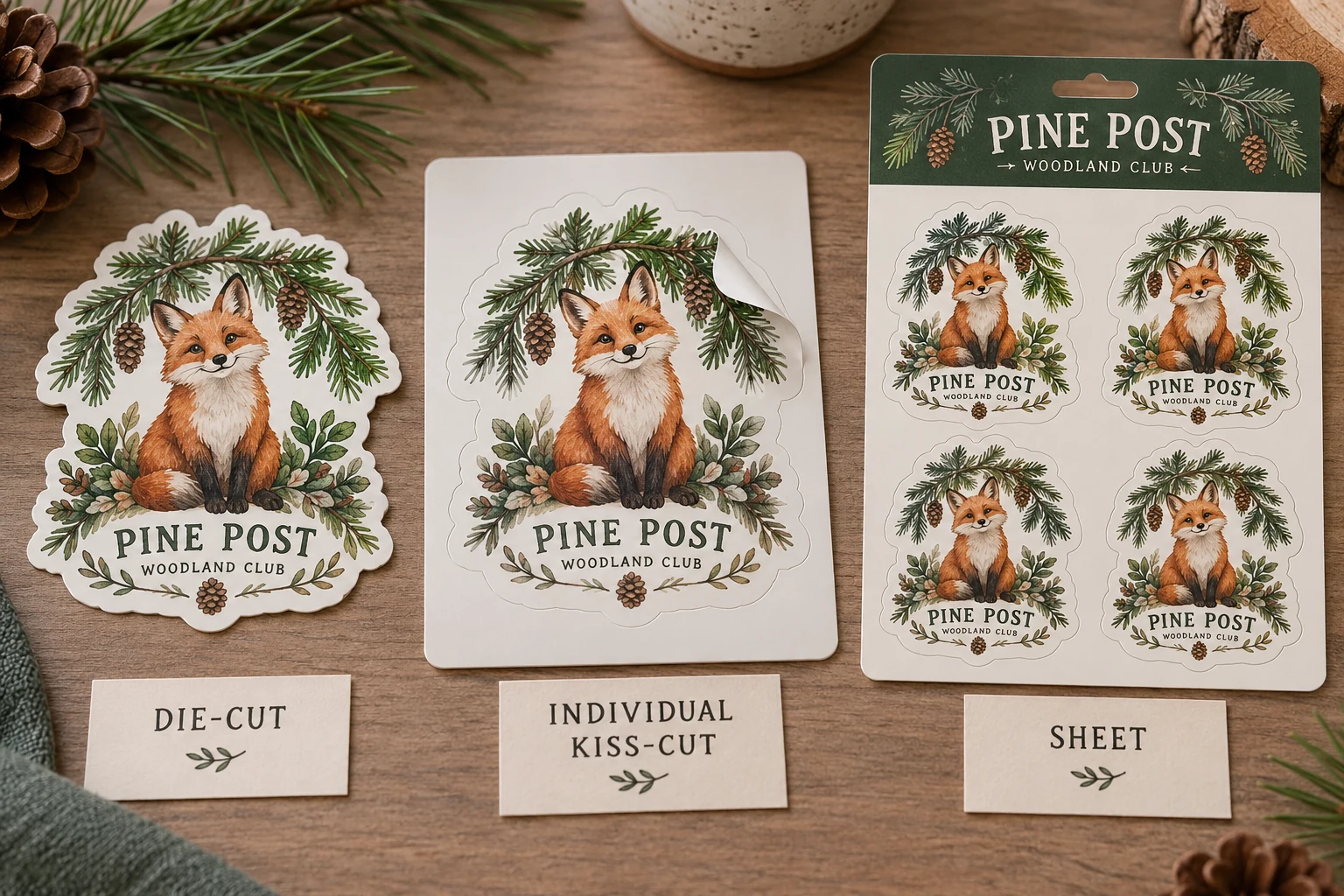
| Number of sheets | Complete backing sheets supplied | Sticker shapes counted as separate delivery units |
| Trial and reorder | Present requirement versus future possibility | Unconfirmed volume treated as committed demand |
As illustrative arithmetic, 200 packs containing one piece from each of three designs require 200 pieces of each design, 600 pieces in total. That relationship is not a minimum order policy. It only explains the allocation the supplier needs to evaluate.
Ask what is creating the small-order constraint
Different requirements can affect a proposed route: several artwork versions, unusual dimensions, special materials, cutting, sorting or assembled packing. Ask which parts constrain the actual proposal. Avoid assuming that the supplier's answer about one format applies to every product.
If an alternative is proposed, identify what changes. A combined sheet, standardized size, shared construction or simpler packing may be worth discussing. It is not automatically equivalent to the buyer's original product. A complete sheet sold as stationery cannot silently replace several loose pieces intended for individual distribution.
The retail assortment guide helps decide the pack contents. Once that decision is fixed, do not reduce the assortment merely to produce an attractive total without asking whether the remaining pack still serves the buyer's purpose.
Simplify the right variable
Compare alternatives against the trial objective. If the buyer is learning which artwork is preferred, removing most of the artwork may weaken the test. If the project is checking application on one package, using a shared size and construction across variants may make the trial easier to interpret.
Packing is another possible tradeoff. Bulk delivery may suit a buyer equipped to sort and assemble, but the work still has to happen somewhere. If staff time or counting accuracy matters, a quotation excluding assembly may solve a supplier constraint while creating a buyer-side problem.
Discuss the quantity and scope together. A lower unit amount at a larger quantity is not necessarily a lower commitment for the first order. The custom sticker cost comparison keeps quoted units, inclusions and total scope visible without inventing benchmark prices.
Keep the trial's limits visible
Identify which construction, artwork and packing the small order represents. If it differs from a proposed later run, record the differences and decide what needs another review. A small hand-applied trial cannot automatically approve a different automatic application route or revised package.
Keep observations tied to the question. A useful trial may establish that the chosen size fits a defined panel, or expose a layout issue worth correcting. It does not establish market demand or repeat-order performance merely because the pieces look attractive. Actual customer response needs its own records.
Do not publish a no-minimum claim or a numerical MOQ from this planning exercise. Availability, quantity, charges and timing require a current project-specific response. The factory-order guide explains how to carry the agreed scope into release.
Send ZC Labels a small-order allocation brief with the artwork list, dimensions, pieces per design, intended finished units, packing needs, use conditions and the decision the first order must support. Include a future quantity only as a clearly labeled possibility. That gives the supplier a defined small job to evaluate and lets the buyer judge whether a proposed simplification still answers the original need.