
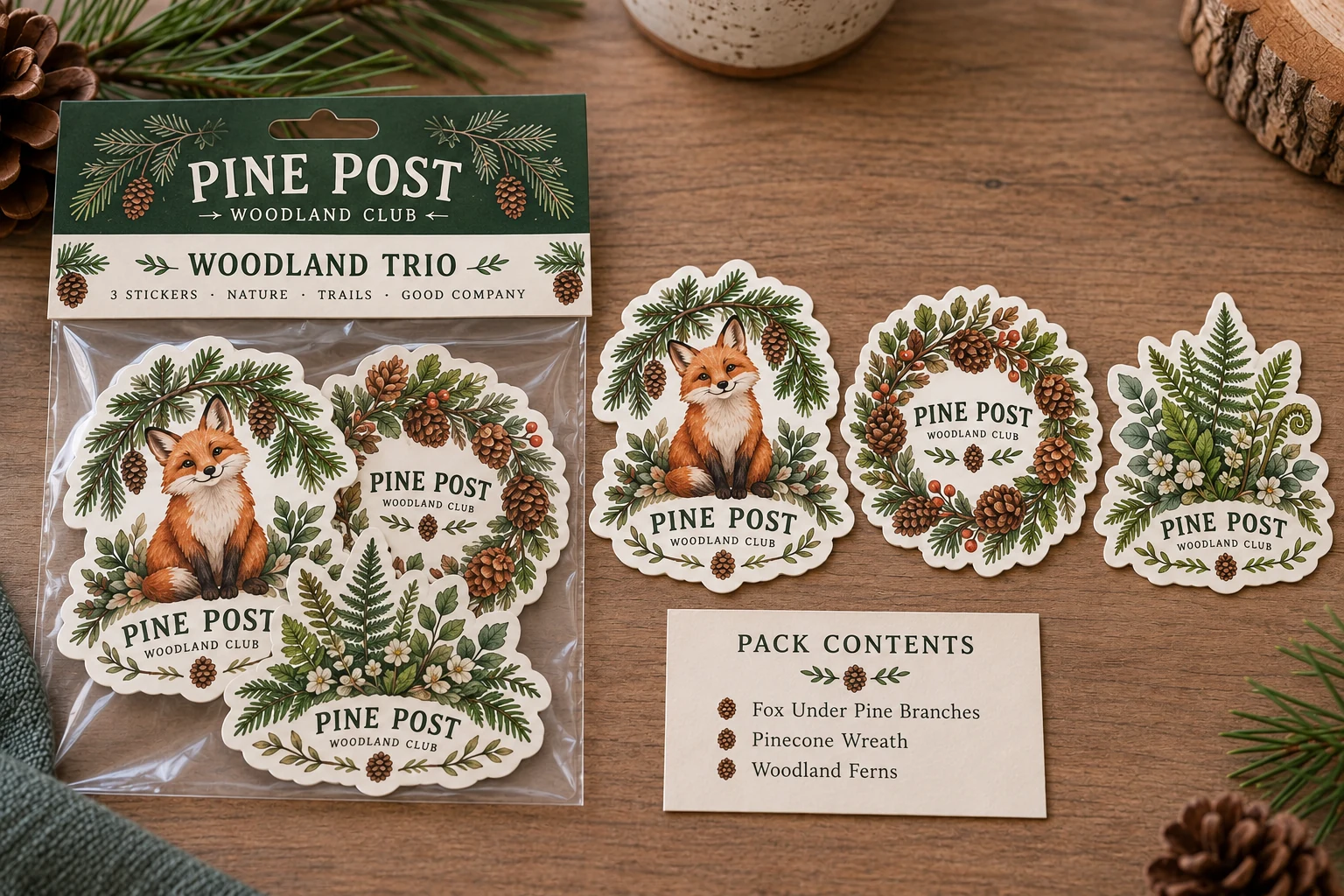
The bag size is approved. The artwork folder is approved. The pack is still undefined because nobody has written which version of each sticker belongs inside or how many finished packs the quotation covers. A beautiful sample can hide that gap until sorting begins.
For a custom sticker pack, I would freeze the assortment before choosing its final bag or backing card. The buyer needs a clear definition of the sellable unit: contents, quantities, artwork versions and presentation. Packing materials should follow that definition instead of becoming a substitute for it.
Write the sellable unit in one place
Give the assortment a pack identifier and version. List every design, its approved artwork reference and pieces per finished pack. State the total finished pack quantity separately from the number of individual stickers. If the order contains several assortments, keep their content lists distinct.
A simple bill of contents is enough to expose many ambiguities. Does “three designs” mean one of each or a selection from three? Can a missing design be substituted? Are two visually similar color versions interchangeable? The buyer or product owner must resolve those questions before the packing instruction is released.
This is a planning record, not a claim about ZC Labels' stock or a promise that every proposed pack can be produced. Supply artwork, dimensions and quantities so feasibility and quoted scope can be reviewed against the actual project.
Choose the finished sticker format first
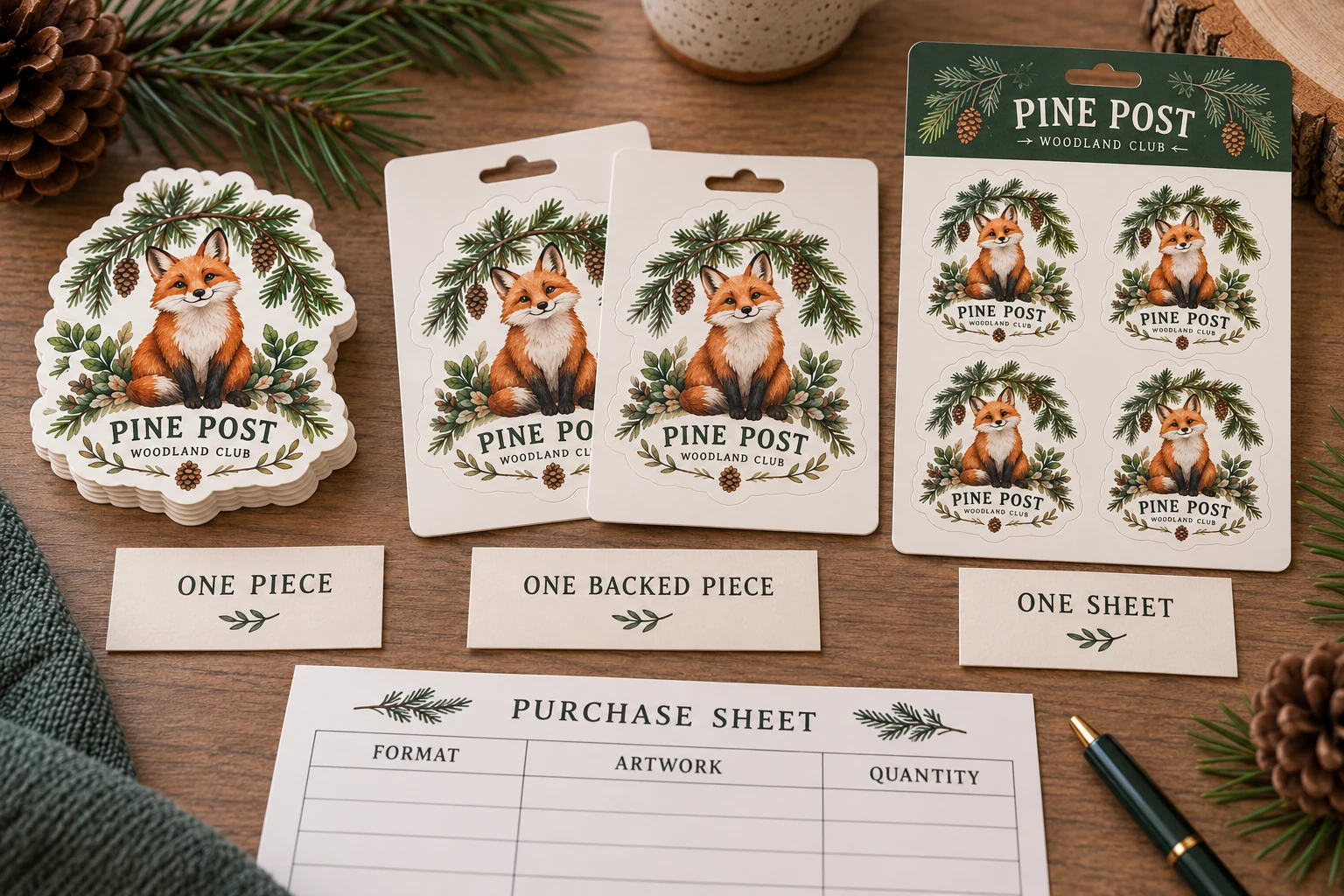
A loose contour-cut sticker, an individually backed kiss-cut item and a complete sheet create different contents and handling. A bag that fits a peeled artwork silhouette may be too small for the backing that actually arrives. Review the complete pieces as supplied.
Avery's cutting explanation distinguishes a contour-cut face-and-backing piece from a kiss-cut face retained on backing. Use that basic distinction when naming the pack contents; its own border specifications are not requirements for this order.
The finished-format guide covers which supply unit fits the recipient's use. Keep this article focused on assembling the chosen units into a controlled assortment. A retail bag changes presentation and handling, not the meaning of the cutting method.
Size the pack around its contents and opening
Use representative full-size pieces when reviewing the bag, card and header. Check the largest outline, the thickest intended stack and any projections that could catch at the opening. Close the proposed pack and review both front and back. Do not select the bag from the dimensions of only the smallest sticker.
Presentation involves a tradeoff. A tighter pack may look orderly but make insertion or opening awkward. More room may ease handling while allowing pieces to shift. A backing card can support a clear identity but adds another artwork and packing component. Compare those consequences rather than describing every additional component as an upgrade.
If the pack will hang or sit in a display, obtain the channel's actual requirements. Do not invent a hang-hole position or retail dimension. The responsible buyer should confirm the display arrangement and how the product will be opened without damaging its contents.
Make the assortment check repeatable
| Pack-definition field | What to confirm |
|---|---|
| Pack identifier and revision | Which assortment the sample represents |
| Design list | Exact files and versions, including lookalike variants |
| Pieces per design | Whether every finished pack receives the same contents |
| Finished pack quantity | What the purchase quantity counts |
| Bag, card and header | Actual packed dimensions and approved artwork |
| Substitution rule | Whether any variation is permitted, and who authorizes it |
| Reference sample | The physical as-received state used for comparison |
Check the contents against the list before closing the sample. Then keep a photograph of the open arrangement and the complete packed reference. Neither replaces the written list: overlapping stickers can hide a missing item in a photograph.
Keep identifiers and claims with their owners
The business responsible for the retail product must supply its approved identifier, variant mapping and market wording. A designer should not invent a retail code or reuse one assortment's identifier on a different pack simply because the header artwork is similar.
The retail barcode guide covers the code and finished-package review. Reserve the required area before decoration crowds it. Do not treat an AI packaging image, a phone-camera scan or an attractive badge as proof of retailer acceptance or compliance.
If no barcode or other channel field is required, do not add a fake one to make the sample look more finished. Complete original artwork and honest information hierarchy are enough for a useful mockup.
Compare who performs the final packing
Supplier-packed assortments and locally packed bulk stickers describe different delivered jobs. Identify which party sorts, counts, supplies bags or cards and checks the finished contents. Keep those tasks visible in the quotation rather than comparing only the printed sticker price.
Local packing can remain sensible where the assortment changes frequently and the buyer controls the final allocation. Supplier pack-out may be worth reviewing when contents are stable and the required instructions are complete. No universal cost winner follows from the choice; compare actual scope and responsibilities.
Retain a version that can survive a reorder
Save the pack list, approved artwork, packaging specification and accepted reference together. If a sticker is resized or replaced, review both the contents and the bag/card fit. A new assortment should not quietly inherit an old sample approval.
Send ZC Labels the assortment brief: design files and dimensions, exact pieces per design, finished pack quantity, any allowed substitutions, bag/card/header requirements, channel-owned identifiers and destination. Those inputs let the quotation describe the product the recipient will actually receive.