
The packing line has a growing pile of used label backing. Procurement proposes changing to a paper liner because the business already collects cardboard. That may solve the wrong problem. The waste contractor has not confirmed that it accepts this coated backing, and nobody has identified the film liner used on another line.
Before changing the label order, confirm a collection route for the actual spent liner at the actual site. Then decide whether the current construction can enter it and what the operation must keep separate. A familiar material name is useful identification; it is not an acceptance receipt.
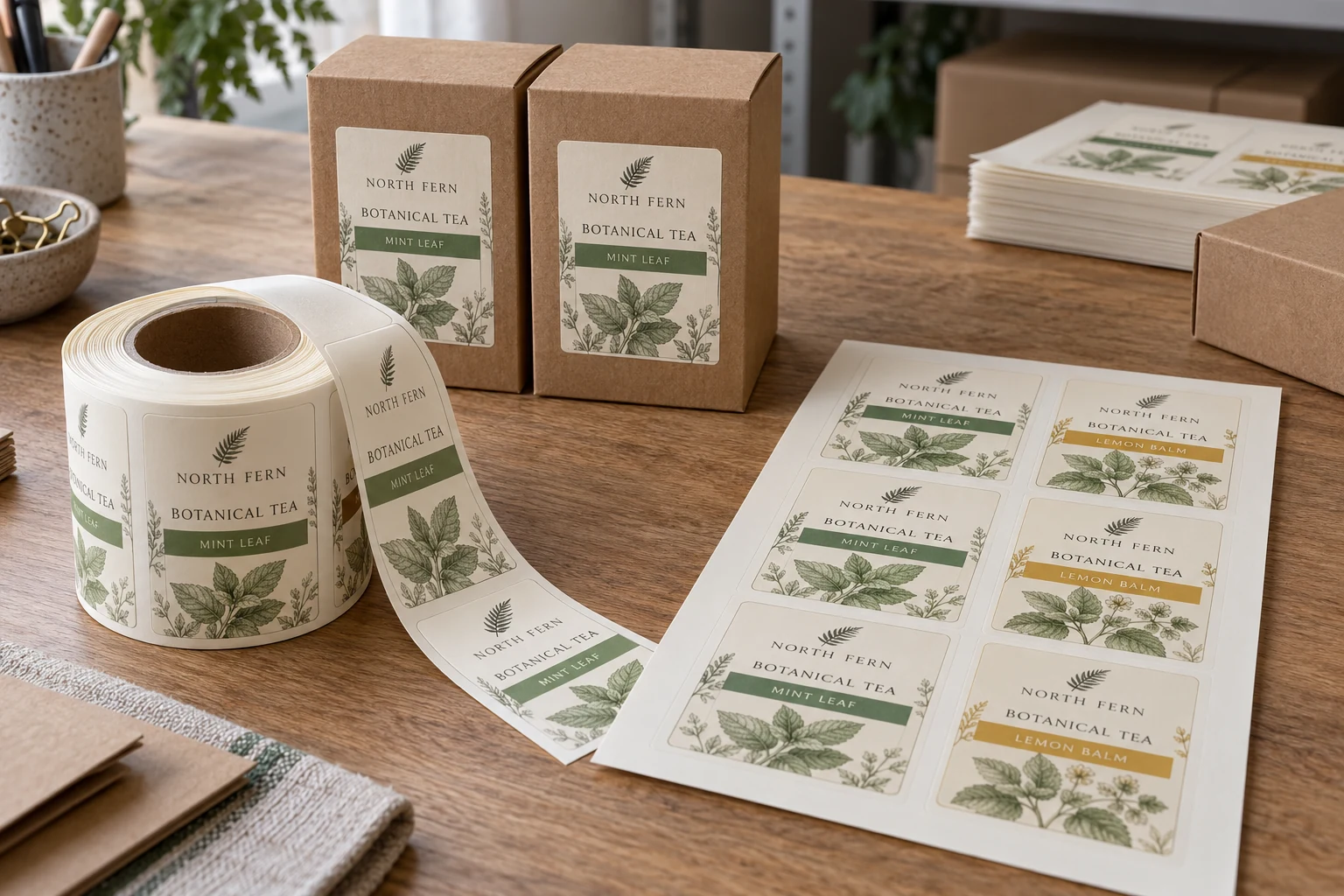
Identify what is left after application
Separate the printed label from the backing it leaves behind. Record the supplier's liner reference where available and ask whether it is paper, film or another specified construction. Keep the reference attached to the roll and its revision. Appearance alone cannot establish the exact material or its eligibility for a collector's process.
Walk through the actual collection point. Does the waste contain only spent backing, or also unused printed labels, cores, packaging, tape and cleaning waste? Describe what is present without assuming it is acceptable contamination. Ask the collector which items it accepts together and which it requires to be separated.
The paper-versus-film liner guide covers selecting and approving a backing for application. This article begins after that selection: how to establish an actionable collection arrangement for the material the site generates.
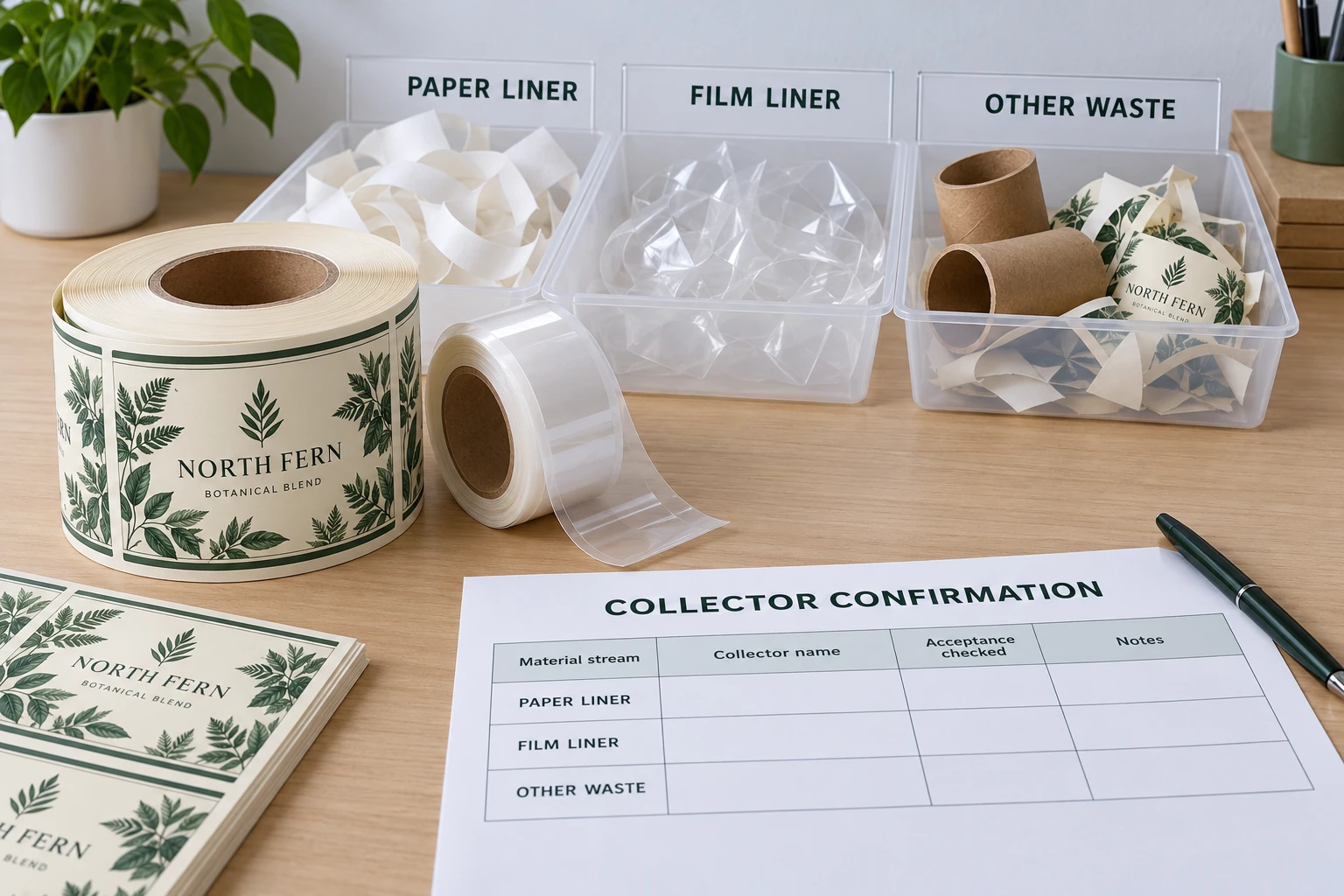
Ask the receiving organization to define acceptance
Send the identified material, photographs, site location and realistic generation pattern to the proposed collector or program. Request its current acceptance instructions. If the material is unknown, say so and ask what reference or sample is needed before approving a collection process.
| Question for the collector | Why procurement needs the answer |
|---|---|
| Is this construction accepted at this location? | Availability and material scope must match the site |
| Which materials must remain separate? | Collection bins and line instructions follow that decision |
| What storage and packing are required? | A loose pile may not be the accepted handoff format |
| What quantities and collection arrangements apply? | The site must plan space and a feasible pickup route |
| What record is returned after collection? | Collection, processing and environmental reporting are different claims |
Do not copy a collection rule from another factory. The receiving organization, destination, construction and service arrangement may differ. A program described online can be a useful contact route without proving that your site is enrolled or that every material it produces is accepted.
Read a specialist program within its stated scope
Avery Dennison's European AD Circular page describes routes for used label liners. Its current page distinguishes a glassine collection arrangement from introductions to PET recycling partners. This is an example of why a buyer should ask about a specific material and location instead of assuming one universal service.
The program belongs to its operator. ZC Labels is not represented here as a participant, collection provider or guarantor of eligibility. An American or other non-European facility should not treat a European page as confirmation of local availability. Contact the appropriate operator or waste handler for the actual site.
Even within a relevant location, obtain the current terms. Do not transfer a published benefit, cost comparison or reporting claim into your own business case before the operator has confirmed its applicability. Keep the proposed route provisional until the important conditions are clear.
Design the collection point around the agreed stream
Once acceptance is confirmed, turn the instructions into a practical handoff. Identify the bin or container, the permitted contents and who moves it from the application station to the collection area. Use wording that names the material and destination route rather than a generic green symbol.
Ask the operations owner to check the arrangement against normal movement, housekeeping and safe access. This procurement guide does not prescribe waste handling or machinery procedures. Used web removal from equipment remains subject to the line owner's operating instructions.
An illustrative site may use one paper liner on a hand-packing station and a film liner on an applicator. Keeping those streams identifiable may be necessary for its chosen collection route. That is a planning scenario, not evidence that either stream is accepted by a particular collector. If separation cannot be maintained, return that fact to the collector before claiming the arrangement works.
Compare a liner change with a collection change
A different backing may change release, cutting or dispensing behavior. It should not be approved solely because a collection option sounds attractive. Keep the physical application approval and the waste-route confirmation as separate decisions that both need a satisfactory answer.
Retaining an already suitable construction and arranging a compatible collection route may be worth comparing with a controlled liner substitution. The alternative could require new samples, a line review or different collection handling. Obtain actual quotations and requirements; do not assume either option reduces total cost or environmental impact.
If a construction changes, identify what application evidence needs repeating. The applicator trial guide explains why a successful hand peel does not approve machine use. Collection convenience cannot replace that evidence.
Keep the record narrower than the claim
Retain the material identification, collector's acceptance instructions and actual handoff records. A pickup arrangement is not proof that every quantity was collected or processed. Use the records the responsible provider actually supplies, and distinguish measured outcomes from estimates or plans.
Use the custom roll label page for the supply-format discussion. For a liner specification discussion with ZC Labels, send the current construction reference, spent-liner photos, application method, destination site, quantity by design and the collector's stated material requirements. These inputs help discuss whether an identified construction or proposed change addresses the requirement. Keep service eligibility and collection confirmation with the receiving organization.