
The roll fits the spindle. The artwork is facing the right way. Yet the printer feeds past the next label instead of stopping where the buyer expected. Ordering the same width again will not settle the missing question: what physical feature tells this machine where each repeat begins?
Before choosing gap or black mark labels, connect the actual detector to a drawing of the finished web. Label size, print method and winding direction are necessary instructions, but none alone establishes reliable detection. Keep setup and calibration with the responsible equipment operator and the applicable manual.
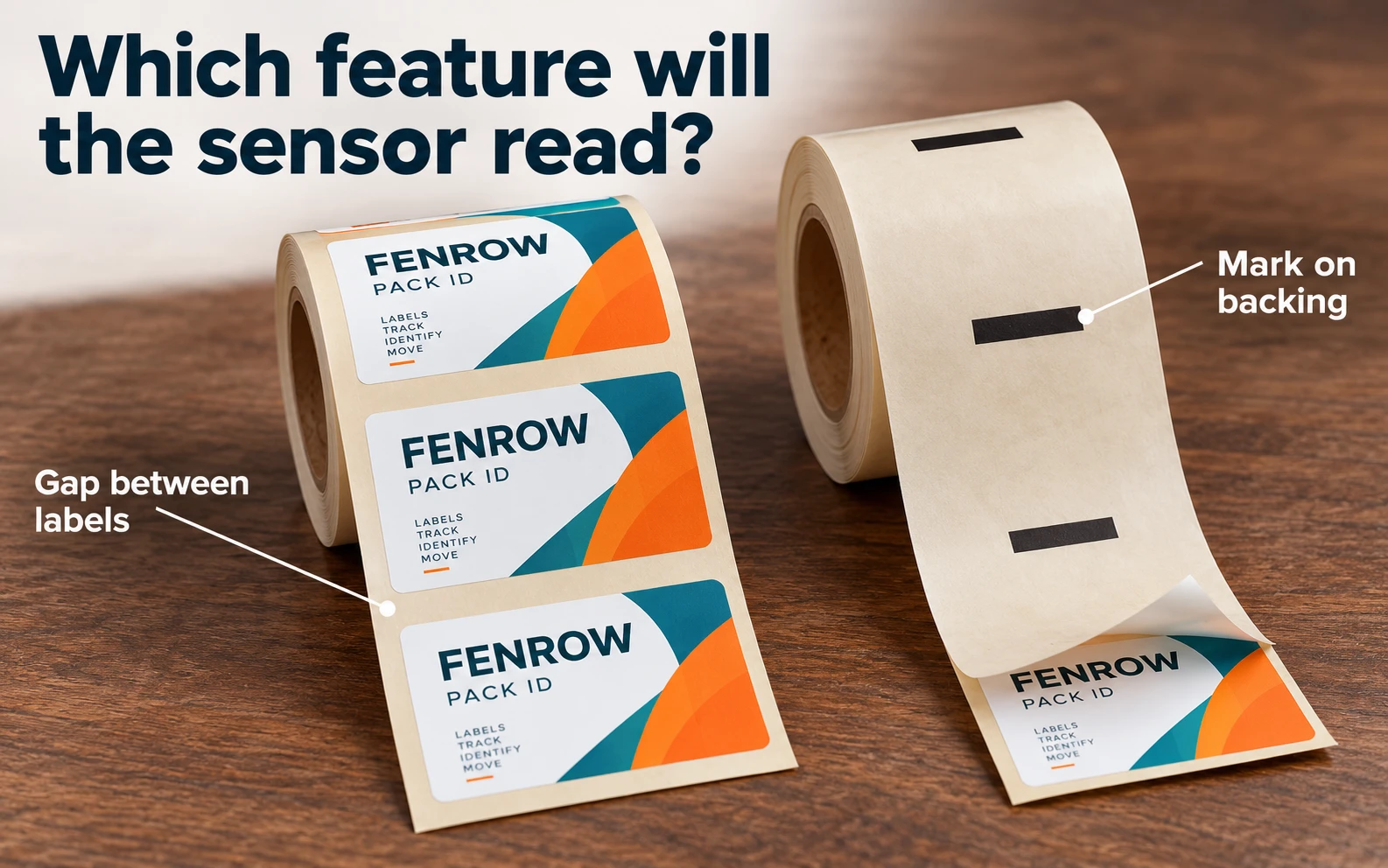
Identify the machine and the feature it expects
Record the equipment model and fitted detector, including whether this is a printer tracking media or an applicator detecting a dispensing position. They may be different devices within the same operation. A sensor that handles one job does not establish the requirements of the other.
Obtain the relevant media specification and ask the line owner to identify the supported detection route. Gap, notch, hole, backing mark and continuous media should not become interchangeable descriptions in a purchase order. If the exact model or sensor cannot be identified, leave that question open before releasing the construction.
Zebra's media setup explanation distinguishes tracking a repeat through gaps, notches or holes from black-mark tracking, and directs users to their own model documentation. It also distinguishes this media setup from the print method. Its settings describe Zebra equipment; this guide does not prescribe a setting for another machine.
Draw the feature along the actual sensing path
Show the web width, travel direction, label outline and repeat. Then mark the position at which the detector observes the moving web. Along that path, what changes as one label passes and the next arrives? An irregular contour can create a different pattern near its edge than through its center.
For backing marks, provide a separate reverse view. Identify which side carries the mark and connect it to the corresponding repeat on the face. Obtain required mark dimensions, position and contrast from the equipment specification. Copying a black rectangle from an unrelated roll is not a supported drawing.
Keep any requested notch or hole outside assumptions about the finished sticker. A proposed feature might affect the liner or another part of the web and needs converter and equipment review. The buyer's drawing should communicate the intended detection event, rather than instruct the converter to improvise a cut.
| Drawing field | Question it closes |
|---|---|
| Equipment and detector reference | Which supported route are we specifying? |
| Travel arrow and repeat | How does the feature pass the detector? |
| Track position across the web width | What does the detector encounter along that path? |
| Face and reverse views | Which physical layer carries the feature? |
| Manufacturer's feature requirements | Which dimensions and conditions need confirmation? |
The roll direction guide controls which artwork edge leads. Keep that instruction beside this drawing. A correct sensing feature in the wrong supplied orientation can still leave the equipment owner with an unusable proposal.
Evaluate the complete printed construction
A clear label, opaque label, paper liner and film liner can present different sensing conditions. Artwork or printing on the backing can also matter to a particular detector. Do not assume that a successful trial using blank stock represents the final printed roll.
Avery Dennison's Global MDO technical overview specifically calls for suitable sensing for its clear-film-liner construction. That product-specific example supports asking about the detector and full web together. It does not establish that every transparent label requires the same sensor or that ZC Labels supplies that named material.
List what the representative roll actually contains: face material, liner, artwork, marks, repeat and relevant finish. If one element is substituted during development, state what the substitute can help assess and what it cannot approve. A hand-placed label demonstrates neither tracking nor dispensing.
Give the trial an interpretable result
Have trained personnel run the proposed web under the equipment maker's instructions. Record the construction and drawing revision, machine configuration, observations and any approved changes. Preserve a sample and a photograph that identify what was used.
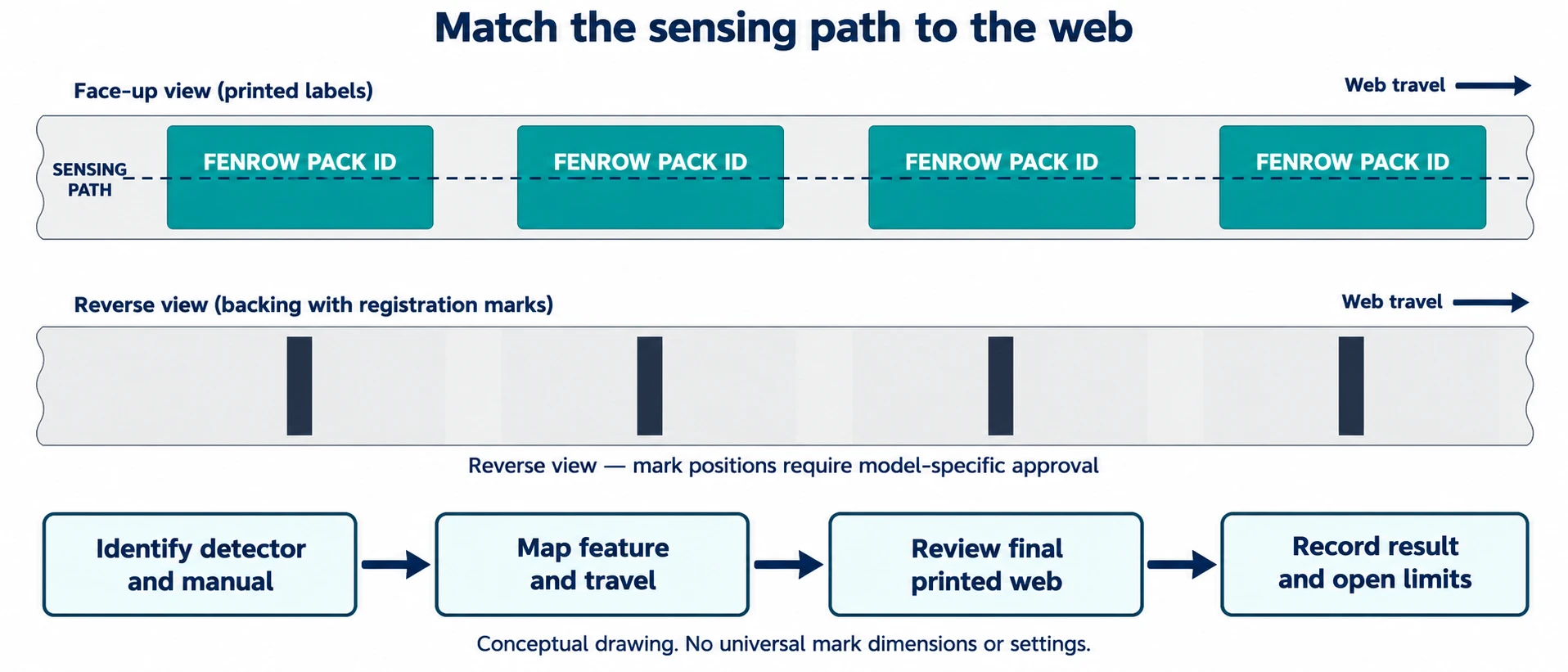
Separate the observation from the diagnosis. Missing a repeat, stopping at an unintended feature and printing in the wrong position may require different investigations. A photograph of displaced print alone does not prove that the backing needs a darker mark. Ask the equipment and material reviewers what evidence would distinguish the possibilities.
Include relevant loading or restart conditions where the line owner considers them appropriate. Save observations against their actual state, rather than retaining only the best finished pack. The applicator trial guide provides the broader trial record; the drawing here makes its detection question specific.
Compare a supported alternative without hiding its cost
If the proposed route is not supported, the next discussion may involve another web feature, a different construction or an equipment change. Each needs confirmation from the responsible parties. Adding backing printing can change the quoted scope; changing material can affect appearance, release and application evidence.
Retaining a known compatible construction may be the sensible choice when a decorative change offers little operational value. Conversely, a genuinely required construction may justify discussing suitable equipment with its provider. Obtain actual options and responsibilities rather than assuming a sensor replacement is inexpensive or a backing mark solves every clear-web problem.
Release the drawing with the order
Keep the accepted face/reverse drawing, detector reference, relevant equipment requirements and bounded trial result together. On reorder, a changed liner, label shape, mark arrangement or print on the sensing path should trigger a review of the affected evidence.
For a custom roll label discussion, send ZC Labels the equipment and sensor references, media requirements, face and reverse photographs, travel direction, final dimensions, artwork, quantities by design and destination through the project enquiry. These inputs make it possible to confirm the proposed supply scope while leaving machine compatibility and safe setup with the equipment owner.