
The quotation lists a total quantity and a price per label. Your packing team sees a different order: several designs, unequal quantities, and repeated stops to find the right version. Choosing roll labels vs sheet stickers from the total piece count leaves that work out of the decision.
I would first write down what happens between opening the label carton and closing the finished package. Rolls can suit repeated picking of one design. Sheets can make a small assortment visible together. Either can become inconvenient when its layout ignores the actual sequence.
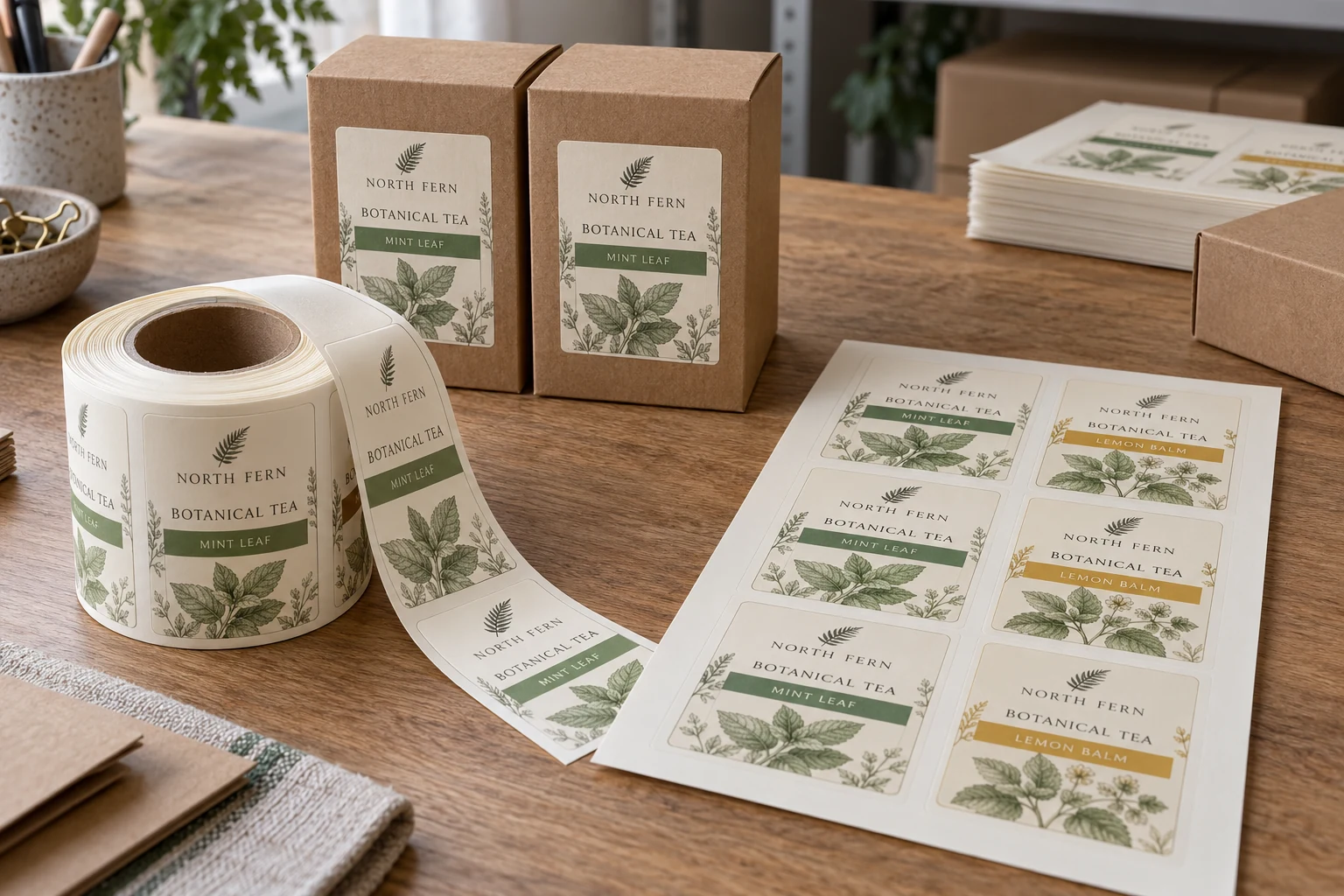
Describe the job as a sequence, not a total
Ask the person doing the packing to describe one normal order and one awkward order. Note where labels wait, how the correct SKU is identified, how a label is peeled, where the package is supported, and how unused labels return to storage. Include the change to the next design.
For an illustrative tea project, packing one flavor for an extended run is different from preparing mixed gift orders. The first task may favor a roll held beside the workstation. The second may favor a visible selection of designs. Neither example proves a format is faster. It tells the buyer what to observe with representative materials.
Use a worksheet that both suppliers can price against:
| Order detail | Record before comparing formats |
|---|---|
| Quantity | Finished labels required for each artwork, not only the combined total |
| Picking unit | One product, one gift assortment, or a run of one SKU |
| Changeover | What is moved, checked, cleared and reloaded when the design changes |
| Application | Hand, dispenser or a named machine; include the package support |
| Leftovers | How partial rolls or sheets remain identified and usable |
| Delivery | Bulk labels, allocated sets or another agreed packing arrangement |
If those answers are unavailable, the price comparison is incomplete. A supplier cannot infer the packing sequence from a beautiful artwork file.
Where rolls earn their place
A roll can present the same design repeatedly without requiring the operator to search across a sheet. That is useful when one product remains at the station and the roll can be stored and dispensed sensibly. Confirm how the liner is collected; a loose trail across the bench is a handling problem the unit price will not reveal.
Rolls also serve many automated application processes, but “on a roll” is not a machine specification. The equipment determines the acceptable winding, core, outside diameter, web and sensing requirements. Obtain those limits before treating a roll quotation as compatible.
Avery's roll-label guidance distinguishes hand and machine application and separately addresses winding and core options. That is useful support for asking about the application method. Its commercial specifications, quantities and delivery terms are specific to its service, not promises for a ZC Labels order.
If equipment is already fixed, format choice may be settled before price comparison. Review the roll unwind and core requirements with the line team; do not ask a mixed sheet to substitute for the web the applicator requires.
Where sheets deserve a fair comparison
A sheet can keep different labels visible at the same time. For hand-packed assortments, that may help the operator select a design without changing a roll. It can also be the finished product itself, as with a retail sticker sheet. Those are different buying tasks, so specify which one applies.
The tradeoff is allocation. Suppose a mixed sheet contains equal numbers of two designs, but the finished order requires unequal quantities. Repeating that layout creates spare labels of one design unless the allocation is adjusted. Discuss separate sheets, a different repeat or another supply arrangement before approving the layout. Do not assume mixed artwork means an equal sales mix.
Ask to review a partially used sheet as well as a complete one. Can the remaining designs stay identifiable? Can the sheet lie flat at the workstation? Will the operator touch adjacent adhesive while lifting the small label? The custom sticker sheet page is a commercial starting point; the actual layout still needs a project brief.
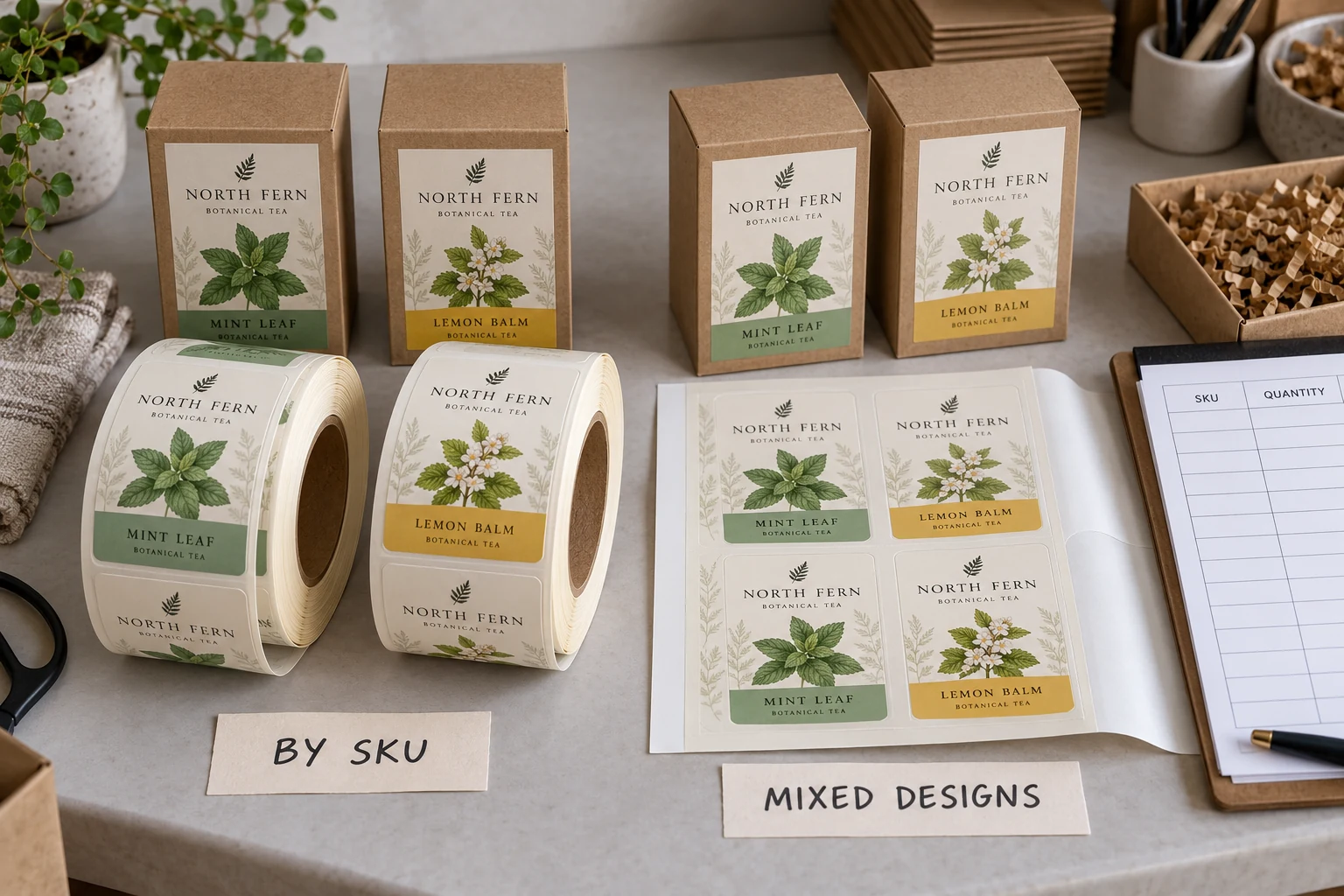
Compare the complete job under the same conditions
Keep artwork, finished size, face material, adhesive and finish comparable. If one quotation uses a different construction, list the difference instead of attributing the price change to roll versus sheet alone. Include design-specific quantities, packing, delivery scope and any agreed sample work.
A useful operational comparison follows the same representative packing task with each viable format. Record setup, ordinary picking, changeover, rejects and leftover handling separately. If you time the work, use actual observations and explain the conditions; do not borrow a vendor's speed claim or extrapolate one easy demonstration to every shift.
The alternative deserves to win when the evidence supports it. Sheets may remain sensible for a manual operation with frequent changes, even at a substantial total quantity. Rolls may be sensible for a small order that must run on a particular applicator. Quantity alone does not settle either case.
Do not turn format selection into an adhesive approval
The supply format does not establish that the label will hold on the package. Keep surface, application environment and intended use in the brief. A fit or adhesion issue needs its own construction review; changing a sheet into a roll does not resolve it.
Likewise, a convenient hand-peel sample does not approve an automated process. Where both workflows will be used, identify both and agree which representative samples are required. There may be good reasons to keep separate supply specifications rather than forcing one format to serve incompatible tasks.
Freeze the allocation with the purchase decision
Record the accepted format for each artwork, the required finished quantity, roll or sheet layout, packing identification and reference sample. Include the person responsible for confirming a later change in SKU mix. A reorder with the same total but a different assortment is not necessarily the same supply job.
Send ZC Labels the format comparison brief: artwork and finished dimensions, quantities by SKU, package photos, the hand-packing sequence or machine requirements, expected changeovers, leftover-storage needs and destination. These details let the format discussion address picking and allocation instead of producing two prices for different jobs.
Put the awkward mixed order into the comparison. That is where a tidy sample layout has to earn its place on the packing table.