
The retail sample is accepted. Production knows which stickers belong in the bag. The receiving team still does not know how many bags make a bundle, whether cartons may mix variants, or which pack version the outside label identifies. The product is defined; the shipment is not.
For custom sticker packaging, I would separate the approved assortment from the packing instruction that delivers it. The buyer needs both. A photograph of one attractive bag cannot tell a warehouse how to count, identify and receive the complete order.
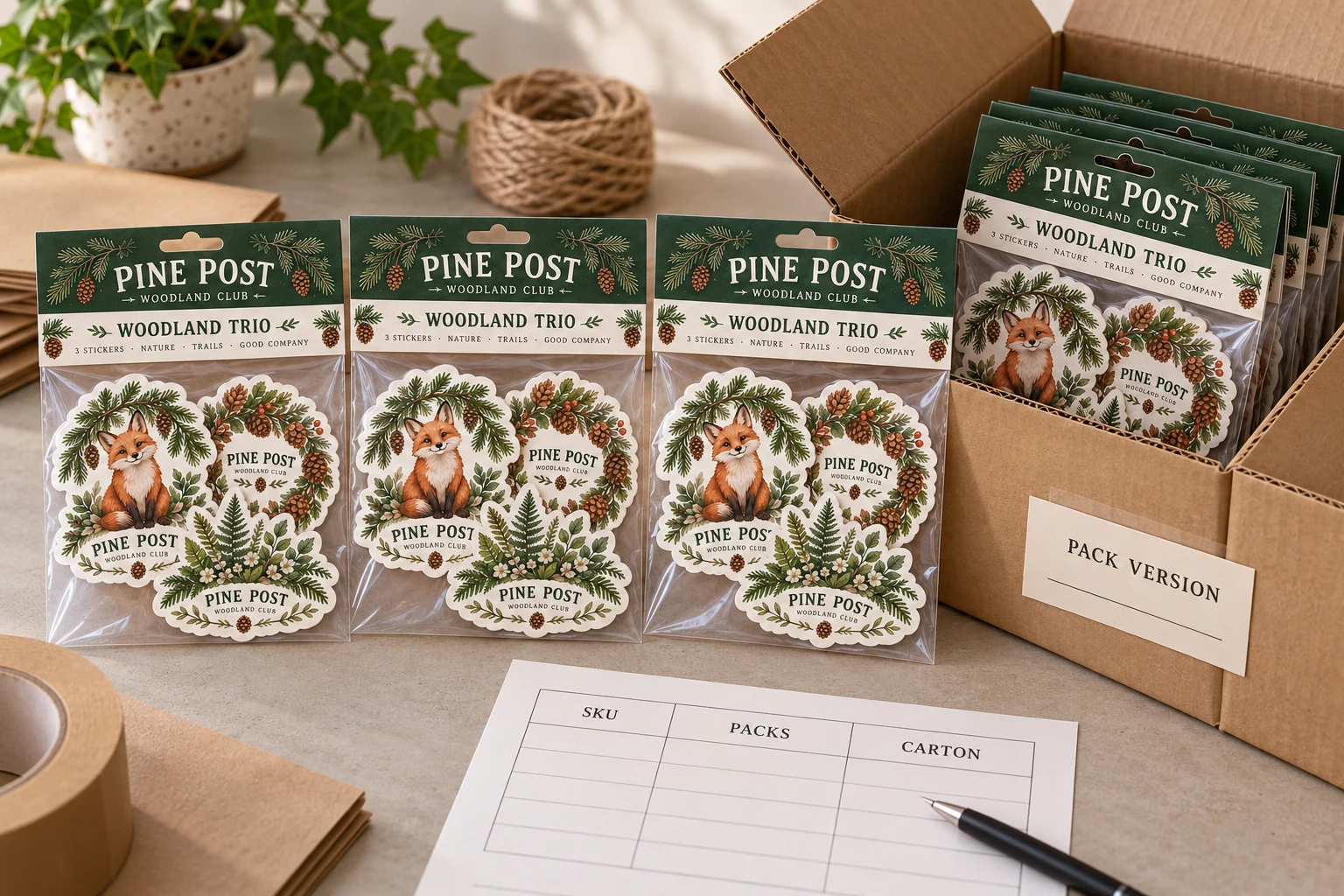
Start from the accepted product version
Reference the approved pack list and artwork, not only the product name. Identify whether the contents arrive as loose individual stickers, complete sheets, counted bundles or finished retail packs. A warehouse may use the same SKU name for several revisions unless the instruction distinguishes them.
The retail assortment guide covers what belongs inside each sellable pack. Do not redesign that assortment while writing the shipping notes. If it changes, return to the product definition and update the relevant approval before using its name on cartons.
State which party supplies and assembles each agreed component. Bags, backing cards, headers, bundle identification and outer cartons can be supplied under different arrangements. Keep the quoted delivered state explicit instead of assuming “packed” includes every step the buyer has in mind.
Define each counting level
Distinguish the quantity of individual printed pieces, the number of finished retail packs and the outer shipping units. If bundles are used, name their contents and counting purpose. Do not allow a count on an outer label to be interpreted as either stickers or finished packs.
| Packing level | Information to state |
|---|---|
| Printed item | Artwork/SKU, revision and finished format |
| Retail pack or set | Approved content-list reference |
| Inner bundle, if used | Unit counted and separation method |
| Shipping carton | Contents by version and any allowed mixing |
| Order total | Reconciliation of the same agreed units |
These fields do not prescribe a carton count or packing ratio. The buyer and supplier must agree feasible quantities and protection for the actual product. A guessed standard bundle can create more ambiguity than leaving a field visibly unresolved.
For an illustrative woodland sticker assortment, the label “Woodland Trio” names the product concept. It does not say how many finished bags are inside a carton. Keep those two meanings in separate fields.
Make mixed versions an explicit choice
Ask whether one carton may contain multiple SKUs or pack revisions. If mixing is permitted, state how each group is separated and identified and how the contents appear in the receiving record. If it is not permitted, write that requirement plainly and have the quoted packing scope reflect it.
Clear variant text matters even when a color cue is used. The subscription variant guide explains the limits of relying on visual cues alone. A decorative brand label cannot replace the receiving owner's identification rules.
The buyer should supply any required warehouse identifiers or label format. Do not invent a carton barcode, retail product number or customer reference to fill a sample image. Where machine-readable data are required, retain the approved mapping and the receiving party's requirements.
Check the package in the state that will arrive
Review an as-packed reference where packing affects presentation or handling. Look for bent sheet corners, pressure on delicate shapes, movement within a bag and contact with printed surfaces. Include the actual header or backing card, since an attractive loose sticker sample leaves those interactions unanswered.
This is a practical review framework, not a transport certification. If the route requires a defined transit test, the responsible technical or logistics owner must specify the package, method and acceptance conditions. Do not infer shipping protection from a neat carton photograph.
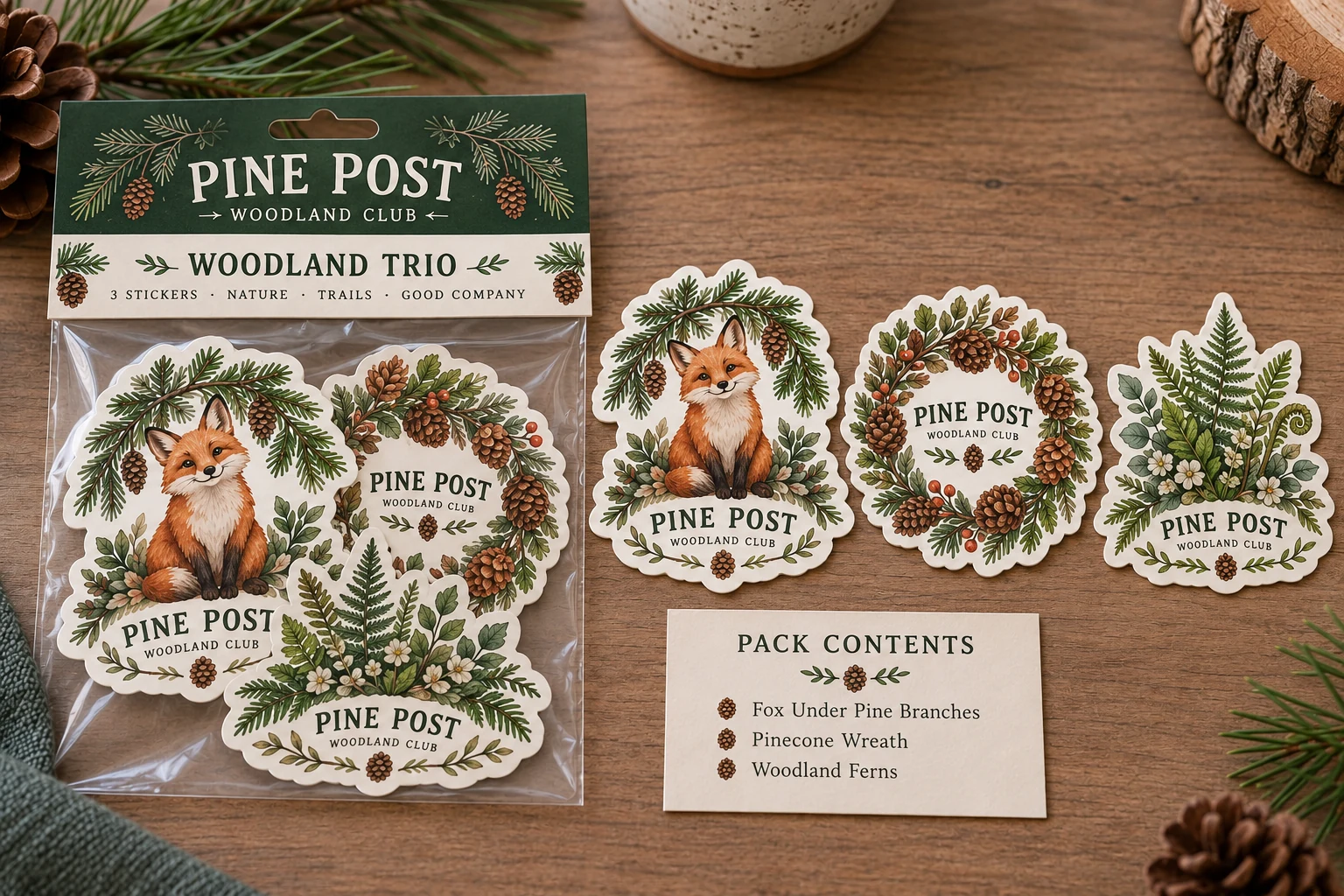
Keep samples or clear records of the relevant packed state with the instruction. A later change from a bag to a sleeve, or a resized backing card, can alter the handling even when the sticker face remains unchanged.
Compare the same delivered scope
One quote may cover loose bulk pieces while another includes counting and retail packing. A price difference does not establish which printer is cheaper until the delivered scope matches. Ask which work remains with the buyer after delivery and compare that work separately.
Local final packing may make sense when assortments change often or the buyer controls allocation near dispatch. Supplier packing may deserve consideration when the product and instructions are stable. Neither route wins automatically. Use actual scope, responsibility and comparable pricing instead of assumed labor savings.
Changing packing late can affect material preparation and handling plans. Agree the process for accepting such a change, including who revises the instruction and confirms any effect on the quotation. Do not turn a casual message into an unrecorded new packing specification.
Give receiving a usable discrepancy path
State what identification and count evidence should accompany a discrepancy. Retain the affected pack and carton information rather than mixing disputed stock with accepted stock before the issue is understood. The responsible buyer and supplier should agree the disposition; this article does not invent claim deadlines or replacement terms.
For reorders, retain the accepted instruction with its product version and deliberate changes. The reorder checklist covers the broader construction and artwork record. Keep packing revisions visible rather than relying on “same as last time.”
Send ZC Labels the packing handoff brief: the approved assortment/version, finished format, quantities in clearly named units, bundle and carton preferences, mixing rules, buyer-supplied identification requirements, desired packed reference and destination. Those inputs connect an accepted product to a shipment the receiving team can understand.