
The floor graphic looks sharp in the proof. The buyer has approved the color and size, but the site team has not identified the floor finish or the complete graphic construction. The delivery date is approaching. Calling the material durable vinyl does not close the decision about placing a printed surface where people walk.
For custom floor stickers, connect the site, compatible construction and installation release before use. Obtain the relevant product documentation and evidence for the proposed finished system, then have the responsible site team determine its suitability and inspection requirements. A print approval answers an appearance question; opening the area requires a separate decision.
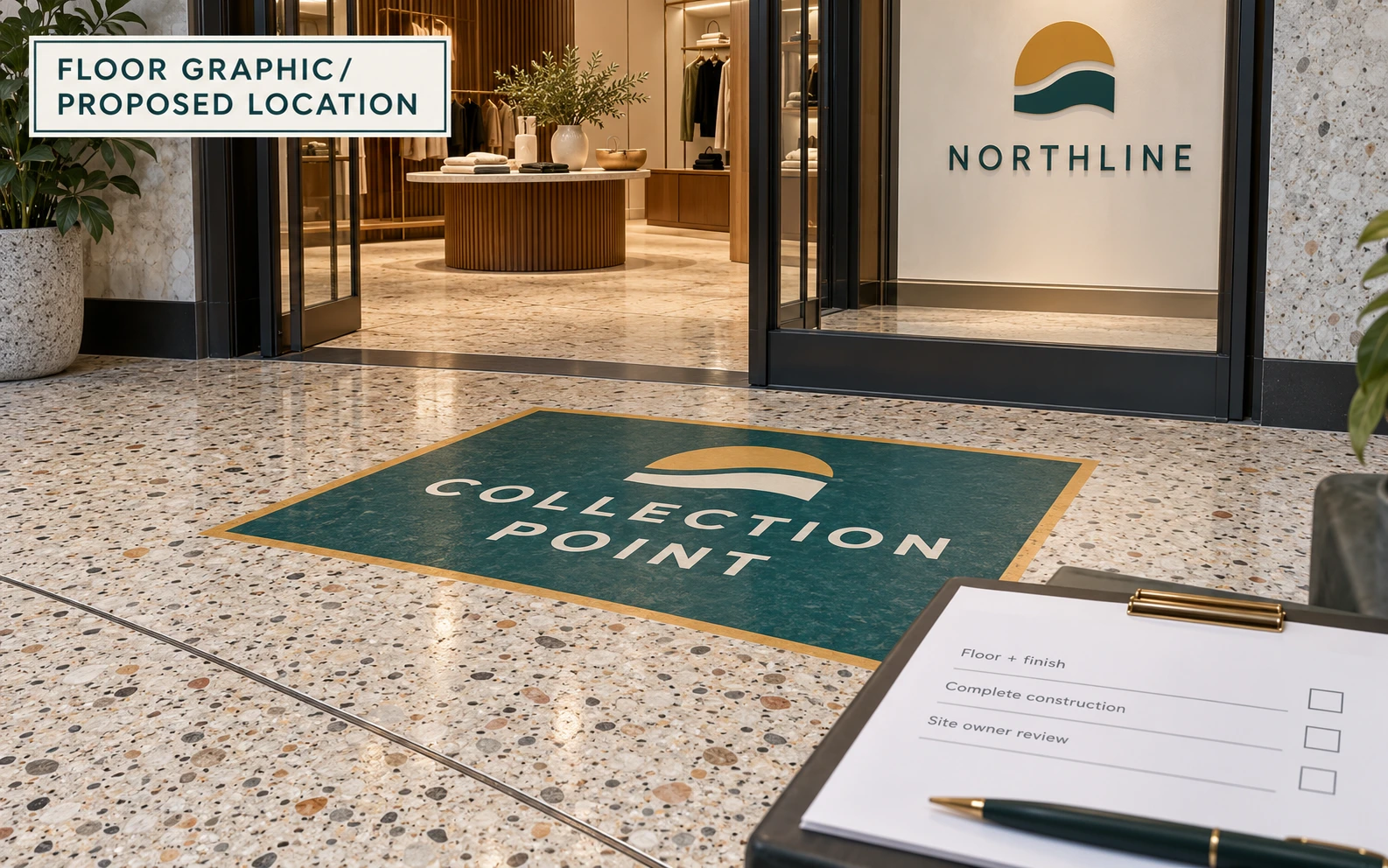
Identify the floor that the graphic will actually contact
Record the flooring material and the current surface finish. Include coatings, sealers, waxes or treatments known to the premises owner. Photograph the intended footprint and surrounding joints, changes in level and existing damage. Do not infer the contact surface from a general description such as shop floor.
Describe the location as well as the substrate. An interior display area and an entrance exposed to tracked-in moisture present different questions. Tell the responsible parties about pedestrian use, cleaning and any relevant carts or equipment. The site owner determines which conditions and risks need assessment.
If the floor identity or finish is unknown, keep that gap open. A supplier cannot reliably match an unidentified installation to a product bulletin. Moving the graphic to another approved display position may be a practical alternative while that question is resolved.
Request the complete compatible construction
Ask for the base film, print system and protective surface, where applicable, as one proposed construction. Obtain the relevant instructions and any limits on combinations. Do not select an ordinary overlaminate solely because it is called matte, textured or scuff resistant.
3M's floor-graphics bulletin, Revision A December 2024, identifies particular materials, surface restrictions and construction-specific slip information. Its distinctions show why a broad film name is insufficient. The cited results belong to those products and stated conditions; they cannot be transferred to an unspecified ZC Labels graphic.
Ask which evidence represents the proposed printed and finished surface. Keep the product identity, document version, method and applicable conditions attached to any result. A number without those references gives the site reviewer little basis for deciding whether it addresses the intended use.
Separate appearance, attachment and pedestrian-surface review
The design owner checks the message, final dimensions and visibility. The application review addresses the actual floor and proposed construction. The responsible site reviewer determines the evidence and acceptance needed for the installed walking surface. Coordinate those decisions without letting one signature silently approve all three.
| Decision | Reference to identify | What remains separate |
|---|---|---|
| Printed message | Approved final-size artwork | Installation suitability |
| Material assembly | Named compatible components | Actual site conditions |
| Attachment | Representative floor and application review | Slip and pedestrian-use assessment |
| Surface evidence | Relevant document and stated scope | Continued condition in service |
| Area release | Responsible owner's accepted installation | Later inspection and maintenance |
These fields organize a procurement handoff. They are not a technical test method, a universal acceptance threshold or a declaration that an installation complies with local requirements. Have the responsible parties define those requirements for the actual site.
Plan installation around the premises
Identify who prepares and installs the graphic, which manufacturer's instructions apply and who accepts the completed work. Keep access to the work area under the premises team's control. Do not ask a printer or purchasing guide to improvise a cleaning chemical, application setting or reopening time.
The cited 3M bulletin also addresses substrate preparation, placement, cleaning and removal. Use the instructions applicable to the actual selected product rather than copying a recipe from another construction. A sample installed on an unrelated smooth board does not represent a coated floor merely because both look clean.
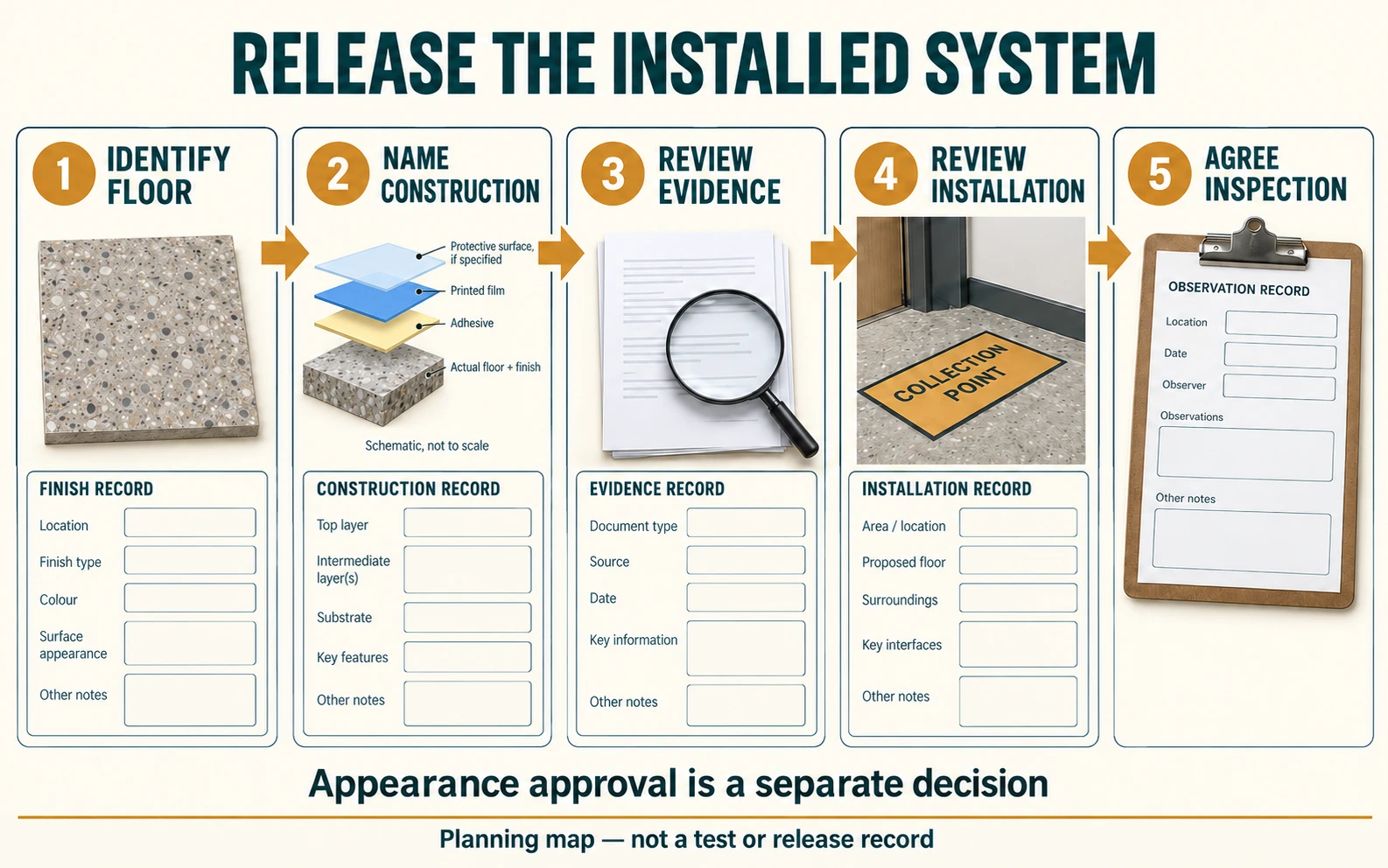
Keep the installation location and graphic size identifiable in the record. If the design is moved across a joint or closer to an entrance after approval, ask which site observations need repeating. The artwork may be unchanged while the relevant use has changed.
Agree how a worn graphic leaves service
Name the person or team responsible for inspecting the graphic and responding to damage. Agree what observations require action, such as an edge no longer lying as intended or a changed surface condition. The site owner defines the actual frequency, response and access arrangements.
Record the cleaning route with the graphic specification. A finished appearance reference does not approve every detergent, machine or maintenance practice. Ask for compatibility information where the normal site process is important, and preserve unresolved conditions before release.
Removal also needs a destination for the area. Review the intended removal route and floor condition afterward with the responsible owner. A temporary campaign date does not establish clean removal or a floor ready for unrestricted use once the print has been lifted.
Compare the display purpose with the installation burden
If the task is a short promotion, a wall, stand or other approved display route may communicate the message with different installation work. If a floor position serves the actual navigation task, keep that purpose while obtaining the evidence and responsibilities it requires. Neither route should be selected from print price alone.
The outdoor-exposure guide discusses bounded lifespan statements. The surface brief organizes contact information. This page adds the decision about a complete graphic in a pedestrian floor location, where those inputs alone cannot establish suitability.
For a floor-graphic feasibility enquiry, send location photographs, floor and finish identity, dimensions, artwork, traffic and cleaning information, intended campaign duration, quantities and the responsible site review requirements. Use the custom graphic project route to ask what construction and documentation can be supplied. These details support a bounded discussion before an attractive print is treated as an accepted walking surface.