
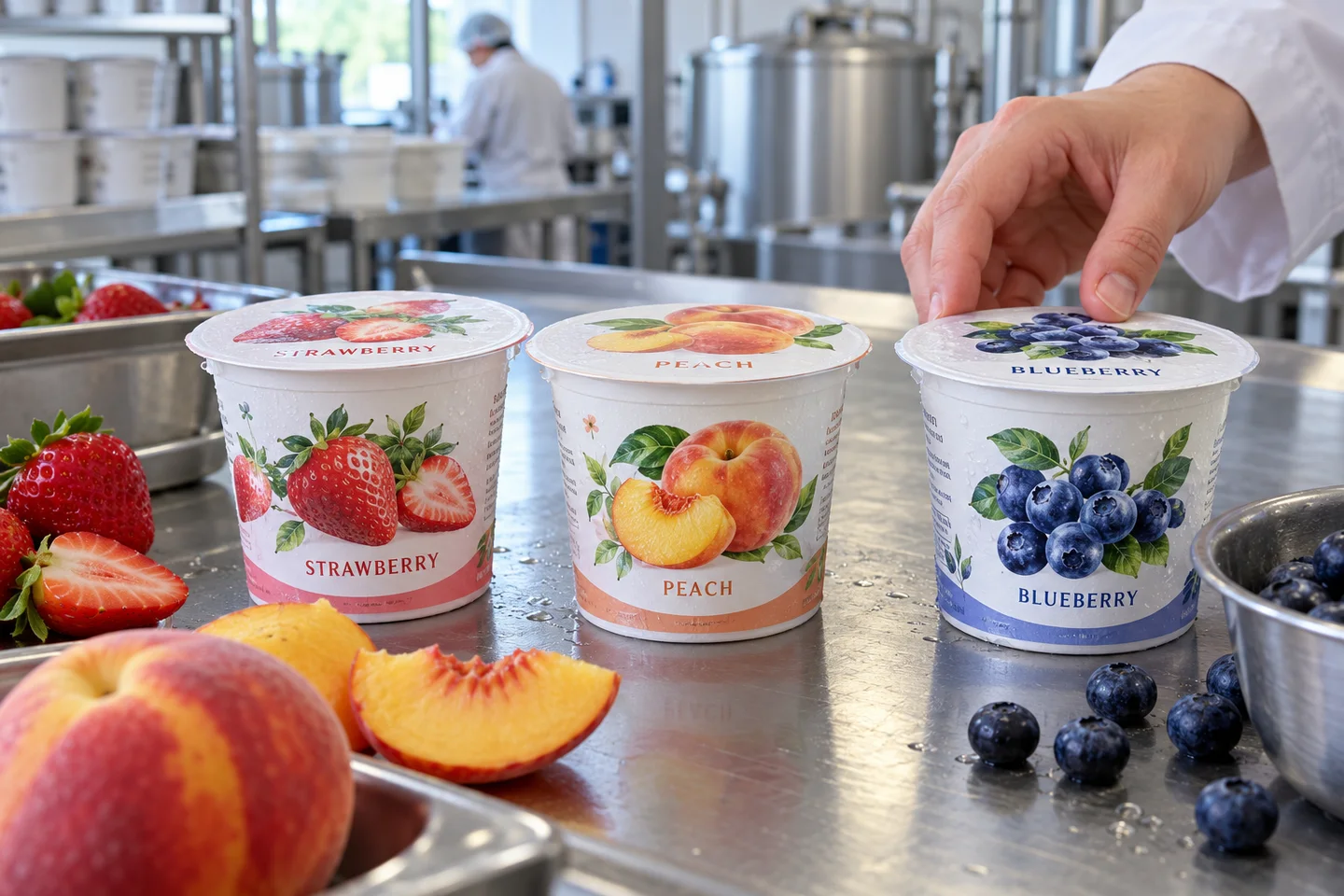
On a flat proof, the strawberry cup and peach cup can look like twins with different colors. On a refrigerated shelf, the useful differences are harder: can someone read the flavor from the front, does the lid label sit inside the sealing rim, and does the side label stay put when the cup comes out of the chiller?
I would begin with three physical pieces: the final cup, its sealed lid and one filled sample at serving temperature. Nominal volume is not a dieline. A slightly tapered wall, a raised rim or a different foil lid can turn a perfectly centered drawing into a crooked applied label.
Decide What the Lid and Wall Each Need to Say
A lid sticker may carry the flavor and original fruit illustration. The side panel may need more room for product name, ingredients, nutrition, date code and the approved barcode. Do not crowd mandatory information onto a tiny round lid just because it photographs well. Let the food brand confirm which text is required in each destination market; the label supplier should reserve space and flag type that becomes unreadable at print size.
Make the fruit art genuinely useful. A full berry illustration and a full peach illustration help a packing team spot a mixed sleeve without relying on color alone. Pair that visual cue with a readable flavor word and the correct approved SKU code. For a multi-flavor run, a small proof matrix is more dependable than one generic mockup.
Trial the Label After Filling and Chilling
Where is the label applied: on dry cups before filling, on sealed cups at room temperature, or after refrigeration? Those are different tests. Label representative filled cups in the planned sequence. Check edge lift, scuffing, condensation and how the printed flavor reads through a chilled display case. A material advertised as moisture resistant is a starting candidate, not a promise about this specific cup.
Watch the lid seal area closely. A decorative sticker should not interfere with the closure or the consumer's opening motion. If the lid is printed directly, compare the economics and flexibility of direct print with an applied label instead of assuming one method is always better.
- Send final cup, lid and filled sample
- Measure usable top and side panels
- Confirm application temperature and sequence
- Proof each flavor, code and date area
- Inspect refrigerated and handled samples
- Have the brand approve all food copy
The cold brew bottle guide covers another chilled-pack problem, while the retail barcode guide helps protect the scan area. Send cup photos, flavor count and the label application plan through the quote form. The right label is the one that still makes sense on a cold, finished cup.
Questions Before You Order
Can the same label fit every yogurt cup?
No. Measure the actual lid and sidewall of each cup, including any taper, rim and seal area, before approving artwork.
Does a film label automatically withstand condensation?
No. Face stock, adhesive, finish, application conditions and the cup surface all matter. Trial the proposed construction on filled cups through the real cold chain.
Who approves nutrition and ingredient wording?
The food brand is responsible for market-specific mandatory information and claims. The printer can review layout and legibility but should not invent approved copy.