
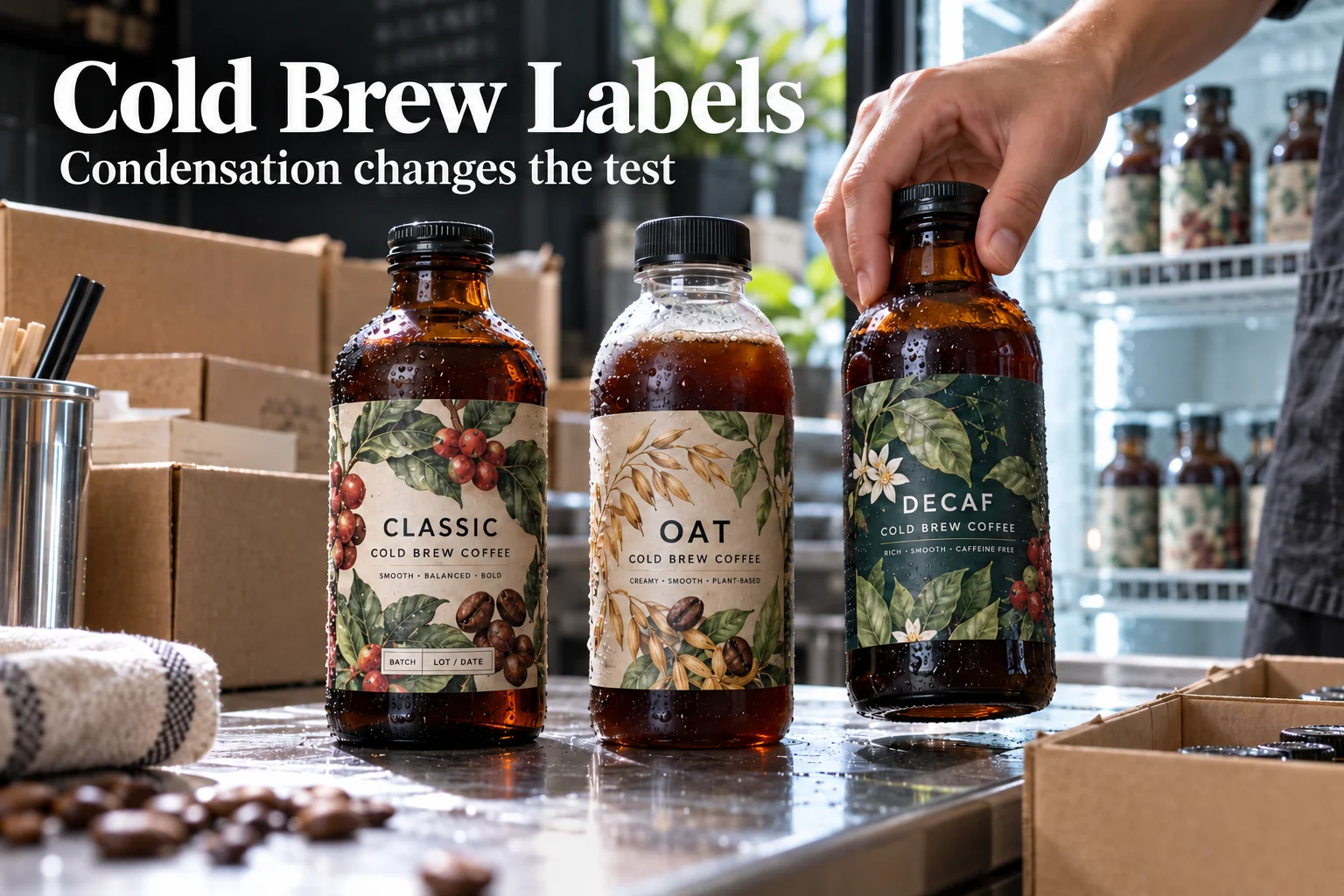
A cold brew bottle has two lives. One is the dry studio shot. The other begins when a cold bottle is set on a warm counter and water beads across the front. I would approve the label in the second life. If the name disappears under glare or an edge starts to lift there, the first photo has not solved the buyer's problem.
Start by deciding whether the product ships in glass, PET or both. Ask for filled, capped samples from the actual bottle supplier. The straight printable panel, shoulder curve and seam can change between bottles that share the same stated volume. A wrap intended for one may wrinkle on another.
Separate Chilling From Application
Where is the label applied: before refrigeration, to a room-temperature filled bottle, or after the bottle is already cold? That sequence matters to the trial. Do not call a material "freezer grade" because the drink is chilled, and do not promise water resistance from a film name alone. Trial the proposed face, finish and adhesive on the bottle through the actual application and storage cycle.
Design Around a Damp Hand
An original coffee-bean illustration, a clear roast name and a restrained color system can separate classic, oat and decaf variants. The artwork should survive a wet thumb across the front and remain readable when droplets collect. Try the label under cooler lighting and after wiping it with the hand motion a buyer would use. Keep batch and date coding away from deep curves or condensation-prone folds.
If a removable promotional sticker is added for a launch, test it separately from the permanent product label. The extra piece should not cover approved product information or interfere with the main barcode. The brand remains responsible for ingredient, nutrition and market-specific claims; a printer can help reserve legible space.
Run a Small Finished-Bottle Check
- Measure filled glass and PET bottles separately
- Record application temperature and sequence
- Check condensation after normal refrigeration
- Rub the print and inspect edge lift
- Proof every flavor and batch-code position
- Scan any retail code on the wet finished pack
The bottle roll-label guide helps with line format, and the coffee bag guide covers a different package and handling path. Send the bottle, filled photo and cold-chain details through the quote form. The label should still look intentional when the bottle is ready to drink.
Questions Before You Order
Are paper labels unsuitable for every cold brew bottle?
No universal answer is responsible. Review the material, finish, adhesive, condensation, storage and service conditions with physical filled-bottle samples.
Should batch dates be printed on every label in advance?
That depends on the bottling workflow. The brand should choose an approved variable-data method and reserve a legible code area before the artwork is finalized.
Can one label fit glass and PET versions?
Only after measuring and testing each bottle. Shape, surface and application behavior can differ even when nominal volume matches.