
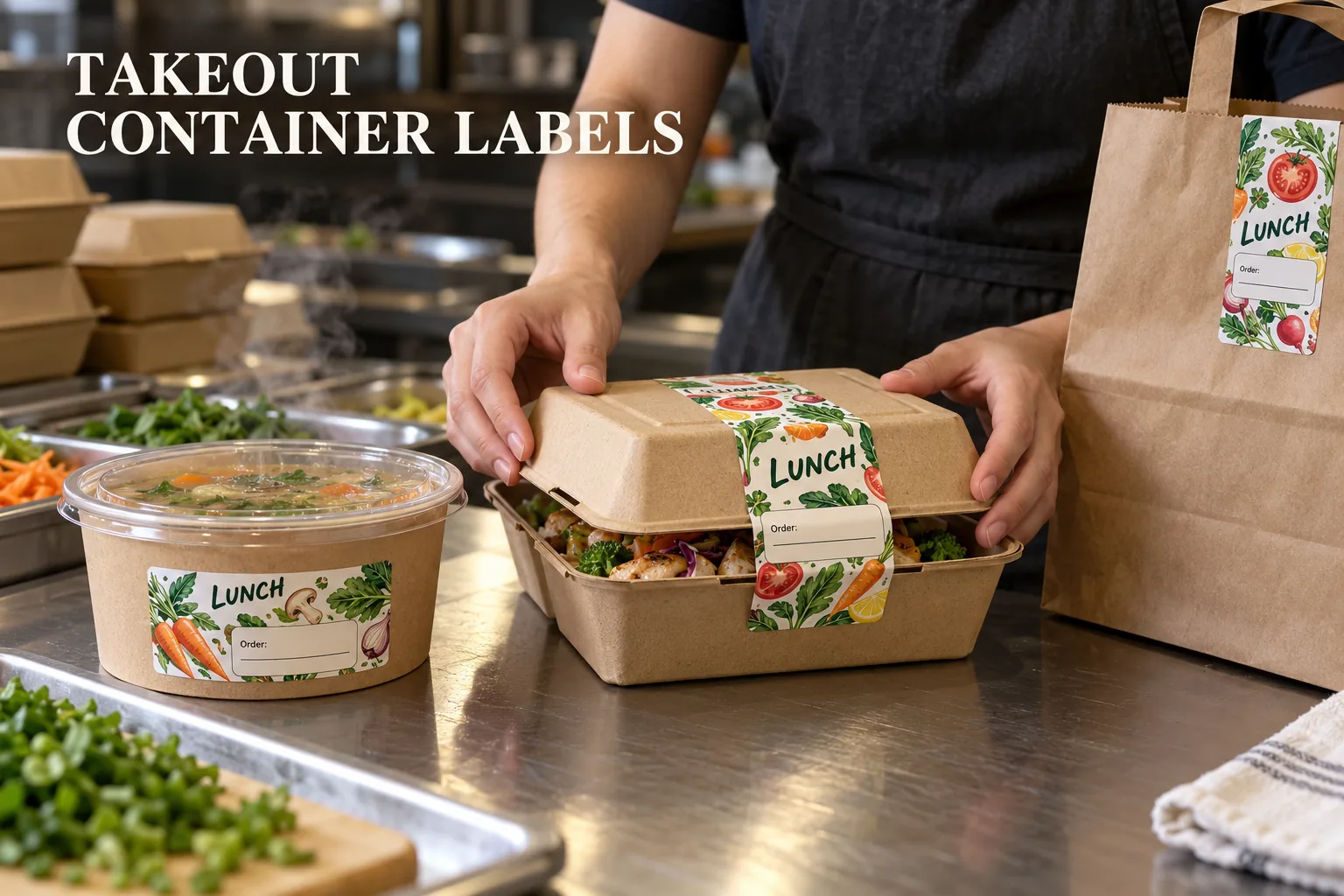
A takeaway container reaches the packing counter warm, sometimes steamy, sometimes greasy. The person closing it needs to identify the order before the next bag is ready. The customer opens it later, perhaps after the box has tilted in transit. A sticker that only looks tidy in a studio photograph misses both of those moments.
I would start with the actual filled container: paper clamshell, coated bowl, plastic lid or whatever the restaurant really uses. Close it the normal way and watch where steam collects. Then decide whether the label is for brand recognition, order identification, closure or a combination. Those jobs do not always belong on one sticker.
Do Not Ask a Brand Sticker to Repair a Weak Lid
If a container closes securely on its own, a printed label can finish the presentation. If the restaurant expects the sticker to hold a lid shut, that is a separate performance requirement. Test the packed box through normal bagging and movement. A seal crossing a vent, hinge or wet edge may fail even when the adhesive works on a clean flat sample.
| Container condition | Likely risk | What to check |
|---|---|---|
| Hot filled bowl | Condensation on the lid | Placement after closing |
| Paper clamshell | Moving hinge or textured board | Flat contact area |
| Greasy handling | Contaminated surface | Actual packing sequence |
| Delivery bag | Boxes rubbing together | Pack-out trial |
| Order variants | Wrong meal handed over | Readable identification field |
Separate Fixed Artwork From Changing Order Data
Original food illustrations, a simple kitchen mark or color bands can make the restaurant recognizable without turning every label into a blank white order slip. But a delivery team may also need a dish name, number or note. Decide whether that information is handwritten, printed separately or part of a versioned label set. The area has to remain writable and legible after the container is closed.
If allergen, ingredient or other regulated information is needed, the food business must supply and approve the wording for its market and product. A print supplier can review space and legibility; it cannot infer the correct food statement from a photograph of the dish.
Test at the Speed the Restaurant Actually Packs
A label can be technically suitable and still be awkward if staff have to peel a tiny corner with gloves on. Ask whether rolls or sheets match the counter routine. Try several packed orders in sequence, using the same hands and bagging method. I would watch for misplacement and hesitation, not just whether the first sticker remains attached.
Heat and steam make universal material claims unhelpful. Identify the exact container surface and the stage at which the label is applied. Trial the proposed construction after food has been packed, and inspect the package after the normal holding and delivery interval. That is a more useful answer than promising all labels work for all hot foods.
Approve the Full Hand-Off
- Pack a real hot or cold order in the chosen container
- Record steam, grease, vent and hinge locations
- Measure the usable flat panel in mm
- Decide whether the sticker brands, identifies or seals
- Check peel-and-place speed with the normal supply format
- Bag and open a complete order
- Approve changing information and artwork versions
The bread bag label guide addresses another fast packing counter; the surface guide helps describe material questions. Share a closed-container photo, packing sequence and artwork in the specification planner. A good label is the one the kitchen can place without thinking and the customer can read without guessing.
Questions Before You Order
Can a sticker seal a hot takeaway container?
First check whether the container has its own secure closure. Steam, grease and lid movement need a test on the actual packed container before relying on a sticker as a seal.
Where should a takeaway label go?
Place it where the lid stays flat and the customer can read it, away from vents, condensation and moving hinges. Test with food inside.
Who approves allergen or order information?
The food business is responsible for accurate order and market-specific information. The label design can reserve a readable area for approved details or a separate order label.