
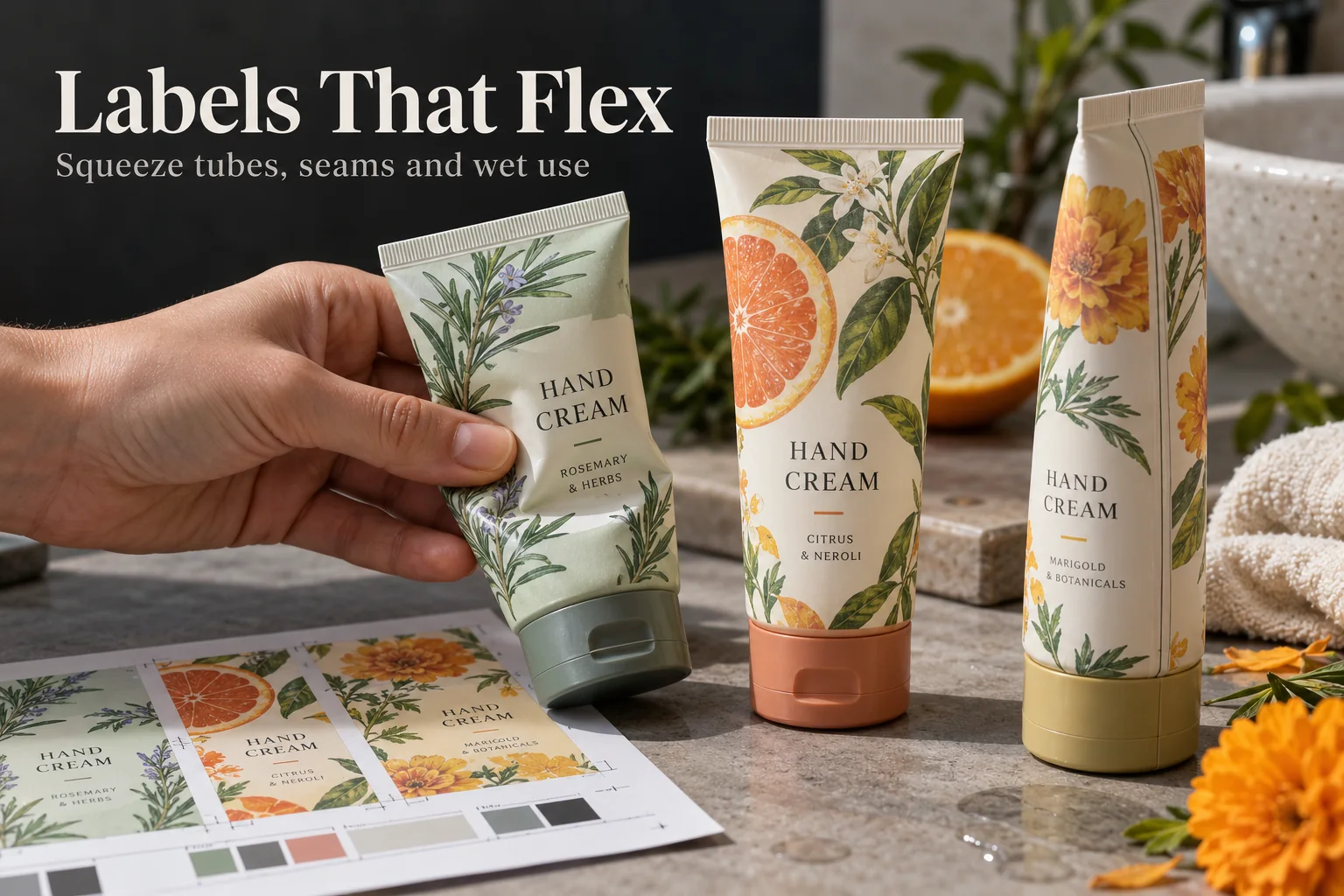
A squeeze tube can look like a tiny bottle in a catalog image. In use it folds, bows and gets handled with damp or lotion-covered fingers. That is why I would never approve the label from a flat proof alone. Put it on a filled tube, squeeze it the way a customer will, and inspect the edge afterward.
First separate three choices: a front label, a wrap label, or direct tube decoration. Labels can help with variant changes and detailed artwork, but the seam and edges need a sensible place to live. Direct print may avoid a separate edge entirely. It deserves a fair comparison rather than being dismissed because the project started as a sticker inquiry.
Find the Panel That Actually Stays Flat
Measure between the shoulder and the crimp on the final tube, not a generic cylinder drawing. Note where the cap, seal and back seam sit. Wrap a paper prototype around the filled package. The longest product name, ingredient panel and lot-code space should fit without crossing the area that creases hardest.
Test the Squeeze, Then the Bathroom
A proposed label film may be designed for conformability, but material family alone cannot guarantee the result on a particular tube. The Avery Dennison conformable-film overview is a useful starting point for the material conversation, not a substitute for a sample.
Apply labels through the intended packing workflow. Squeeze the tube repeatedly, set it down wet, wipe away controlled contact with the actual formula and inspect print, finish and adhesion after the planned dwell. Do not quietly substitute water for oil or lotion when the product can touch the label. If a label edge becomes the failure point, move it, change construction or reconsider direct decoration.
Let the Original Art Help Identification
An illustrated rosemary sprig, citrus slice or colored stripe can distinguish two hand-cream variants without imitating another brand. Keep the product-type word readable at shelf distance. Small mandatory text and claims belong to the responsible brand's review; a printer can flag space and reproduction concerns but should not invent approved wording.
- Send filled tubes and exact material information
- Mark shoulder, crimp and squeeze zones
- Compare front label, wrap and direct print
- Trial repeated flex and wet handling
- Test contact with the actual formula
- Approve longest SKU name and code area
The shampoo bottle guide covers wet-use questions; the cosmetic label guide covers small text and package curves. Send a tube photo and expected use to the quote form. I would rather lose an attractive mockup than deliver a label whose edge lifts halfway through the tube.
Questions Before You Order
Can any sticker go on a squeeze tube?
No. Tube flexibility, coating, contents, application method and label construction all affect performance. Trial the intended material on the filled tube.
Where should the label seam go?
Keep the seam away from the most compressed and visible area when the tube design allows. Confirm placement with a wrapped physical sample.
Should a squeeze tube be directly printed instead?
Sometimes direct decoration is the better route, especially when a label edge or repeated flex creates unacceptable risk. Compare process, artwork changes and volume before deciding.