
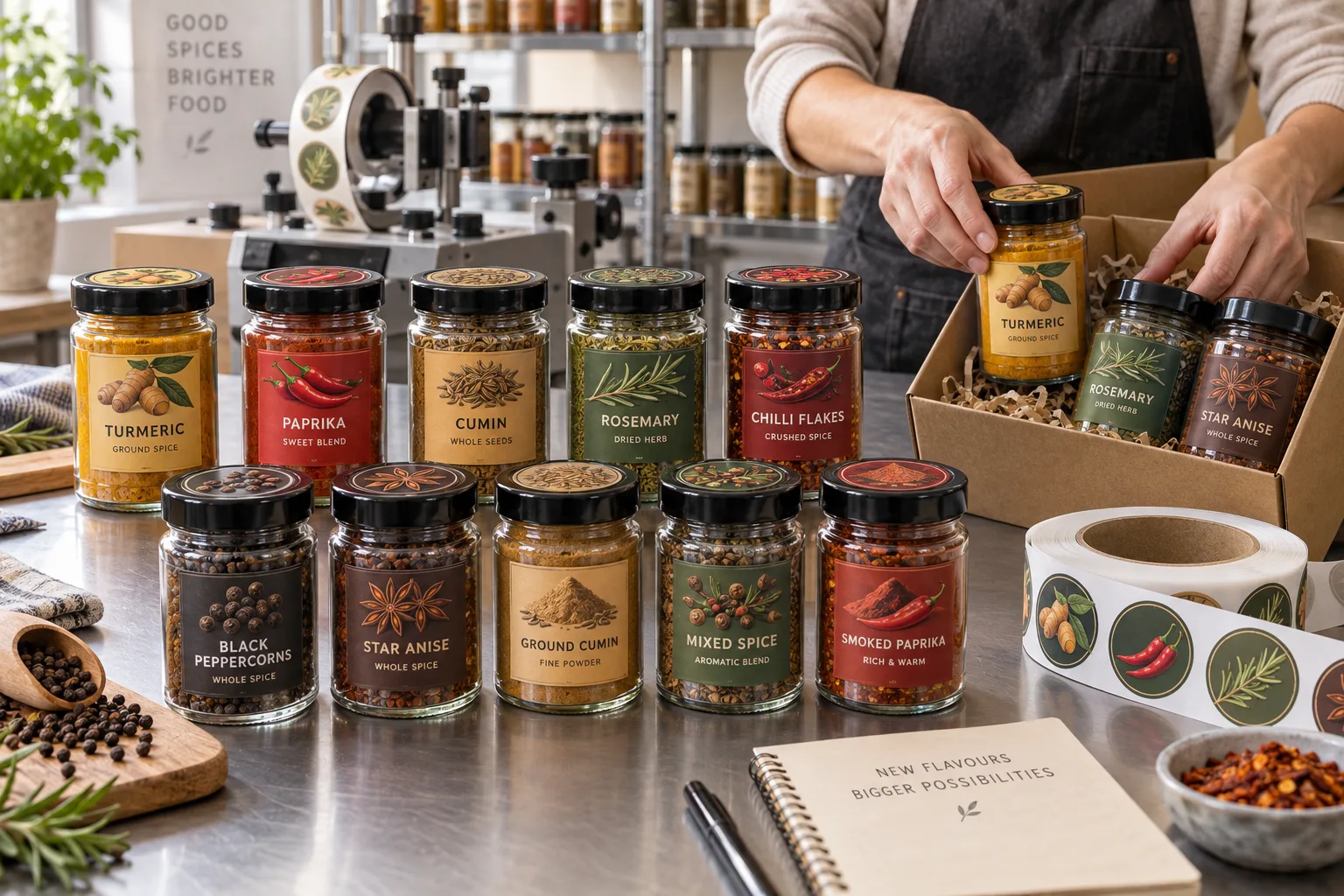
A spice jar label has two customers. The shopper wants to recognize the product quickly. The person filling and packing the range wants to pick the right artwork without reading six nearly identical files three times.
That is why we treat spice labels as a system, not a collection of isolated mini posters. The system has to survive small panels, repeated handling, changing ingredients and new SKUs that may be added months later.
Design for the Way the Jar Is Seen
A jar on a retail shelf is read from the front. A jar stored in a drawer is often read from the lid. A refill pouch may be read while lying flat. Before selecting a label format, ask how the customer and packing team will physically find the product.
Front-and-back labels leave the spice visible and can work well on straight-sided jars. A wrap provides more information space but introduces a seam and may hide the product. A lid label adds useful identification but should not repeat every detail from the body.
| Label position | Best use | Production detail to confirm |
|---|---|---|
| Front panel | Retail recognition | Straight glass area and centered application |
| Back panel | Ingredients and business information | Readable size and relation to the front |
| Lid top | Drawer storage or gift sets | Usable diameter and cap texture |
| Full wrap | More content or opaque jars | Seam, overlap and changing circumference |
Ingredient Illustration Is Functional, Not Filler
Spices give us a rich visual language without borrowing anyone else's brand. Original turmeric roots, red chilies, cumin seeds, rosemary sprigs and star anise can make each SKU visible from a distance. The drawing style should stay consistent even when the ingredient shape changes.
Color helps, but do not rely on color alone. Similar yellow labels for turmeric, curry and mustard can become a picking problem. Pair each accent with a large spice name and a distinct ingredient illustration. For wholesale cases or gift sets, repeat that cue on the lid or outer pack.
Plan the Information Hierarchy Before Shrinking Type
Small jars tempt designers to reduce everything. We prefer to decide what the front must communicate, what belongs on the back and what can move to an outer carton or insert. A readable spice name and product identity usually matter more than a long brand story.
Ingredient, allergen, weight, origin and business statements depend on the product and target market. The brand should supply approved wording. We check whether it fits, whether the contrast is practical and whether the cut or curve threatens readability.
Test the Label Around Real Pantry Handling
Spice jars meet dry dust, oily fingers, cabinet abrasion and repeated lid turning. Powders can reach the container during filling and weaken adhesion if the jar is not cleaned. Some plastic jars also present a different surface from glass even when they look identical in a photograph.
Apply production-size samples after the normal cleaning step. Fill the jars, pack them together and handle them over several days. Inspect corners, seams, scuffing and lid labels. If the product enters a gift box, test removal from the insert so labels do not scrape against dividers.
Our Spice Label Test List
- Confirm glass or plastic and cap material
- Measure the straight body panel and lid diameter
- Choose front, back, lid or wrap positions by display method
- Print every SKU at actual size
- Check spice name and illustration at shelf distance
- Apply after the real filling and cleaning sequence
- Simulate dust, hand oil, carton rubbing and repeated opening
- Lock a naming and artwork-version system for reorders
What We Would Put in the Quote Request
Send jar and lid dimensions, container material, photos, label positions, artwork, total quantity, quantities by spice, application method, information fields, finish direction and gift-set or case-packing details. Explain whether customers view the jars from the front, top or both.
A spice label range feels professional when a customer can find cumin in one glance and the packing team can find the right file just as quickly. Original ingredient artwork is part of that operating system, not decoration added at the end.