
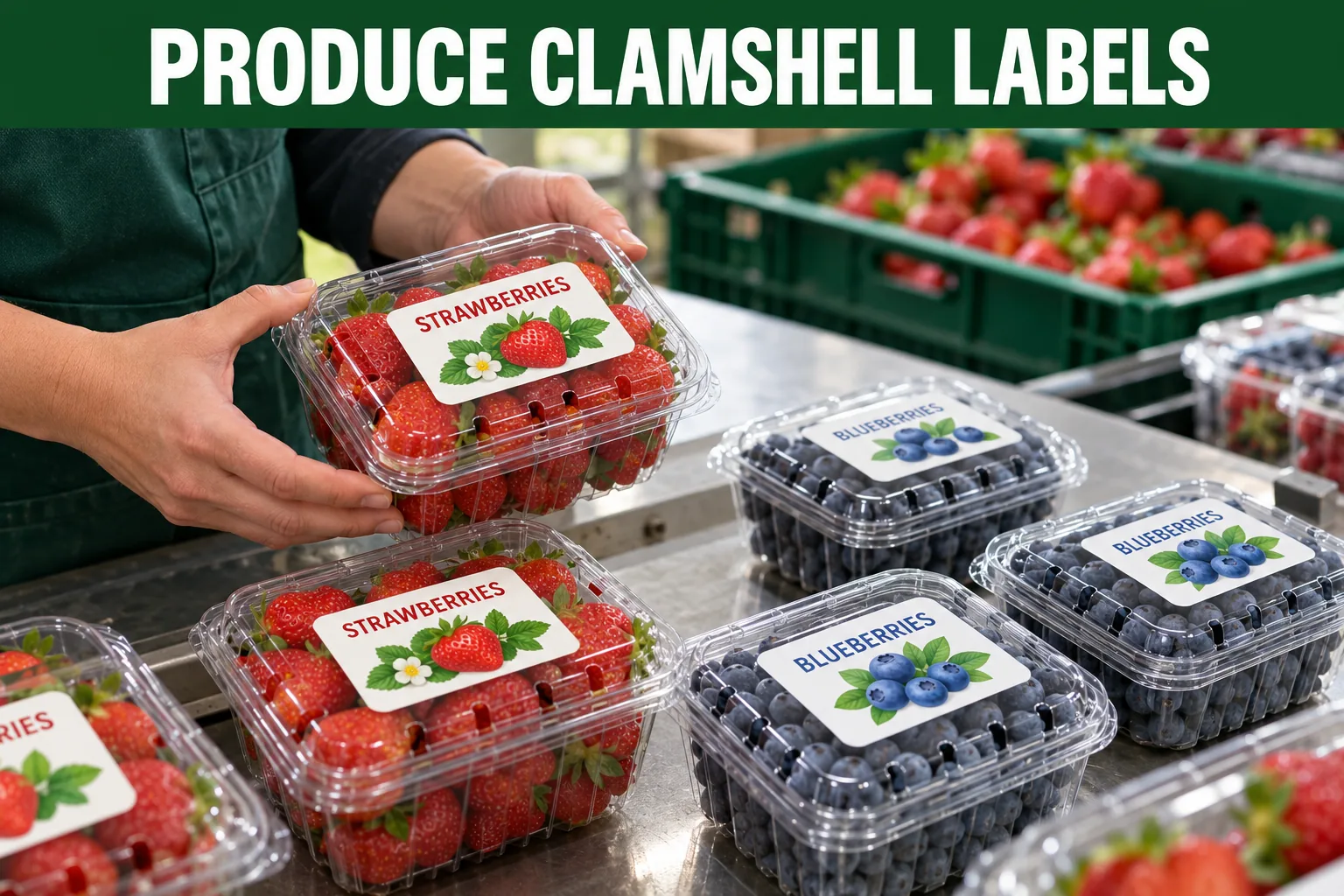
Fresh berries do some of their own selling. A shopper sees color and condition through the lid before reading a slogan. On a packing line, though, the pack still needs a clear product identity and the correct lot information. A label that covers the best view or a vent has solved the wrong problem.
I would take the actual filled clamshell, close it and mark three things with removable tape: the clear viewing area, the vent openings and the hinge or latch. Only then is there a sensible label footprint. Empty packaging drawings rarely show how fruit rises into the lid or how a worker grips it.
Keep Functional Areas Clear
| Pack feature | Buyer question | Proof check |
|---|---|---|
| Clear lid | How much produce stays visible? | View a filled pack at shelf distance |
| Vent slots | Can the sticker block airflow? | Mark and avoid every vent |
| Hinge and latch | Can the pack open normally? | Open a labeled sample |
| Traceability area | Where is the lot printed or added? | Check the final packing step |
A small illustrated fruit mark can make variants recognizable without hiding the produce. Original berry drawings, a strong variety name and a restrained color cue are enough. Save space for mandatory or owner-approved information; do not squeeze it into decorative type after the shape is finalized.
Test on a Chilled, Handled Pack
A clear plastic lid can have a different surface from a paper carton. Condensation, cold storage and wiping all matter. Ask for a trial label and apply it at the point in the workflow where staff will actually apply it. Then chill, handle and open the pack under realistic conditions. A dry sample on a desk is only an artwork proof.
There is no universal promise that a material will stay attached on every clamshell. The pack resin, surface treatment and temperature need to be known. If the label will bridge a lid seam as a seal, define whether it is decorative, a closure aid or a tamper signal; those are different jobs.
Give Lot Data a Place Before Printing
Some packers add the lot later with a printer or secondary sticker. Others provide the data in the artwork. Agree on who owns the data, where it goes and whether every batch requires a variable field. Do not print an attractive but fictional origin or harvest date. The brand or packer must approve the claims and wording for the target market.
- Send photos of the exact filled clamshell
- Measure the usable lid area in millimeters
- Mark vents, hinge, latch and viewing window
- Identify who supplies lot and origin information
- Test a sample after chilling and normal handling
- Check the labeled pack in its transport carton
The food container label guide explains another clear-pack placement problem; the surface matching guide helps frame adhesion questions. Upload the filled-pack photos and approved copy through the specification planner. Let the fruit remain the first thing a buyer sees.
Questions Before You Order
Can a label cover the clamshell vents?
Do not assume so. Mark the vents and hinge on the real filled pack, then place the label outside functional areas.
Is a waterproof label necessary for refrigerated produce?
The answer depends on the pack surface, condensation and handling. Test the proposed material on the actual chilled clamshell.
Who approves origin and lot information?
The produce brand or packer approves traceability, origin and market-specific wording. Printing checks the supplied version and legibility.