
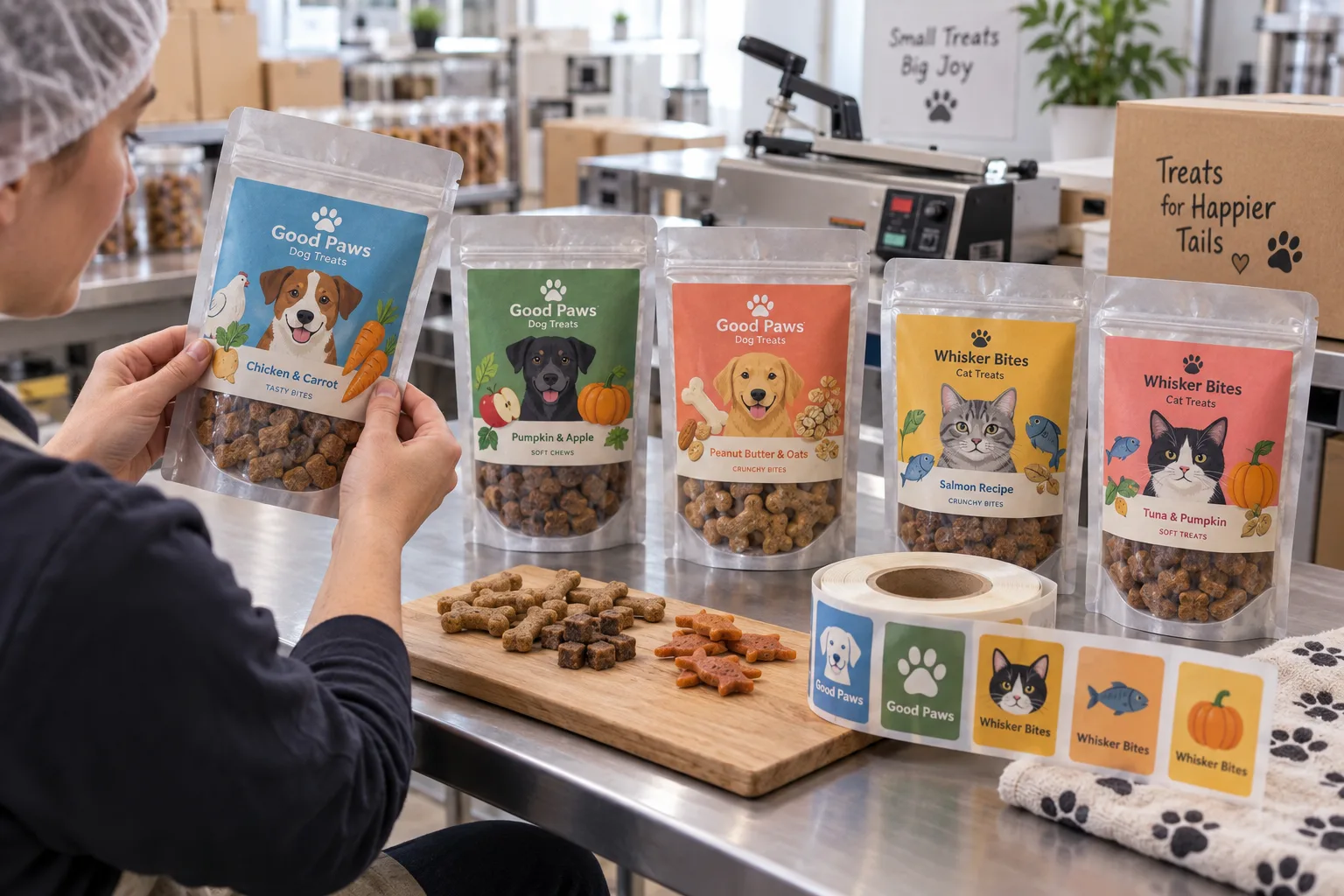
Pet treat packaging has a natural reason to be visual. Customers want to see whether the product is for a dog or cat, what flavor it is and how the treat fits into daily use. A white label with only a name throws away that advantage.
At the same time, a cheerful dog illustration cannot solve a label that wrinkles over a pouch gusset or a flavor name buried under claims. We build these projects from the physical bag outward: filled shape, zipper, seal, folds, information and then the illustration system.
Measure the Filled Pouch, Not the Flat Bag
A stand-up pouch changes when treats are added. The front bows, side gussets open and the bottom expands. Place the intended weight inside before selecting the label dimensions. Keep the label away from the top heat seal, zipper track and areas that fold repeatedly.
If the treats leave oil or crumbs inside the pack, also examine the outside filling workflow. A label applied after oily product dust reaches the panel may fail even when the material performed well on a clean sample.
| Package decision | Buyer question | Production check |
|---|---|---|
| Front label size | What must be noticed first? | Filled shape, fold clearance and shelf readability |
| Back information label | How much approved text is required? | Final-size legibility and seal clearance |
| Species and flavor cues | Dog, cat or both; which ingredient? | Distinct original icons plus clear words |
| Application sequence | Before or after filling? | Clean panel, pressure and repeatable placement |
Original Graphics Should Answer Real Questions
A generic original dog profile, cat face, paw, bone, fish, chicken, pumpkin or carrot can make the product easy to sort without copying an entertainment character. Use the animal cue to identify the intended pet and the ingredient cue to identify the flavor. Keep both secondary to a readable product name.
For a growing range, keep the drawing style and layout fixed. Change the animal or ingredient illustration and accent color in a controlled way. This avoids the two common extremes: every SKU looking identical, or every SKU looking as though it came from a different company.
Friendly Artwork Must Not Turn Into a Health Claim
A smiling pet, heart or active pose can make packaging welcoming, but wording such as calming, dental, joint support or vet approved needs evidence and market review. Do not create fake medical badges or certification marks to make the pack look established.
Ingredients, feeding guidance, net quantity, analysis and business information vary by product and market. The responsible brand should provide approved content. Our production role is to preserve space, contrast and print clarity and to flag obvious legibility risks.
Choose Finish for Handling and Merchandising
Pet treat bags are opened, closed, carried and sometimes stored near food bowls or outdoor gear. The label may meet hand oils, crumbs and abrasion. A protected film construction can support frequent handling; a paper direction may work for a dry bakery pouch with a shorter, controlled route. Test the actual pack instead of applying a broad waterproof promise.
Also check photography. Matte can reduce glare in marketplace images, while gloss can add color intensity. The right answer depends on the artwork, pouch and sales channel. Product recognition should remain strong under both camera light and ordinary shelf light.
Our Pet Treat Label Test List
- Fill the final pouch to the intended product weight
- Mark zipper, seal, fold and gusset exclusion zones
- Confirm whether labels are applied before or after filling
- Print all required text and feeding content at actual size
- Check species, flavor and product name from shelf distance
- Handle the pack with realistic oil, crumbs and repeated opening
- Run carton, subscription-box or retail-hook packing tests
- Review every claim and document request before approval
What We Would Put in the Quote Request
Send the final pouch specification, filled dimensions and weight, surface type, label positions, animal and flavor SKUs, quantities, artwork, approved text, application sequence, finish direction and outer packing. Mention oily treats, frozen storage or other unusual conditions.
A good pet treat label can be warm, colorful and full of recognizable graphics without borrowing a famous character or hiding behind blank packaging. The test is simple: customers should understand the product quickly, and the finished label should still look deliberate after the pouch has been handled.