
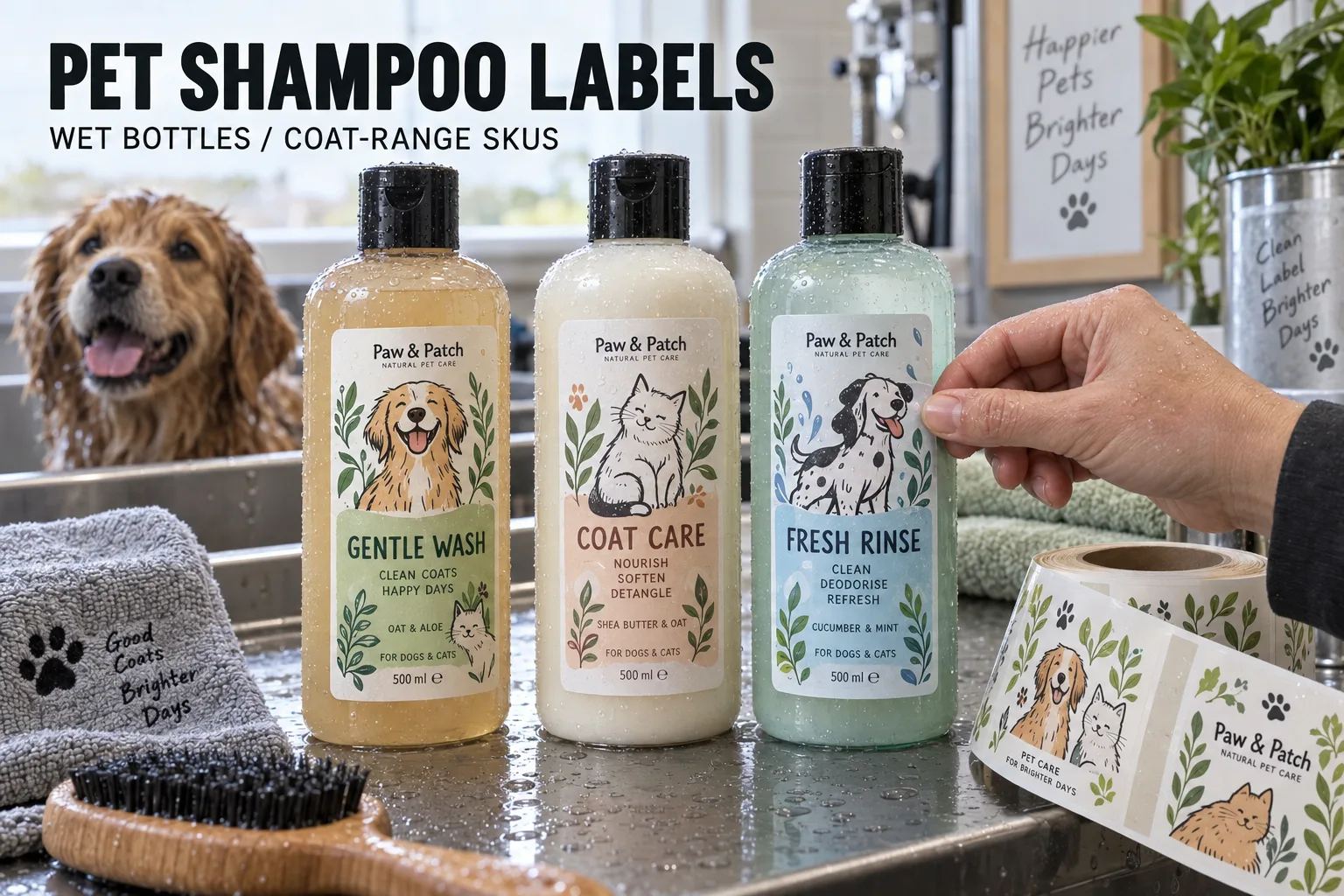
A pet shampoo bottle is usually photographed dry, front-facing and perfectly clean. Its working life is less polite. Wet hands squeeze it, a cap gets set down, the bottle may sit on a damp shelf, and a groomer needs to find the right variant without reading a paragraph. I would design around that second scene.
There is a temptation to put a large animal illustration on the front and call the range finished. I like an original dog or cat drawing when it helps people recognize the product. It cannot replace the variant name, usable directions or a label construction suited to the actual bottle.
Start With the Filled Bottle and the Normal Grip
Ask for the final bottle material, shape and fill size. Mark the flat or gently curved panel where a label can sit without crossing a seam or a squeeze point. Then hold the bottle with wet hands as it would be used. If fingers cover the variant name, the front layout is doing the wrong job.
A pump bottle used at a grooming station and a small flip-cap retail bottle may share a brand but not an application plan. I would measure each in mm and treat the back-panel space separately. Enlarging the front label until it wraps around both curves often makes the result harder to apply and read.
| Question | Buyer input | Review on the real pack |
|---|---|---|
| Bottle surface | Final material and finish | Application and edge contact |
| Wet handling | Normal bathing routine | Grip, wiping and print condition |
| Formula contact | Expected splash and cleaning | Defined exposure trial |
| Variant system | Approved SKU list | Quick identification |
| Back information | Owner-approved copy | Readability and version control |
Water Resistance Is a Test, Not an Adjective
Water on the outside, product formula under the cap and repeated wiping are different exposures. I would agree on a trial that uses the intended bottle, label construction, application method and time before use. A label surviving a quick rinse does not automatically prove every other condition.
Film, paper, coating and adhesive choices should follow that trial. A buyer may prefer a soft matte finish for a calm grooming brand, but the finish still needs to remain legible when wet. If the supplier recommends a different construction, ask which specific exposure it is solving rather than accepting a vague 'premium waterproof' description.
Make the Coat Range Easy to Pick
Original paw, leaf or coat illustrations can give the range character. Use different visual cues for products that are easy to confuse, while keeping the brand mark in one place. A blank white bottle with one generic label does not help the person reaching into a grooming shelf.
I would review the full family side by side: wash, conditioner and any specialized variant. The label should not imply a medical or safety result simply because the graphic suggests it. Any product claim, ingredient text or use direction belongs to the responsible owner and needs destination-market approval.
Control the Versions Before Printing
Different scents, bottle sizes and languages multiply artwork files quickly. Name every version by SKU, size and revision. Send quantities for each version, not only a total. Keep a physical approved bottle or a documented proof as the reference for a later reorder.
As a planning example, 1,200 bottles across three variants may not divide evenly. If one variant has fewer labels, its unit planning and packing may differ. That is a reason to state the split, not a claim about the factory's minimum order.
- Photograph the filled bottle from front and back
- Measure usable panels in mm
- Record normal wet grip and wiping
- Provide owner-approved directions and claims
- Review all variants together at final size
- Test one labeled bottle through the agreed routine
- Specify quantity and packing by SKU
The shampoo bottle guide and spray bottle guide offer related surface questions, not a substitute for a pet-product trial. Send the bottle details through our quote form. A useful label makes the right bottle easier to pick even when the room is busy and the hands are wet.
Questions Before You Order
Are pet shampoo labels the same as ordinary shampoo labels?
Some packaging questions overlap, but bottle shape, use setting, formulation contact, product information and target-market claims must be reviewed for the specific pet product.
Can I claim a label is waterproof?
Describe the expected water, formula, wiping and storage exposure first. Test the proposed complete construction on the final bottle before making a performance claim.
Who approves pet grooming product claims?
The responsible product owner supplies and approves directions, ingredient statements and any safety or efficacy claims for the destination market. Printing review does not validate those claims.