
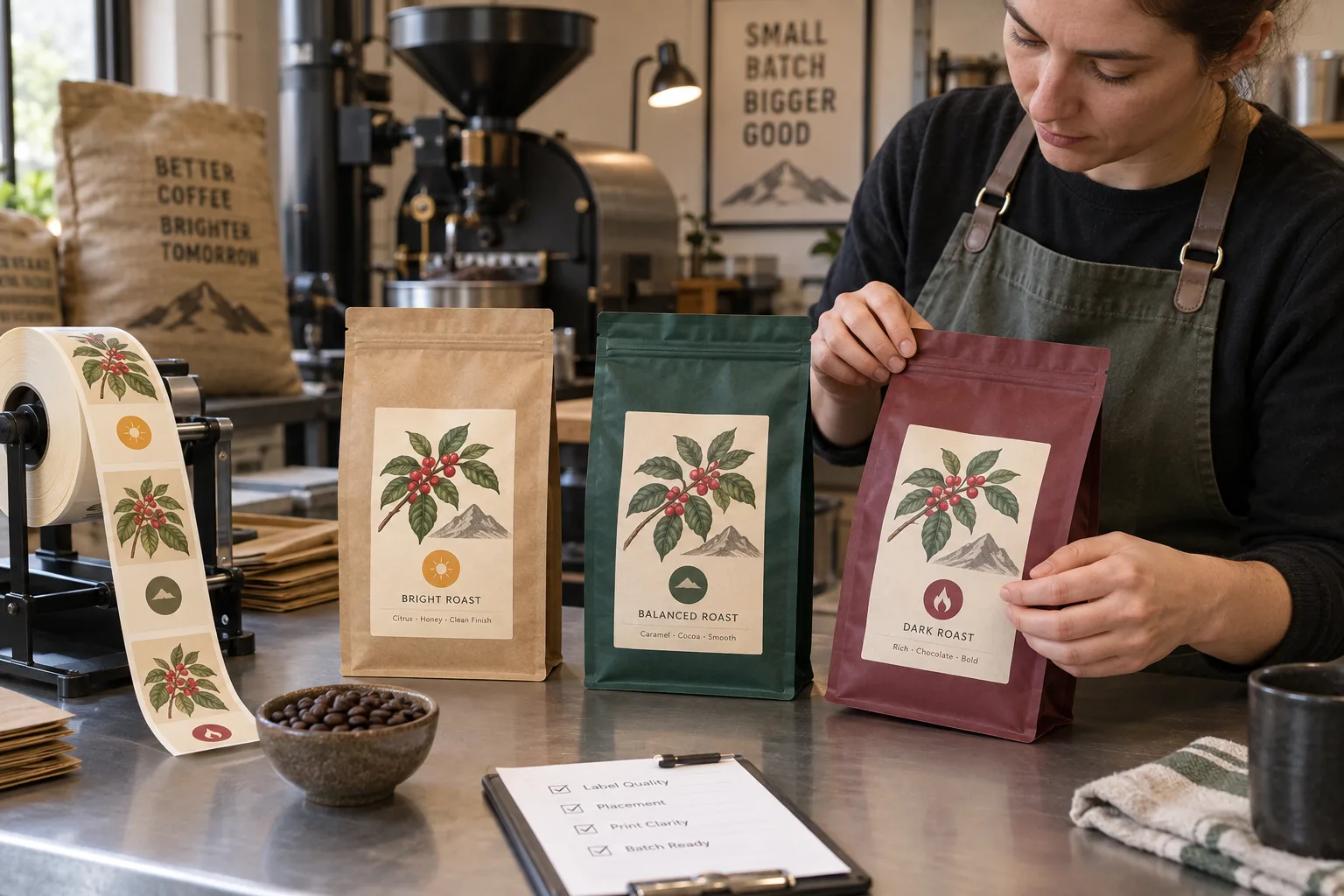
When a coffee brand asks for a premium label, the conversation often begins with paper texture and ends with the bag valve. That order is backwards. On the packing table, the valve, gusset, zipper, seal zone and date code have more influence over the label than the mood board does.
From the factory side, I would rather receive one filled sample bag than ten screenshots. The filled bag shows how the front panel bows, where the gusset begins and how much the surface moves when someone picks it up. A label that sits perfectly on an empty flat pouch can wrinkle after the bag is filled with beans.
Map the Bag Before Choosing a Label Size
Start with the usable front and back panels. Mark the zipper, heat-seal area, degassing valve, bottom fold and any window. If the bag supplier gives a drawing, compare it with a physical sample because production folds and filled shape can reduce the truly flat area.
The safest label does not merely fit between two dimensions. It also leaves breathing room around moving edges. A wide label that crosses a gusset may look impressive on a screen and then fight the package every time the bag flexes.
| Bag detail | Why it matters | What to send |
|---|---|---|
| Surface film or paper | Texture and coatings change adhesion | Bag specification or real sample |
| Valve position | The label must not block venting or distort nearby | Measured distance from bag edges |
| Filled shape | Beans turn a flat pouch into a curved panel | Filled sample and front photo |
| SKU system | Roast, origin and grind need quick recognition | Complete product list and shared artwork template |
Paper Look and Film Performance Solve Different Problems
A textured paper label can support a crafted coffee story, especially on matte bags sold in dry retail conditions. Film is often considered when the bag sees oil, moisture, rubbing or repeated handling. Neither material is automatically more premium. The honest choice depends on what the package must survive and how it should feel in the hand.
Coffee beans can release oil, and packing areas are not always perfectly clean. A good face material cannot compensate for a contaminated bag. Apply test labels to bags from the actual production lot, using the same wiping and handling process planned for packing.
Build the Roast System Before Multiplying Artwork
One coffee label is an artwork project. Six roasts are a version-control project. Keep the logo position, information hierarchy and label size stable, then change one or two deliberate signals. Color bands, original roast icons or a clearly bounded origin panel can separate the SKUs without making every bag look like a different company.
The weak approach is to let each new coffee inherit a copied file with small uncontrolled edits. That is how an old origin, wrong roast level or stale barcode survives into a reorder. Use a named master template, assign a unique artwork code and keep the approved PDF with a photograph of the finished bag.
Leave a Real Home for the Date Code
Roast date and lot information are often added after label printing. Decide whether the code goes on the bag, on a reserved label panel or on a separate variable-data sticker. The answer changes the artwork. A tiny empty corner that looked generous on a monitor can become unusable once the coding equipment, operator access and final bag curve are considered.
If the code is applied separately, test its contrast and adhesion too. The permanent brand label and the date sticker are two different components with different jobs.
A Practical Coffee Bag Label Test
- Use the final bag material, size, zipper and valve position
- Fill the bag to the intended product weight before judging fit
- Keep the label clear of the valve, seal zone and moving gussets
- Apply labels with the planned hand or machine workflow
- Check edge contact after the bag has flexed and been packed
- Expose samples to expected oil, rubbing and storage conditions
- Verify every roast, origin, grind and date-code field
- Retain one approved filled bag for the next reorder
What We Would Put in the Quote Request
Send the bag sample or specification, filled dimensions, usable label panel, valve location, quantity by SKU, artwork, finish direction, application method and packing requirement. Mention any coding step and whether rolls must match a label applicator.
The expensive coffee label is not always the one with the special finish. It is the label that was ordered before anyone filled the bag. Let the package settle the geometry first, then use original artwork, color and finish to make the coffee recognizable.