
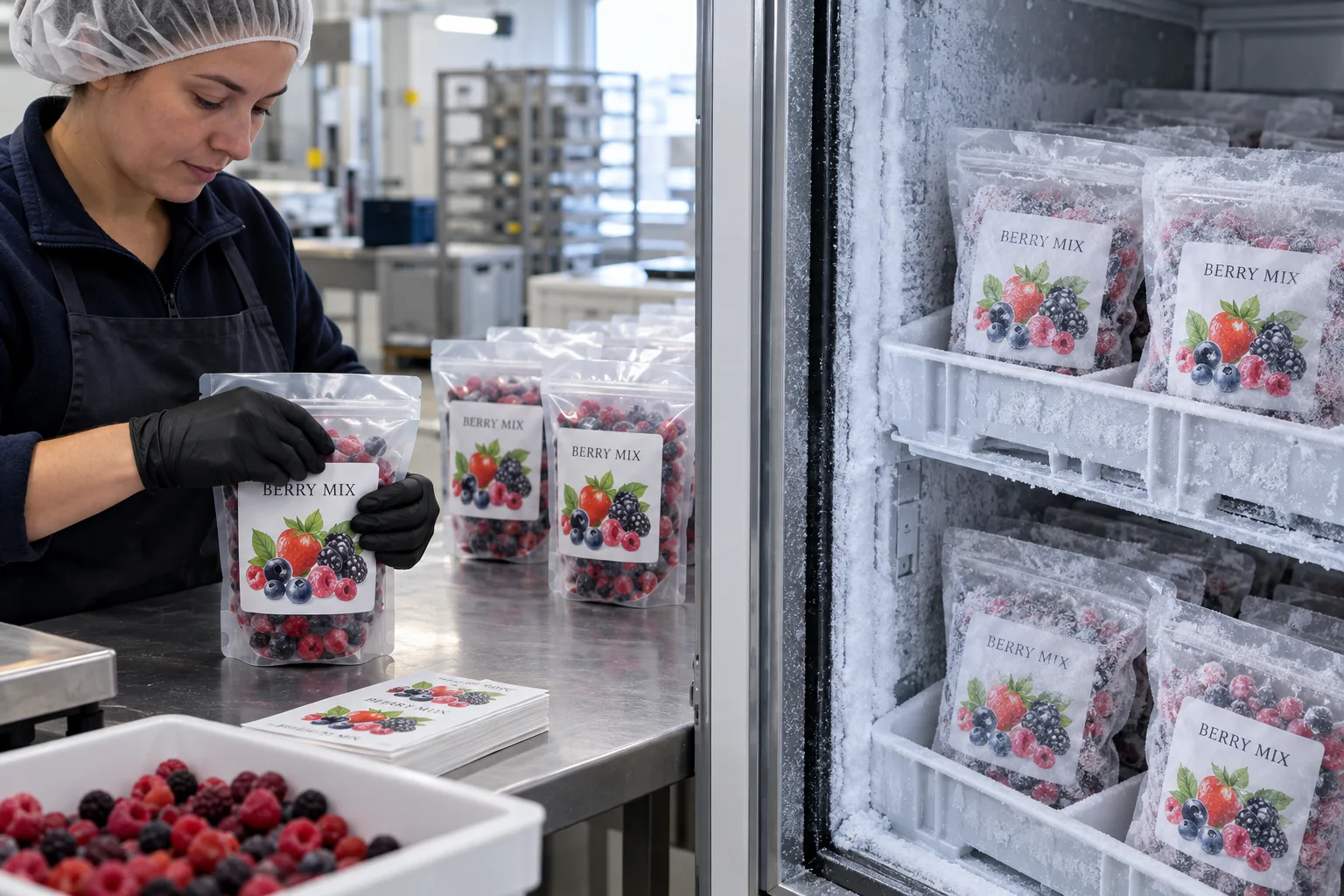
Two bags of frozen berries can reach the same freezer with very different label histories. One was labeled on a clean, dry pouch before filling and freezing. The other was pulled from cold storage and labeled while frost formed on the film. If a buyer asks only for a "freezer label," I still do not know which problem to solve.
I would map the packing line first: when the bag is sealed, when it cools, when a date or lot code is printed, and when someone presses the label onto it. The application step matters because an adhesive has to make contact before anyone can judge how it behaves in storage. A claim about low-temperature storage is not automatically a claim about sticking to a cold or wet surface.
Compare the Two Application Routes
For pre-freeze application, trial the label on production film at the real packing-line speed. Check whether the bag wrinkles under the label and whether sealing or filling disturbs the edge. Then freeze, handle and thaw representative packs according to the actual distribution route. Do not evaluate the label only when the pouch is still flat and empty.
For post-freeze application, record the pack surface temperature and visible moisture. A frosted bag, a dry frozen carton and a cold but damp tub are different test surfaces. Ask the supplier whether the proposed construction is suitable for that application condition. Press samples on finished packs and inspect them after the full planned hold and handling cycle. If frost makes the result inconsistent, changing the sequence may be more dependable than searching for a stronger-sounding adhesive.
Keep the Printed Information Useful
The front can carry a complete original food illustration and readable product name. Leave a clean field for the brand's approved ingredient, date, lot and barcode information. Test scanning after freezing and after condensation appears. If several flavors share one base artwork, proof each SKU and its data source separately. The food brand remains responsible for market-specific copy and claims.
- Identify pouch, carton or tub material
- State whether labeling is before or after freezing
- Record surface temperature and moisture at application
- Trial on filled finished packs
- Check print, edges and barcode after handling
- Approve each flavor and variable-data field
Read the broader freezer label buying guide for material planning and the surface-matching guide for the adhesive conversation. Send photos of the actual packing stage with a label brief. The timing is part of the specification.
Questions Before You Order
Can any freezer label be applied to a frozen bag?
No. Storage performance and application performance are separate questions. Ask for a construction qualified for the actual surface and application temperature, then trial it.
Should labels be applied before freezing?
Often that is easier to evaluate on a clean, dry pack, but it depends on the packing workflow and materials. Test the whole route rather than assuming one timing is always correct.
Does condensation matter if the final pack stays frozen?
Yes. Moisture at the moment of application can interfere with contact. Record whether packs are dry, frosted or wet when labeling occurs.