
A temporary decorative wall graphic looks suitable in a material book. The installation wall has an unknown paint history and must look acceptable after removal. The buyer needs two decisions: whether the graphic can remain through the intended display and whether its removal fits the owner's expectations for that painted surface.
For wall decals, removable is not a guarantee of no paint damage on every wall. Identify the actual paint, condition and history before relying on a generic adhesive description.

Identify the wall system, not just its color
Ask the owner for paint product, finish, application date and known repairs or layers. Record texture, dust, moisture concerns, peeling and other relevant condition information. If something is unknown, keep that gap rather than guessing from a white-wall photograph.
3M's wall-application bulletin explains that film and paint interactions vary and recommends system-specific testing. Its methods and eligibility rules apply within its defined products and conditions. They do not provide a universal pass threshold for another decal or prove that the underlying paint is sound.
Agree when the surface is ready
Follow the paint maker's curing requirements and the selected film system's preparation instructions. A wall dry to the touch is not automatically ready for every adhesive graphic. Coordinate the display deadline with the people responsible for painting, preparation and installation.
If the event schedule does not allow the appropriate review, identify that limitation before printing a full wall. Compare an alternative display board or another owner-approved placement. Do not turn an incomplete waiting period into a material approval simply because the artwork deadline is fixed.
| Surface record | Why it matters to the decision |
|---|---|
| Paint and finish reference | Names the actual contact layer |
| Known age and repairs | Preserves uncertainty about readiness and underlying condition |
| Representative trial location | Shows what area the observation represents |
| Removal expectation | Defines the surface state the owner requires afterward |
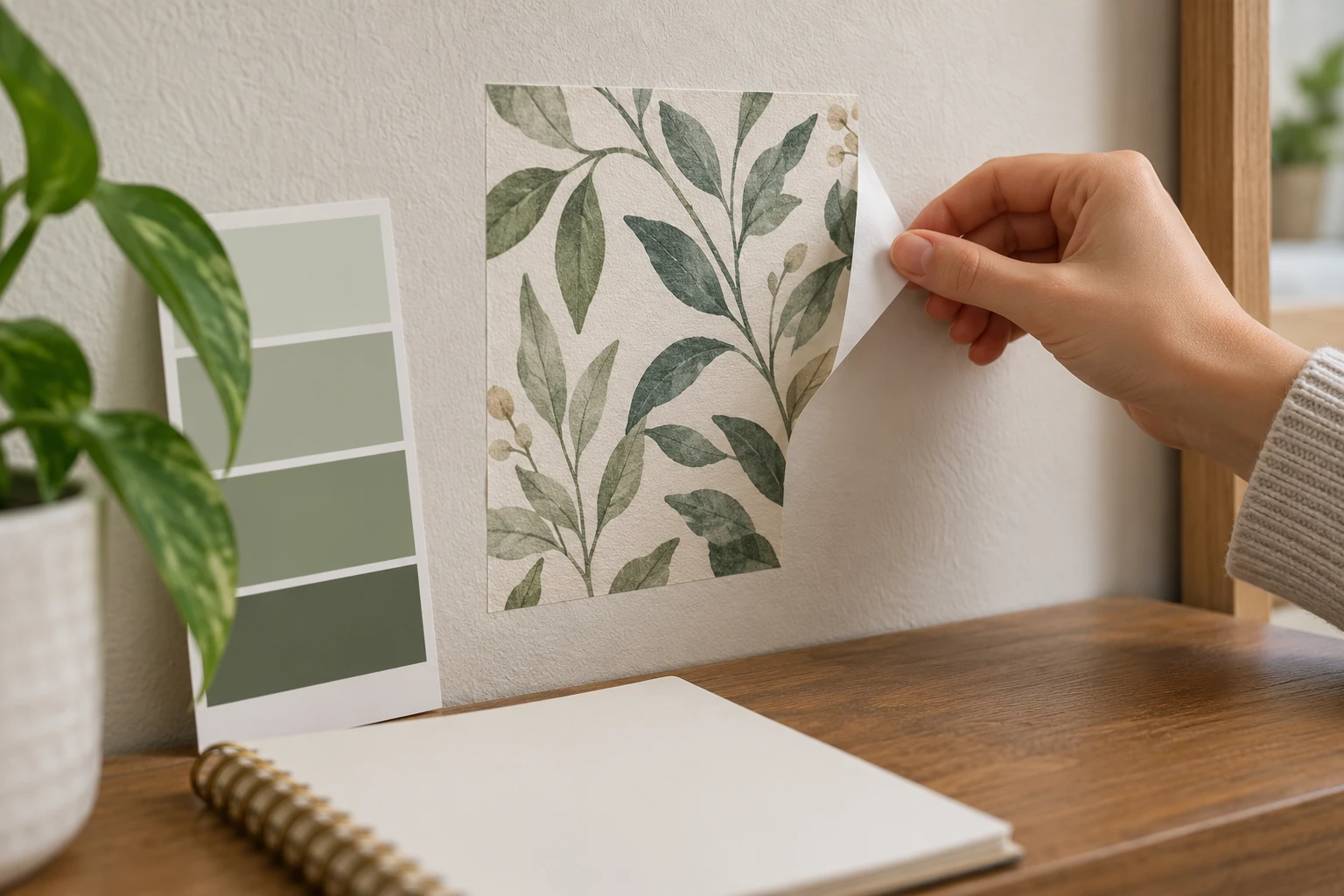
Review holding and removal separately
Ask the installer and provider to propose a representative trial for the identified wall. Record film reference, size, preparation, application, relevant interval and observations. A tiny immediate peel cannot stand in for a large graphic left through a different period and environment.
Define acceptable removal appearance with the owner: adhesive residue, staining, lifting paint or another concern. Keep the permitted removal procedure explicit and system-specific. Do not assume that heat, chemicals or scraping are acceptable on the surface. Preserve evidence of any damage for review rather than automatically assigning it to one cause.
Include the real layout and handover
Map seams, corners, fixtures and any prohibited coverage zones. Agree who installs, checks and removes the graphic. A quote for printed material does not automatically include site preparation, access equipment or restoration after removal.
The general removal guide explains the two requirements. Here the extra decision is the complete paint-and-wall system, its readiness and the responsible installation route. Retain that record with the artwork and accepted trial.
Send known paint and wall details, photographs, dimensions, display period, removal expectations and installation responsibilities through the decorative graphic enquiry. Ask for feasible material options and required surface review before authorizing production for the site.