
Before accepting a sticker's scuff-resistance result, identify the surface that rubbed against it and the conditions of that contact. Compare proposed print-protection options using the same artwork and an agreed rub exposure. Have the buyer name the appearance or information that must survive, then ask which evidence represents that requirement.
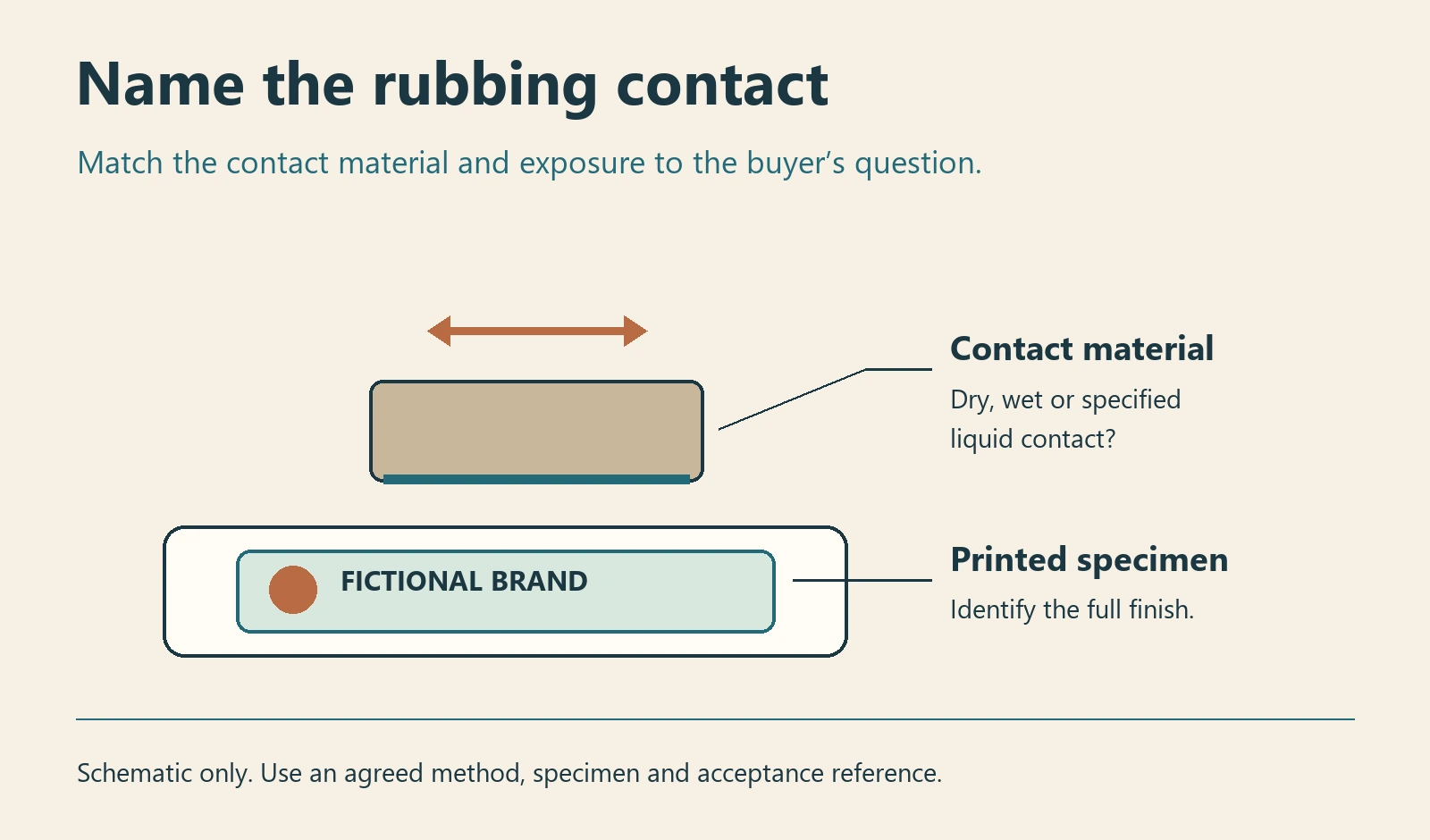
Describe the contact the finished sticker will encounter
A loose giveaway may rub against other pieces in its distribution bag. A sticker on a reusable case may be wiped after use. A dark printed panel can show a surface mark that matters to the buyer even while the wording remains legible. Give the technical reviewer the actual contact material, handling sequence and any liquid involved.
Danilee's Sutherland rub-testing guidance describes different dry and wet procedures and examines the printed specimen alongside the contacting test material for transfer. Its procedures also distinguish liquid contact without rubbing from contact with movement. Those distinctions help the buyer specify the question a report should answer. Danilee rub-testing procedures.
Ask a qualified reviewer which method suits the job and which specimen it needs. Where a formal method is required, record its designation and version. The buyer should agree the relevant test scope and acceptance with the responsible parties before work begins. Sample availability, costs and timing require project confirmation under the ZC sample policy.
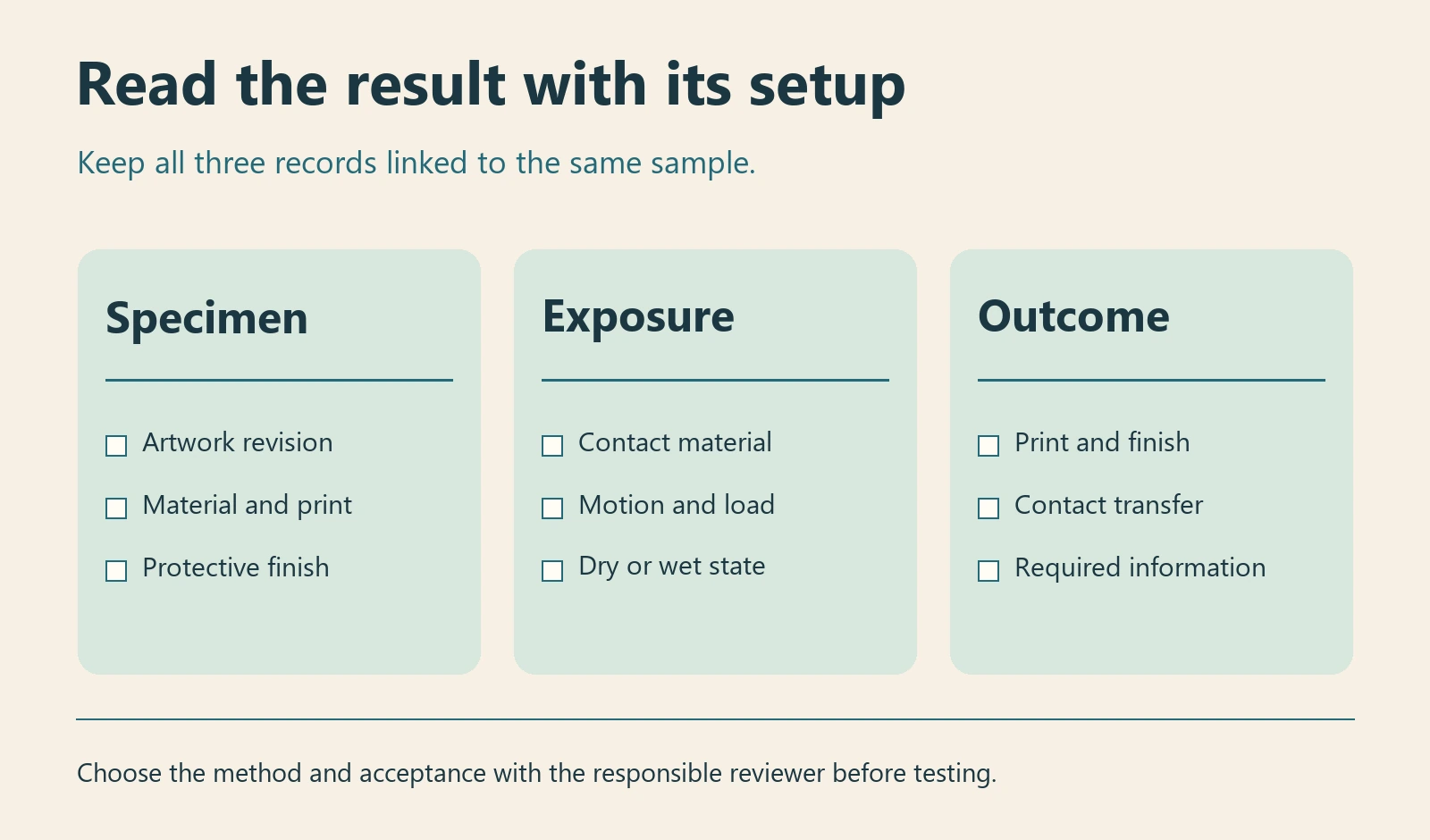
Read the exposure behind a reported result
| Report field | What it should identify | Keep the decision open when |
|---|---|---|
| Specimen | Artwork revision, face material, printing and protective finish, with the preparation and conditioning used. | The sample represents another construction or leaves its identity unclear. |
| Rubbing contact | Contacting material, dry or wet state, liquid if used, applied load, motion, speed and exposure count as applicable to the method. | Two reported counts use different conditions that have not been reconciled. |
| Observed result | Changed print or finish, transfer to the contacting material, readable information and the agreed acceptance reference. | A pass statement cannot be connected to the feature the buyer needs. |
A report saying a sample completed a stated number of rubs needs the associated setup and acceptance record. If another proposal uses a different contact material or wet condition, ask the reviewer whether the results support a comparison. If a short handling demonstration is used, retain what was actually done and the limited observation it produced.
Choose protection against the same requirement
Use the same critical artwork areas when comparing a proposed coating, laminate or another available construction. Ask which part of the protective stack changes and check the appearance, feel and relevant finished format alongside the rub evidence. The matte and gloss guide addresses the separate appearance choice. The wet-use guide helps define water exposure and the moment information must be read.
Retain an identified untouched reference with the assessed specimen and contacting material where the agreed review permits. Ask the owner to record which outcome supports release and any additional use condition still to assess. Send the artwork, final dimensions, quantity, intended rubbing contact, liquid or cleaning details if relevant, and available report through the custom die-cut sticker route.