
Before dispatching physical sticker samples internationally, connect the agreed specimen list to the goods description and quantities used in the shipment documents. “Samples” explains the purpose of sending them. It does not identify everything inside the parcel or settle the required invoice and value information.
Start with the items actually available for the review: for example, complete printed sticker sheets, individual backed pieces or an identified material reference. Confirm sample availability and scope first. This record helps prepare an agreed shipment; it is not an offer of a free sample pack or a promise that a particular sample route is available.
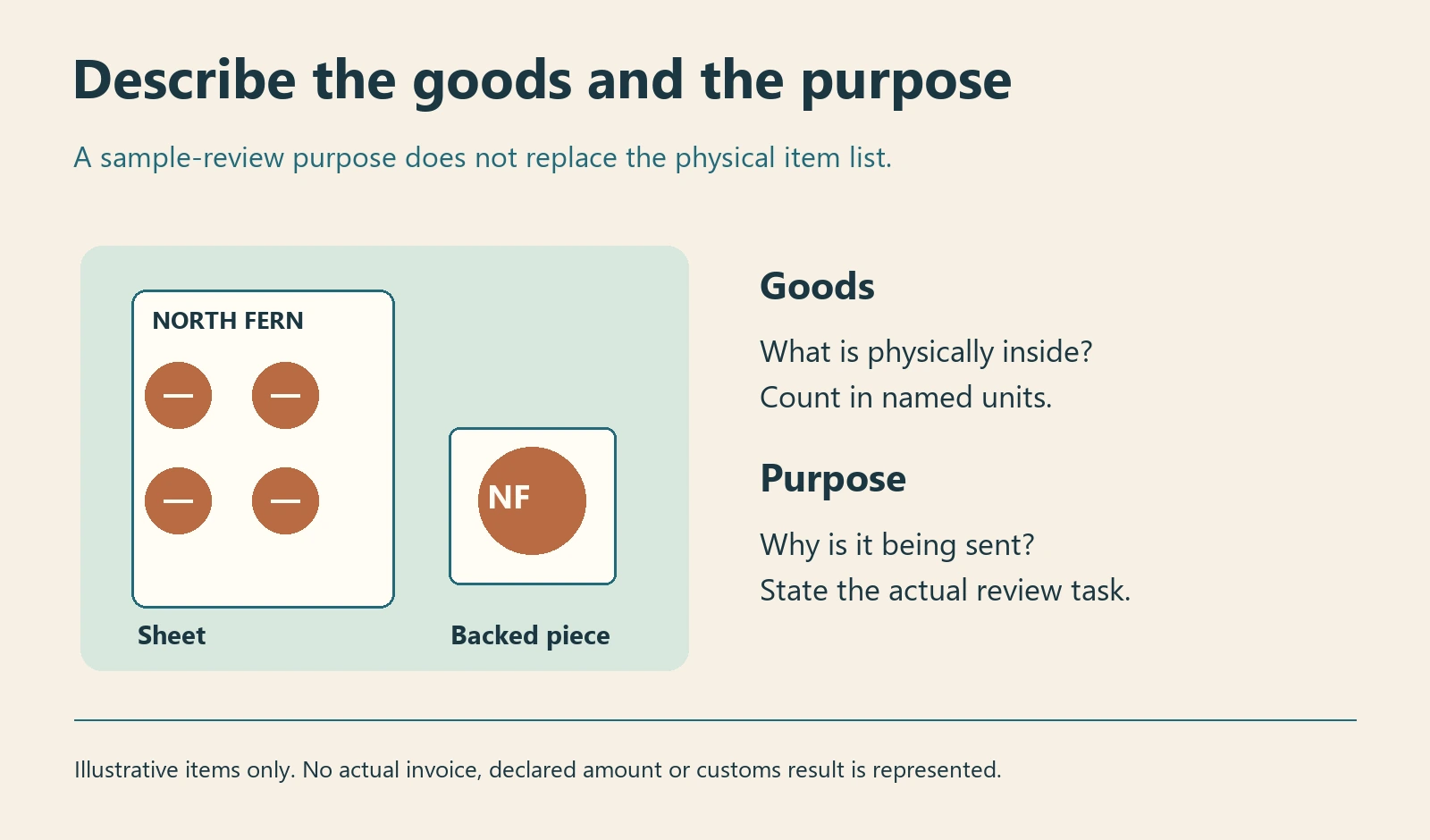
Give each specimen a countable identity
List what is being packed and what each item is intended to help the reviewer assess. Retain its artwork or construction reference where known. A sheet with several peelable motifs is not the same counting unit as a loose piece. Keep a named unit beside every quantity and explain any conversion used in the document record.
Do not describe a whole parcel simply as “paper” because part of it is printed. Ask the shipper to confirm an accurate description of the actual goods and materials. If the parcel includes another item, such as a separate packaging reference, include it in the contents review instead of letting it disappear under the sticker count.
| Record | Question to close before dispatch |
|---|---|
| Specimen identity | Which artwork, construction or material reference is actually packed? |
| Goods and material description | Does the description explain the physical item, rather than only its review purpose? |
| Quantity and unit | Are sheets, backed pieces and other items identified without mixing units? |
| Purpose | Is this a sample review, sale, return or another accurately stated movement? |
| Origin, value and classification | Who confirms these fields against the actual goods and destination requirements? |
Confirm the document route for the destination
DHL Express’s shipping-document guidance lists commodity description, origin, quantity and unit, weight and value among customs invoice information. It records the reason for export separately. That distinction supports keeping the physical item list and the sample-review purpose connected without treating them as interchangeable descriptions.
DHL Express Netherlands explains that a pro forma invoice is often used for noncommercial movements such as samples, while some destinations require a commercial invoice even for those movements. Confirm the applicable document with the shipper and the responsible carrier or customs representative for the actual route. A familiar blank form is not evidence that it is the right document.
Ask what additional information is needed and who provides it. Do not copy a tariff classification, origin statement or tax identification from an unrelated parcel. Keep unsupported fields open for the responsible party’s confirmation rather than choosing a plausible-looking entry to complete a form.
Separate the sample charge from its declared value basis
A sample may involve a specimen charge, preparation work, courier charges or another confirmed amount. Record what the commercial quote covers. A waived charge or possible credit against a later order should not automatically become a zero-value instruction for the goods.
DHL’s US customs FAQ asks for true market value and identifies undervaluation as a possible clearance problem. Have the shipper and the appropriate customs party confirm the value basis when no ordinary sale price exists. This article supplies no nominal amount, valuation formula, duty threshold or guarantee of duty-free entry.
Keep the currency and any relevant cost breakdown explicit in the returned document record. If an invoice total differs from a sample payment request, ask what each represents. The difference may have an explanation, but neither party should silently edit the documents merely to make the two numbers look alike.
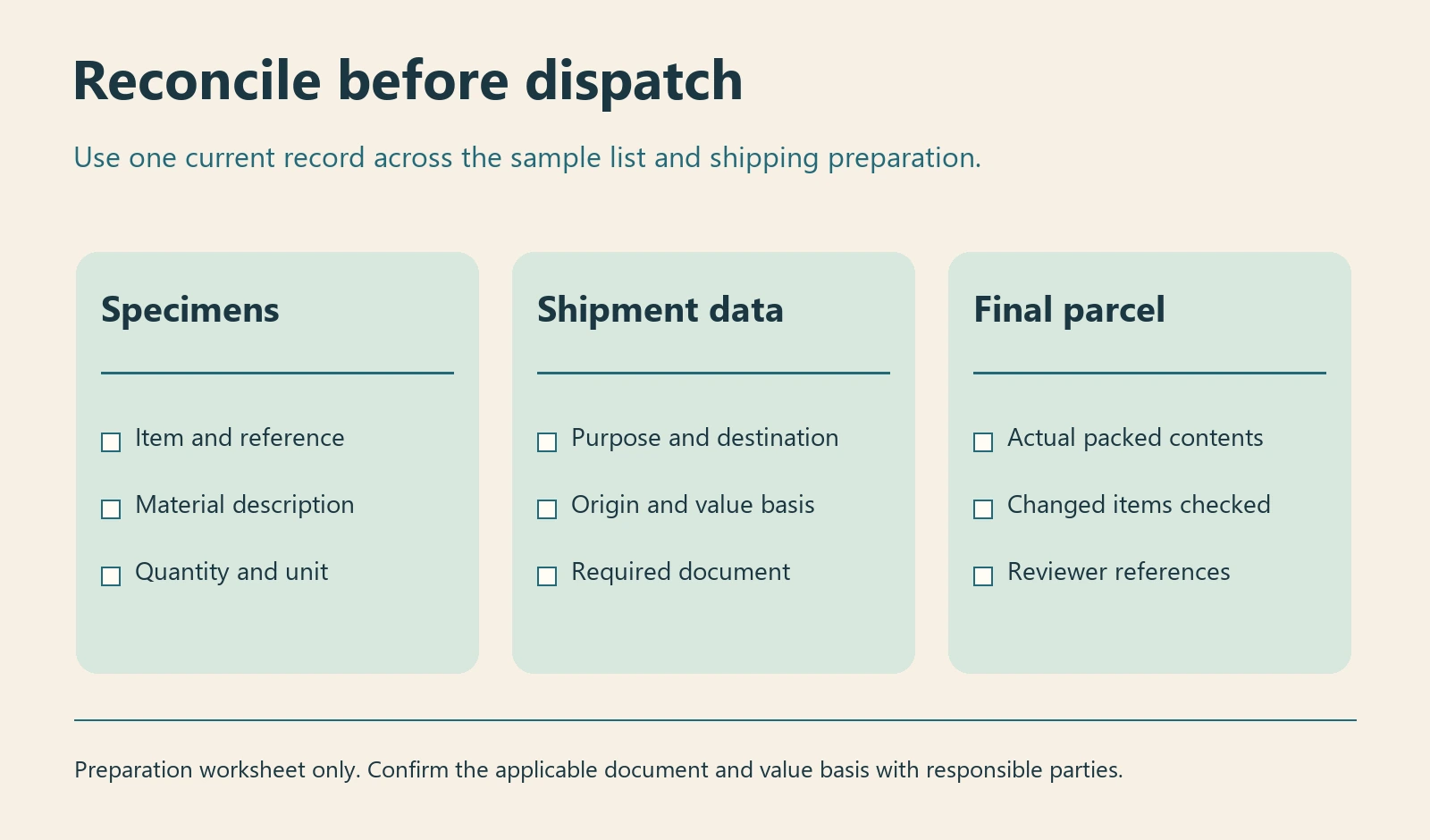
Reconcile the final parcel before authorizing collection
Give the person preparing the shipment one current contents revision. Compare the packed items, invoice description and quantity record before the carrier handoff. If a sample is replaced or another reference is added, return the affected information for confirmation. An early specimen list should not remain the final document after the parcel changes.
Keep a copy of the confirmed document reference with the sample identities. The reviewer needs to know which item arrived and what it represents; a courier’s contents description is not a full material specification. Use the sample and proof guide to retain the approval limit of each specimen.
When a goods description, value basis or necessary destination field remains unresolved, hold the dispatch instruction for clarification. If the immediate question is only artwork layout, an identified digital proof may allow that review to proceed while the physical shipment is prepared. It cannot replace evidence needed for feel, fit or application.
Send a specimen brief that can become a shipment record
For a custom sticker sheet project, send the intended sample-review question, actual item references and materials where known, quantities in named units, destination and required reviewer receipt event through a sample-shipment enquiry. Ask which sample route and documentation information can be confirmed.
Apply the current sample policy to availability, charges and timing, and the shipping information to the proposed route and quotation. Correct preparation reduces an information gap; it does not establish customs acceptance or a fixed arrival date.