
A botanical sticker can be appropriate decoration for a journaling card without being an appropriate way to mount an irreplaceable photograph. A scrapbook collection should make that boundary clear before its artwork or packaging suggests that every included piece is photo-safe.
When buying custom scrapbook stickers, identify whether they decorate separate stationery, touch photographic materials or form part of a claimed preservation system. Keep ordinary decorative production separate from a photographic-conservation requirement. If the project depends on protecting originals, obtain the appropriate preservation advice before selecting an adhesive route.
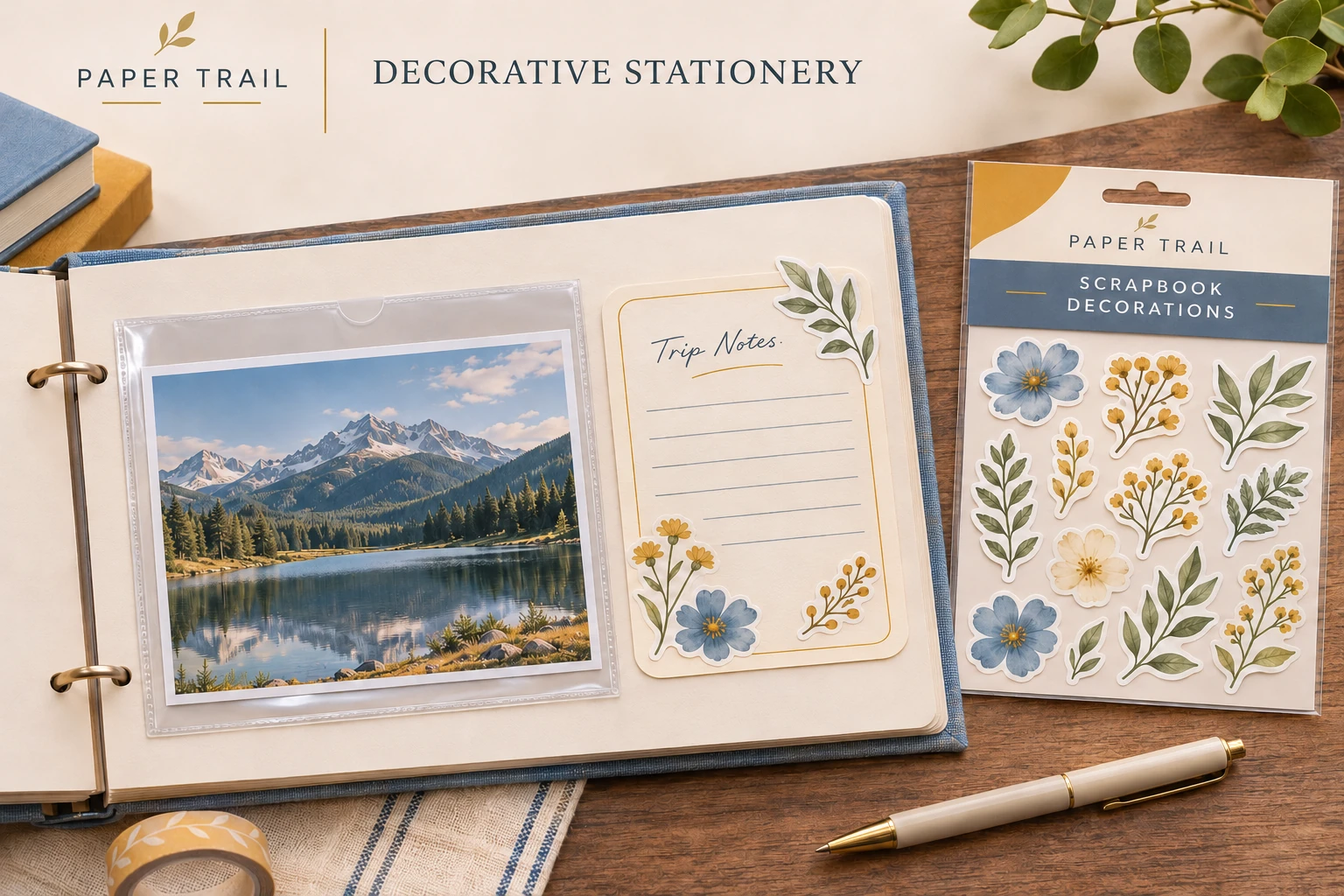
Locate the decoration in the actual product
Draw the intended photograph, its enclosure or support, album page and decorative elements as separate objects. Mark where sticker adhesive will touch. Include what the objects meet when a page turns or the book closes. A front-facing mockup can conceal contact with the facing page.
Do not assume that moving a sticker to a sleeve proves the complete storage system safe. The enclosure, its contents and any additions still need to match the responsible owner's preservation requirements. Distance in a digital illustration is not evidence of a specified protective performance.
The ZC Labels stationery range includes scrapbook directions. That describes a decorative product category, not verified archival, acid-free or photo-safe properties of an unidentified finished construction. Specify the intended ordinary stationery surface when discussing a custom print project.
Separate originals, reproductions and decorative inserts
The Library of Congress photograph-care guidance advises against adhesives on photographs and explains that the photographic materials matter to care decisions. A visually attractive scrapbook does not override that distinction. Do not use a precious original as an informal sticker trial or prescribe a removal method from an online mockup.
For an ordinary creative product using replaceable reproductions, the owner may define a different intended life and use. Identify that choice explicitly rather than presenting it as approval for historical prints or family originals. Permission to reproduce the picture is also a separate owner responsibility.
A decorative card that can be kept separate from photographic storage may offer the intended visual theme without asking an ordinary sticker to perform a conservation job. The owner still chooses the final arrangement. This guide does not certify an album, recommend a preservation material or establish that a card is suitable inside a particular enclosure.
Write a contact-and-claim brief
| Object or statement | Input to identify | Decision still needed |
|---|---|---|
| Photograph or reproduction | What it is, who owns it and whether it is replaceable | Whether specialist preservation requirements govern the project |
| Decoration surface | Actual card or page, coating and proposed position | Which ordinary application the supplier is being asked to review |
| Enclosure or album system | Owner-selected components and contact map | Who assesses the complete photographic storage arrangement |
| Proposed preservation wording | Exact claim and represented finished construction | What evidence and authorized wording, if any, support it |
Mark an unknown field as unknown. If the owner cannot identify what the sticker will contact, obtain that reference before asking for a suitability conclusion. A general paper preference does not explain the adhesive, printed finish or complete assembled use.
The Library's preservation FAQ discusses album and enclosure choices and photographic-activity testing of storage materials. Those are reasons to obtain the correct evidence for a preservation system; they do not establish that a natural-looking label, an acid-free paper description or the illustration on this page meets that system's requirements.
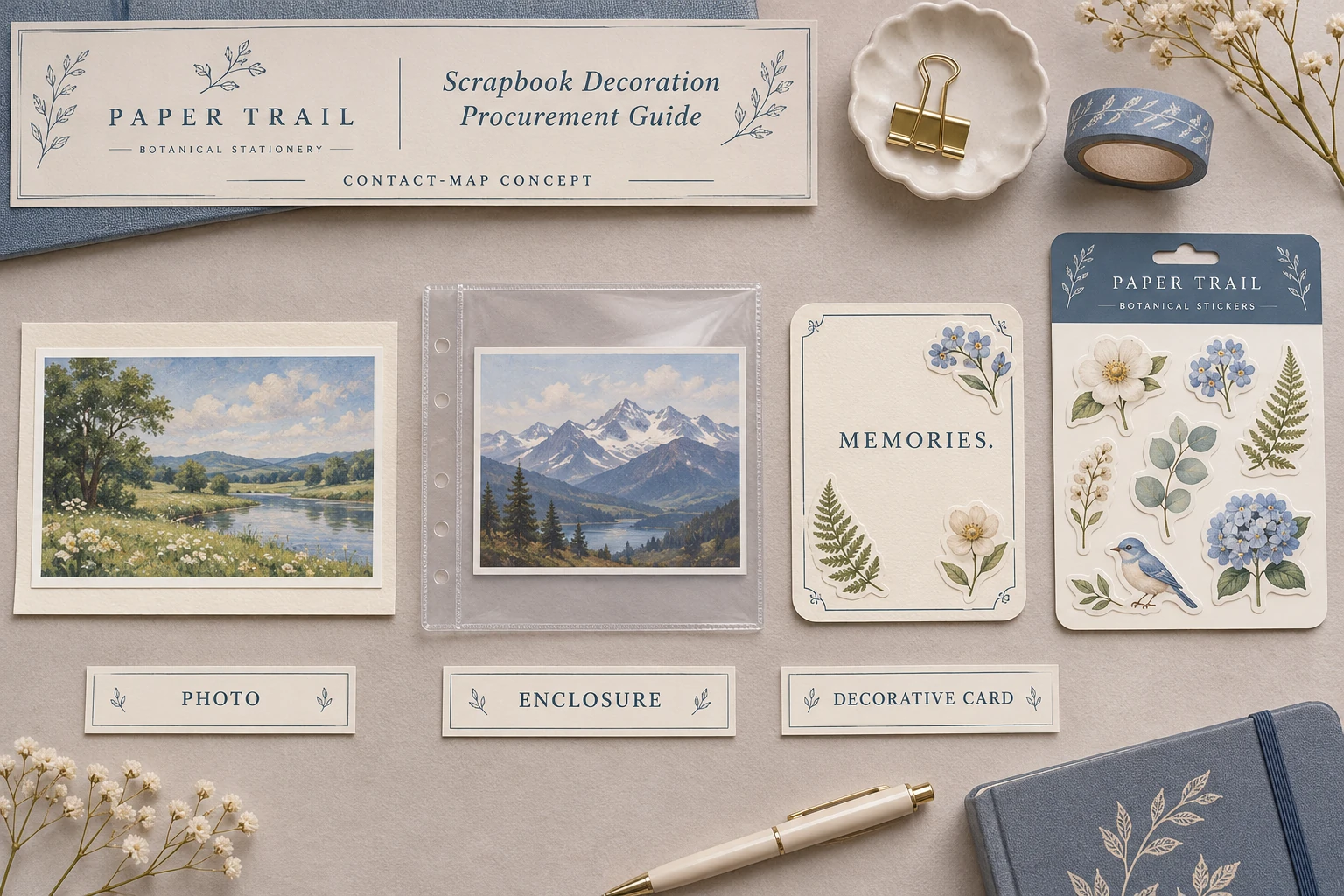
Keep immediate handling observations within their limits
A sample on the actual decorative card can help the owner review placement, readability and the intended opening or handling. Record that card, the construction and the action. Those observations answer a functional stationery question; they do not establish long-term photographic compatibility.
Similarly, easy removal from one new card does not demonstrate safe removal from a photographic print or an old album. The holding and removal guide keeps the actual substrate, duration and end state explicit. Where preservation is required, have the responsible specialist define the relevant evidence instead of converting an ordinary peel demonstration into a claim.
Do not promise that a thicker film, clear finish or separate liner makes the assembly archival. The liner is a supplied support, while the applied sticker has its own construction. Request the actual references if a claim depends on a component, and keep the complete-use question with the accepting owner.
Decide what the collection can honestly promise
If the business is selling decorative stationery, describe that product and its intended application without unsupported preservation language. If it intends to sell a photographic-storage system, identify the specialist assessment and relevant evidence before releasing that claim. The second route is a different requirement, not a decorative upgrade established by the same artwork.
Where the evidence is missing, retain the claim as pending, consider an owner-approved decorative-only arrangement or choose another properly assessed route. Do not print an archival badge simply to make a sleeve look complete. The bookplate guide likewise separates ordinary book use from an archival expectation, but does not approve photographic contact.
Send ZC Labels a decorative scrapbook brief with the actual stationery surface, marked placement/contact drawing, artwork, dimensions, quantities and packing. State whether photographs are involved and identify any separately owned preservation requirement or claim. Ask what identified decorative construction and sample scope can be discussed; availability, cost and timing remain subject to the project-specific sample policy.