
A promotional label is intended to release a lavender scent when the recipient rubs a marked area. The printed artwork can be approved on screen, but the scent experience cannot. A scented-label purchase needs an agreed fragrance reference, activation area, review method and delivery protection before the image alone can become a production approval.
Separate a decorative illustration of lavender from a claim about what the label smells like. The responsible brand must decide whether the scent is a general impression or is intended to represent a particular product. That choice changes what must be compared and approved.
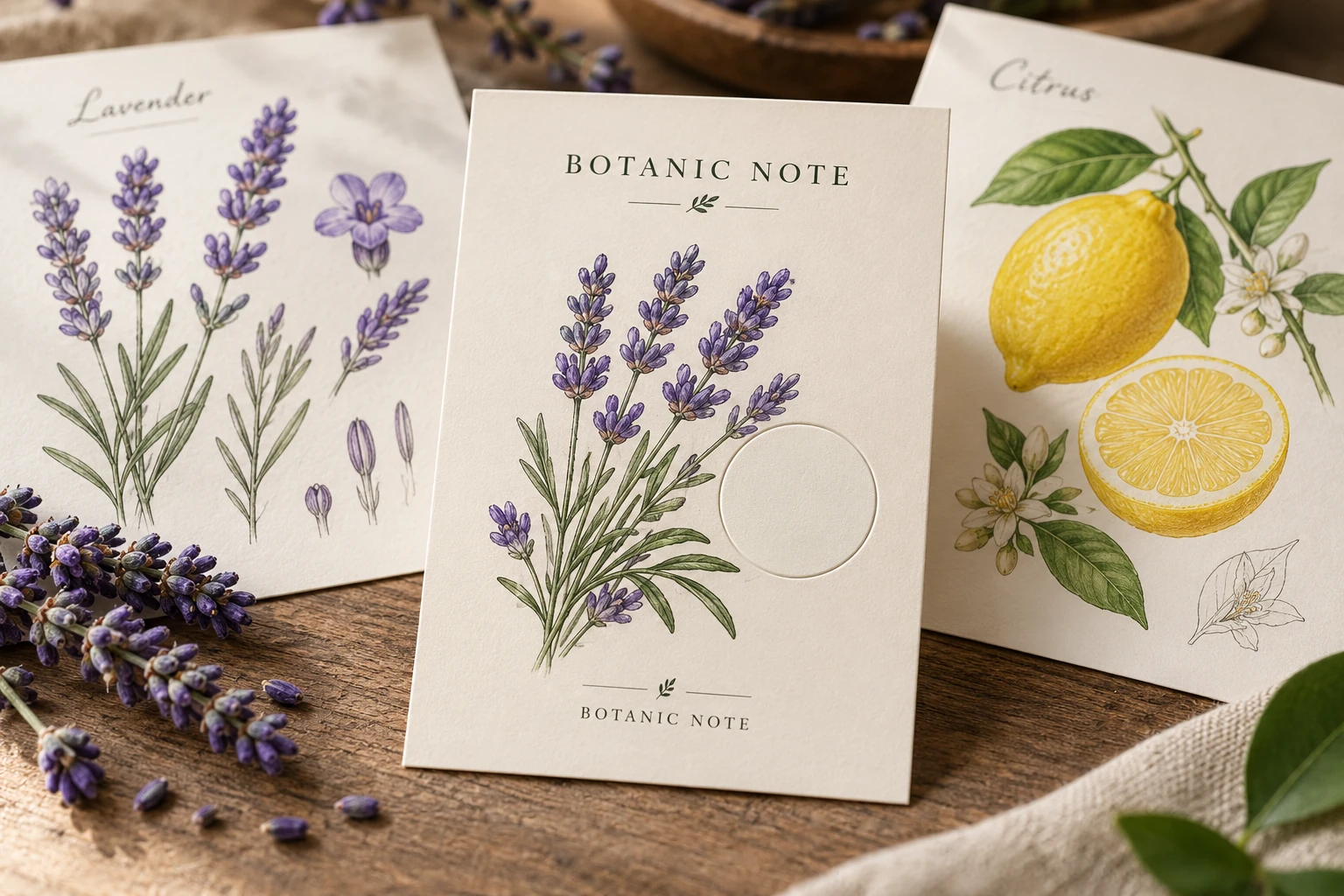
Identify the activation mechanism
Scentisphere describes a printable coating containing microencapsulated fragrance for its rub-activated sampling product. This establishes a specialist route to discuss, not a guarantee that any ink, coating or label construction delivers the same effect. Request the proposed provider's own product explanation and available options.
Ask whether activation requires rubbing, opening a protected area or another intended action. Identify where the user touches the piece and what the instructions should say. Do not use the same generic scratch-and-sniff phrase for different mechanisms without confirming the actual construction.
Keep artwork, coating location and fragrance separate
Supply a finish map showing the activation area independently from the color artwork. Identify important wording that must remain readable and any surface that must not receive the coating. Ask the provider how the coating interacts with the proposed print, substrate and packing.
Name the accepted fragrance reference and its version. An email saying lavender is not a complete sensory standard, particularly when the label is meant to represent an existing product. Agree who approves the reference and how the comparison is made; an illustration, scent name or marketing paragraph cannot substitute for that decision.
| Approval | Owner's question |
|---|---|
| Artwork and instructions | Does the user know which area to activate and how? |
| Fragrance identity | Which physical reference controls the intended impression? |
| Activation and use | Does the proposed piece support the intended user action? |
| Storage and dispatch | What protection and handling does the chosen system require? |
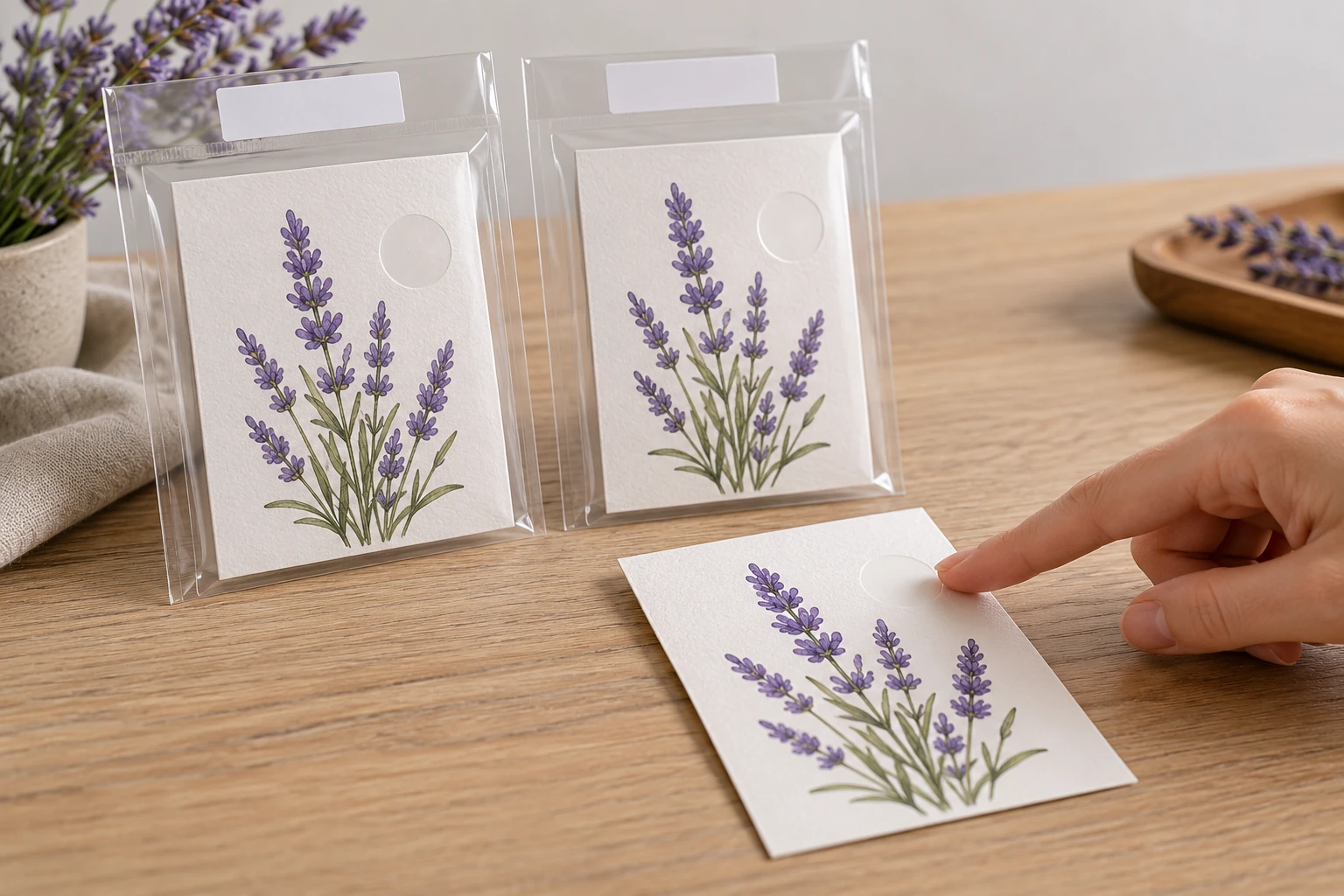
Review representative samples without inventing a score
Have the specialist and product owner define the relevant review conditions, sample identity and comparison method. Keep unactivated references identifiable and record the history of pieces that have already been handled. Repeatedly rubbing a single sample changes the specimen being reviewed; it should not be described later as an untouched example.
Document observations and disagreements rather than turning one person's impression into a quantified intensity or a universal acceptance result. If the label must represent a specific fragrance, resolve that match with its owner before production. This guide prescribes no exposure amount, sensory panel size or pass threshold.
Confirm suitability and handling with the specialist
State the intended audience, market, placement and contact conditions. Ask the responsible provider and brand to review applicable ingredient, labeling and safety information. Do not infer skin suitability, allergen absence, food suitability or therapeutic effects from the decorative use of a scent.
Obtain storage, packing and expected-use information for the actual construction. Ask whether the pieces need separation or protection from unintended rubbing and how any claimed usable period is supported. A sample that smells acceptable today does not prove performance after an unspecified shipment or storage history.
For a specialty promotional label enquiry, send artwork, activation map, intended fragrance reference, user action, market and contact conditions, quantities and delivered state. Ask whether a suitable specialist route is available before accepting a production commitment. Keep this sensory approval separate from the ordinary print appearance reference.